Turns out, your favorite starchy side dish might be more than just delicious; it could be a key player in human evolution. New research suggests that Indigenous Andean communities possess a unique "digestive superpower," all thanks to the humble potato.
Scientists have uncovered compelling evidence that the domestication of potatoes in the Andes didn't just fill stomachs; it actively shaped human bodies, specifically how they process food. Which, if you think about it, is both impressive and slightly terrifying.
The Potato's Evolutionary Impact
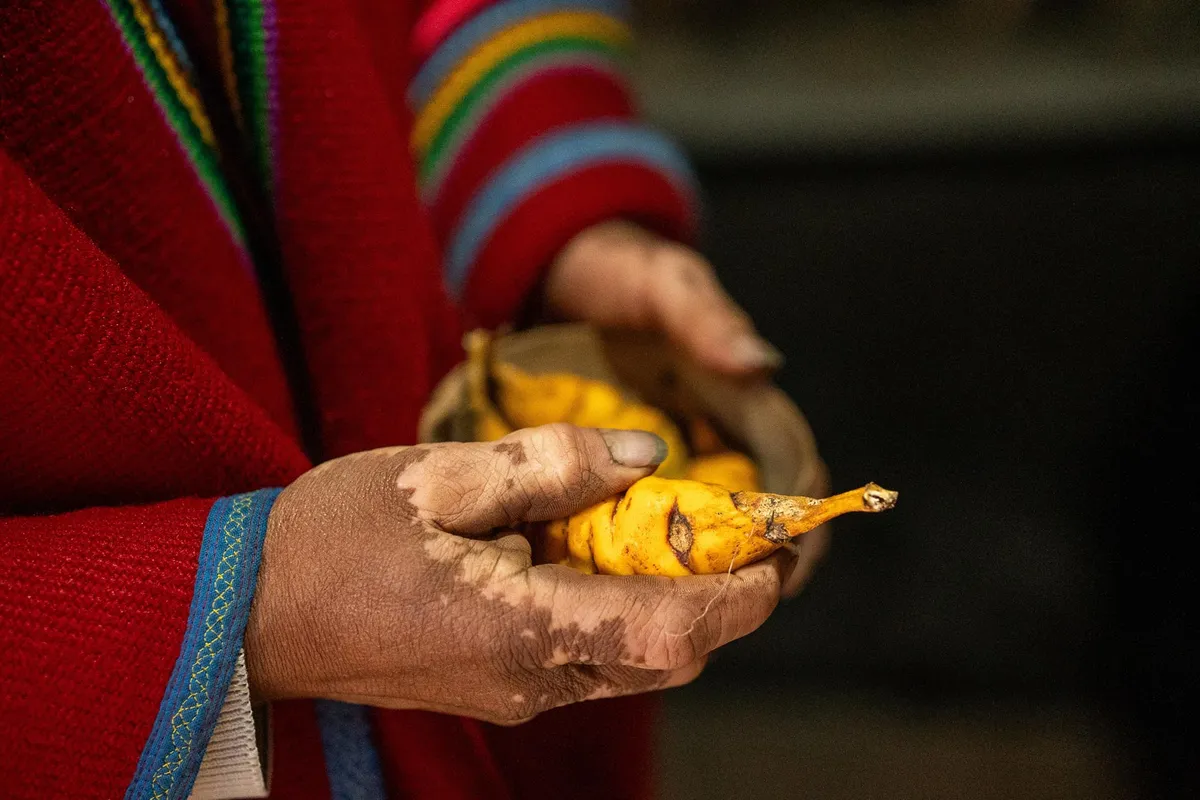
Indigenous people in the Andes were the OG potato farmers, making this starchy crop a dietary cornerstone for those living at challenging high altitudes. Fast forward to today, and their descendants in Peru boast more copies of a specific starch-digesting gene than any other human group on Earth. Let that satisfying number sink in.
We're a new kind of news feed.
Regular news is designed to drain you. We're a non-profit built to restore you. Every story we publish is scored for impact, progress, and hope.
Start Your News DetoxA new study reveals that natural selection essentially gave a high-five to Indigenous Andeans with multiple copies of the AMY1 gene. This evolutionary leg-up happened roughly 6,000 to 10,000 years ago, precisely when potatoes started gracing Andean highland farms.
More AMY1 copies mean more amylase enzyme in your saliva, which is basically your body's personal starch-demolition crew. The better that crew works, the more effectively you break down those carbs.
Researchers from UCLA and the University at Buffalo spearheaded this investigation, collecting DNA from Quechua-speaking Andean people in Peru. They then stacked these samples against thousands of others from various human populations, like a very scientific game of compare and contrast.
Abigail Bigham, a UCLA anthropology professor, highlighted the Andes' significance as a natural laboratory for human adaptation — from coping with low oxygen to mastering specific diets. Meanwhile, Omer Gokcumen, a University at Buffalo professor, noted that while diet's influence on evolution was suspected, concrete evidence has been rarer than a perfectly ripe avocado.
Evolution by Starch
Ancestors of Indigenous Andeans already had varying AMY1 copy numbers before they settled down and started farming potatoes. But once potatoes became the main course, those with more copies suddenly had an evolutionary edge. It was like winning the genetic lottery, but for digesting carbs.
Starting around 10,000 years ago, people sporting roughly 10 or more AMY1 copies enjoyed a 1.24% survival or reproductive advantage each generation. Gokcumen clarified that evolution isn't always about gaining new traits; sometimes it's about gently nudging those with fewer AMY1 copies out of the gene pool, perhaps because they simply had fewer children. Survival of the starch-digesters, if you will.
Today, Indigenous Peruvians average 10 AMY1 copies. That's two to four more copies than any of the other 83 populations studied. For perspective, the Maya, an Indigenous group in Mexico with a shared history but no potato farming tradition, average six copies. So, it's not just a regional thing; it's a potato thing.
And for those wondering if European contact messed with the data, advanced DNA analysis showed the high AMY1 copy numbers were well-established thousands of years before Columbus even thought about sailing the ocean blue.
This study doesn't just peel back layers on Andean adaptation; it also raises fascinating questions about how our modern diets continue to sculpt our genetic makeup. Bigham even threw a little shade at the paleo diet, pointing out that human populations have clearly adapted to new food sources within the last 10,000 years. Our bodies aren't just relics of the distant Paleolithic past, apparently. They're still taking notes.