Good news, future generations (and anyone who likes the idea of Earth not becoming a cosmic snack): our planet might just dodge the sun's death embrace. For decades, the prevailing wisdom was that when our star finally gives up the ghost, it would expand and swallow Earth whole. Turns out, that might not be the case after all.
Now, before you start planning your five-billion-year survival bunker, remember this is all still billions of years away. Long after humanity has, shall we say, moved on to other cosmic adventures or just stopped existing. But still, it’s nice to know we might not end up as stellar dust.
The Sun's Mid-Life Crisis (and Beyond)
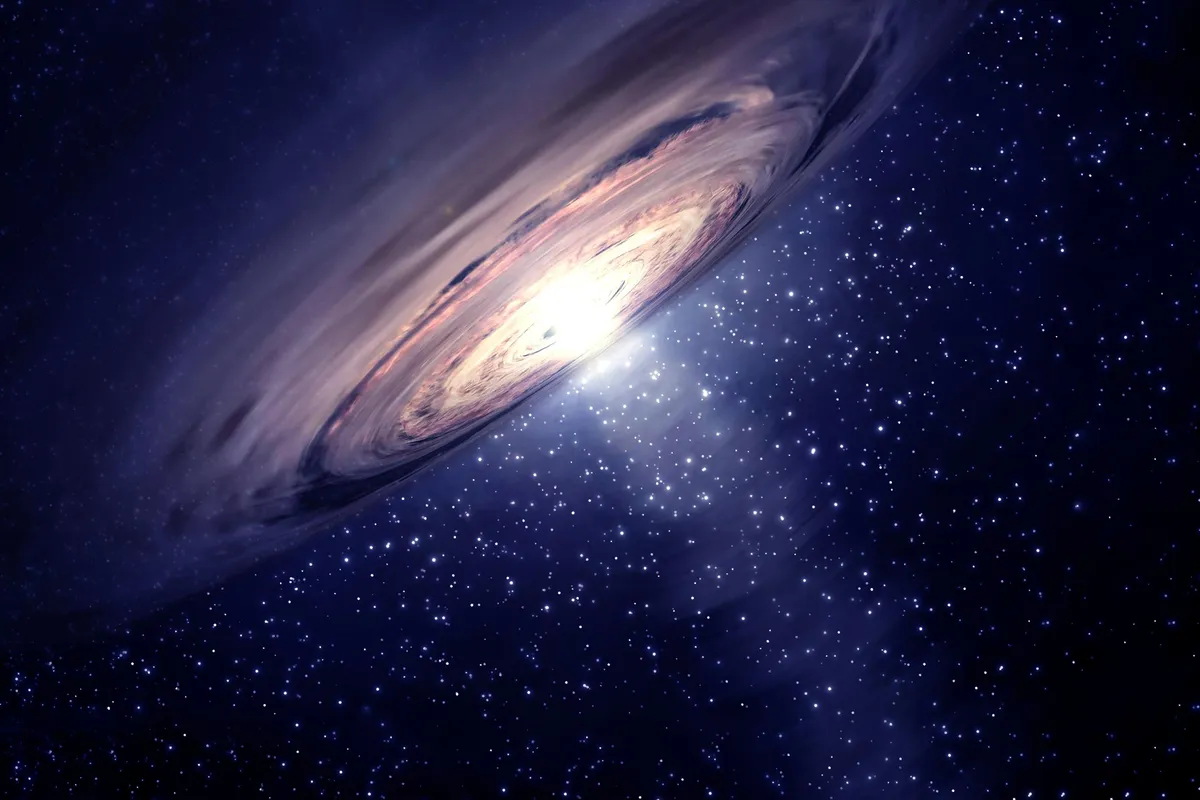
Here’s the cosmic drama: when the sun eventually runs out of hydrogen fuel in its core, it’ll start getting… puffy. Like a star that’s really let itself go. It'll first balloon into a red giant. Then, after burning through its helium, it’ll expand even further into something charmingly called an "AGB star." (Think of it as the sun's second, even more dramatic, growth spurt.)
We're a new kind of news feed.
Regular news is designed to drain you. We're a non-profit built to restore you. Every story we publish is scored for impact, progress, and hope.
Start Your News DetoxPreviously, the thinking went like this: as the sun expands, its increased gravity would simply pull Earth closer, eventually gobbling it up. Much like how the moon’s gravity creates tides on Earth, the sun’s expansion would create massive tidal forces within itself that would drag our planet in. A stellar death hug, if you will.
But here’s the twist: the sun also starts shedding a lot of its mass through intense stellar winds. And these winds, it turns out, push Earth away.
So, what wins? The pull of the expanding sun, or the push of its dying breath? Mats Esseldeurs, who led a recent study in Astronomy & Astrophysics, explains it’s a celestial tug-of-war. If the tidal forces are stronger, Earth's toast. But if the sun's mass loss is more powerful, Earth actually moves into a wider, safer orbit. Escape velocity, but for planets.
Better Models, Brighter Future
The reason for this sudden shift in planetary real estate predictions? Better math, mostly. Older calculations of how tides work inside giant stars were, let’s just say, a bit simplistic. But over the last 15 years, our stellar models have gotten a serious upgrade. Stephane Mathis, an astrophysicist involved in the research, noted that these new models show the tidal effect is "lower than previously expected." Less pull, more push.
To gauge just how much mass the sun might lose, the team looked to L2 Puppis, a star they describe as an "old cousin" to our sun. By studying this elder relative, they got a clearer picture of our own sun's eventual decline.
The upshot? With this improved understanding of stellar physics and better data on mass loss, it now seems Earth could indeed drift away from the sun's fiery grasp. Mercury and Venus, however, aren't so lucky. They're still slated to become interstellar appetizers. Mars, though? It’s also expected to make a clean getaway. Good for Mars.
After all this dramatic expansion and mass shedding, the sun will eventually shrink down into a dense, dim ember called a white dwarf. No more fusion, just a slow fade into cosmic obscurity. And Earth, if it plays its cards right, might just be there to watch the whole thing from a safe distance.