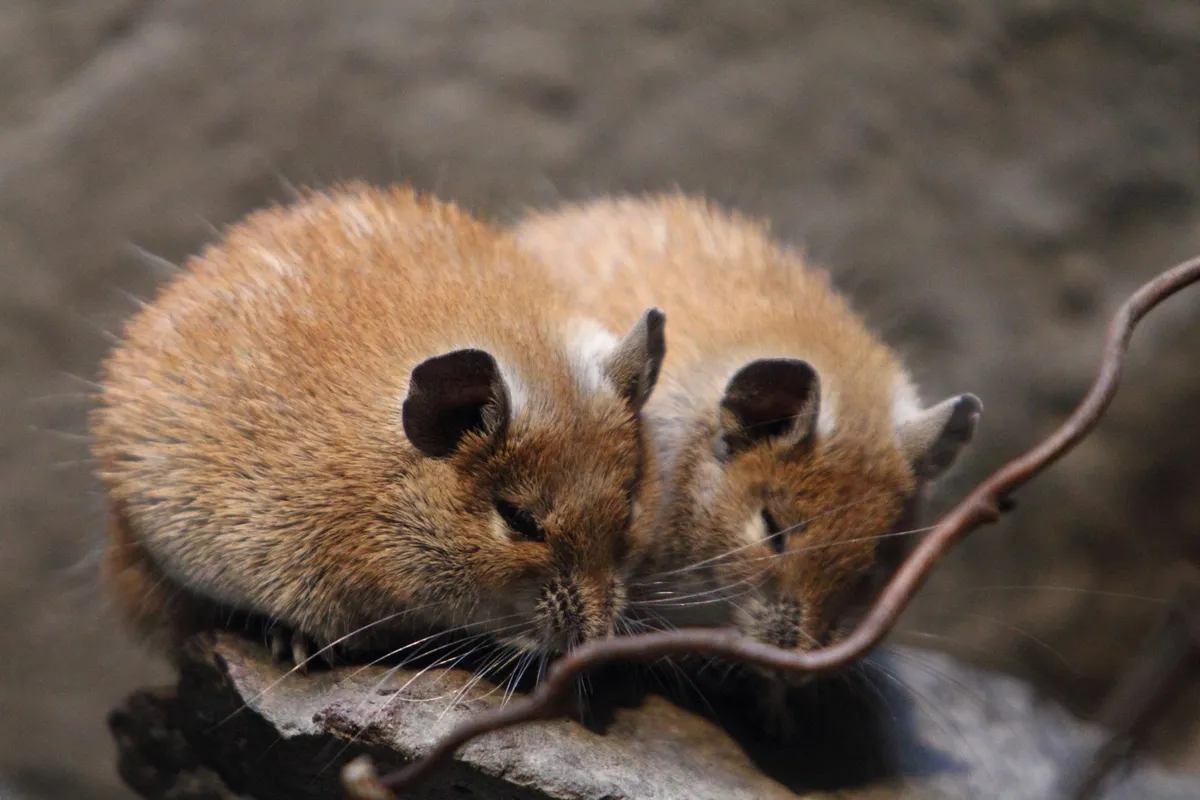
A wild mouse with an unusually long life may hold clues to healthy aging. While aging is often seen as unavoidable, different species age at very different rates. Understanding these differences is a big question in aging research. It could show how bodies naturally fight disease and decline.
Researchers are now looking at the golden spiny mouse. This small rodent lives in the rocky deserts of the Middle East. It lives much longer than most mice. It also stays healthy for most of its life, avoiding the usual physical, mental, and immune decline that comes with aging.
How the Golden Spiny Mouse Defies Aging
Scientists at Yale School of Medicine studied the biological reasons for this mouse's amazing resilience. Their findings suggest the mouse has natural ways to control age-related inflammation. It also keeps its tissues and organs healthy into old age. These discoveries could lead to new treatments for healthier aging in humans.
We're a new kind of news feed.
Regular news is designed to drain you. We're a non-profit built to restore you. Every story we publish is scored for impact, progress, and hope.
Start Your News Detox"Mice in the wild typically live around nine months," said Vishwa Deep Dixit, a professor at Yale School of Medicine. "But some of these golden spiny mice live in the desert for up to five years. And that's just what we've seen; their maximum lifespan is unknown."
Dixit explained that to live that long, they must forage for food and avoid predators. They are not just "aged" in the way we usually think.
Hee Hoon Kim, a researcher in Dixit's lab, said the main question is why some species, like the golden spiny mouse, age with so little decline, while others do not.
Reduced Physical and Cognitive Aging
Dixit, Kim, and their team worked with researchers at Tel Aviv University. They studied young and old golden spiny mice. They compared them to similar mouse species.
Their analysis showed several unique traits in the golden spiny mouse. Three traits were especially important for understanding its healthy aging.
First, golden spiny mice can heal skin injuries without scars. This ability does not go away with age. Older mice kept the same regenerative power.
Second, their thymus gland is remarkable. In humans, this gland is above the heart and makes white blood cells for the immune system. In most animals, the thymus shrinks and breaks down quickly with age.
"Aging of the thymus actually happens before other organs age," Dixit said. "But even in very old golden spiny mice, the thymus is healthy and works well. This might give the mice a much stronger immune system into old age."
The team also found that older golden spiny mice did not lose their learning and memory skills. This loss is common in aging animals.
"These are all major pathways that decline with age," Dixit noted. "Understanding how they stay healthy in this species could be very important."
Keeping Inflammation in Check
As bodies age, chronic low-level inflammation often increases. This is called "inflammaging." Much of this inflammation starts in fat tissue. The researchers looked at gene activity in the golden spiny mouse's fat tissue. They found a protein called clusterin.
Clusterin helps remove misfolded proteins from the body, which can reduce their harmful effects. This protein has been linked to less brain inflammation in Alzheimer's disease. It is also linked to longer lifespans in many mammals, including humans. For example, people 100 years or older often have higher levels of clusterin. In older golden spiny mice, immune cells in fat tissue showed high activity in the gene that makes clusterin.
To see if clusterin caused these effects, the researchers gave the protein to standard lab mice. These treated mice showed some of the same healthy aging traits as the golden spiny mice. They had less decline in movement and healthier organs than mice that did not get clusterin. They also showed signs of reduced inflammaging. Similar benefits were seen when human white blood cells were exposed to clusterin.
"We think that clusterin is one of the key players in how golden spiny mice resist age-related decline," Kim said. "This is a small start to a big story."
Evolutionary Advantages
Wild animals usually do not die just from old age. Predators, lack of food, and infections often kill them first. Because of this, healthy aging traits are not usually strongly favored by natural selection. Many animals do not live long enough for these traits to improve survival across generations.
However, golden spiny mice have several adaptations that help them live long enough for healthy aging traits to matter. Unlike many mice, they are active during the day. This helps them avoid competing with other mouse species for food. It also reduces contact with predators that hunt at night.
They can also handle toxins and survive long periods without food by using less energy. This allows them to save energy while still looking for food. Their babies are also more developed at birth than other mice. Several females help care for the pups, which improves their chances of survival.
"So they have many ways of avoiding death," Dixit said. "We think that natural selection can then give them these healthy aging traits, which are passed down through generations."
Dixit, Kim, and their team believe that metabolic pathways in golden spiny mice help them resist aging. Similar pathways might exist in other mice and humans. However, they may have become inactive for unknown reasons. Proteins like clusterin might be able to reactivate some of these pathways.
Dixit believes these pathways could eventually lead to ways to improve aging and longevity in people. "We think these will be stepping stones for new drugs in the future."
Deep Dive & References
Immunometabolic resistors of aging in long-lived golden spiny mice - Science Advances, 2026