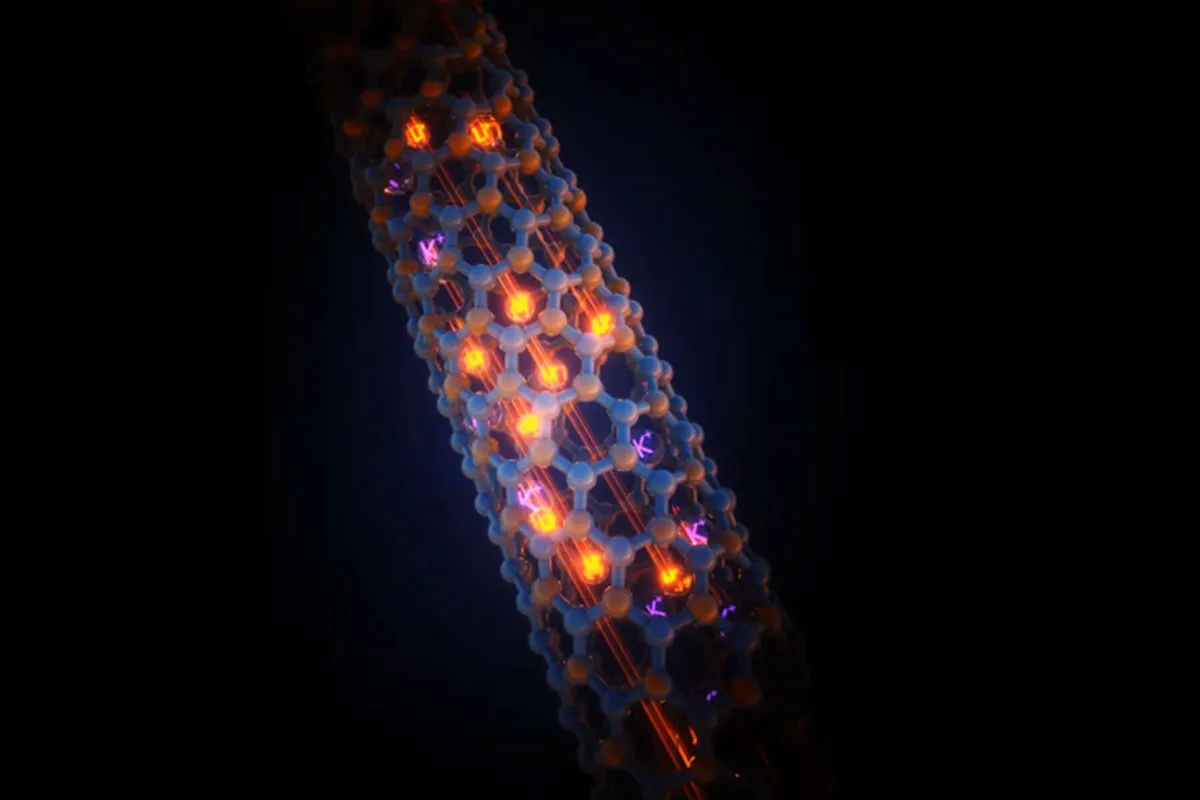
Researchers at the University of Technology Sydney found a new way to control tiny quantum light sources. They did this by twisting atom-thin layers of a material called hexagonal boron nitride.
This discovery offers a new method to tune quantum emitters. These are microscopic light sources important for future quantum computers, secure communication, and sensitive sensors.
Dr. Angus Gale, the lead author, said this work gives scientists a valuable tool. It helps make quantum systems more practical.
We're a new kind of news feed.
Regular news is designed to drain you. We're a non-profit built to restore you. Every story we publish is scored for impact, progress, and hope.
Start Your News Detox"You can measure these quantum emitters and see that they exist, but it's hard to make them work in practice," Dr. Gale explained. "This gives us a lever to get closer to that."
Twisting Layers Changes Quantum Light
Dr. Gale and his team found that twisting the material significantly changed the color and wavelength of the light from the quantum emitters. The amount of change was surprisingly large.
Most studies create a device at a fixed twist angle. But these researchers could repeatedly lift, rotate, and restack the material. This allowed them to continuously change its properties.
"We're leveraging the fact that this material, hexagonal boron nitride (hBN), is layered," Dr. Gale said. "We can pick it up, stack it, twist it, and use that twist to modify the emitters."
He noted that this is not possible with traditional materials like diamond or silicon carbide. The shift in emission was much larger than expected.
Why Hexagonal Boron Nitride Is Different
Dr. Gale compared the material's structure to slices of cheese, not a solid block.
"With a block of cheese, you can't really get to the flavor in the middle," he said. "But with slices, you can peel away layers, put them back together and change how they interact."
Because hBN has extremely thin layers, researchers can separate and reassemble them. This is not possible with conventional quantum materials.
New Possibilities for Quantum Technologies
Professor Igor Aharonovich, the supervising author, said twisting layered materials can reveal entirely new physical behaviors.
"You can take two layers that don't do much on their own, put them together at a specific angle, and suddenly you have a completely different system," Professor Aharonovich noted.
These findings could help advance several new quantum technologies.
"These materials could eventually be used for quantum computing communications and quantum sensing," Aharonovich said. This would help applications like healthcare, cybersecurity, and improved GPS. It also gives more control over the building blocks needed for these technologies.
Deep Dive & References
Twist-controlled modulation of quantum emitters in hexagonal boron nitride - Science Advances, 2026