Researchers have created new nanotube membranes that allow ions to move incredibly fast. This discovery could lead to better ways to generate clean energy, recover lithium, and separate molecules.
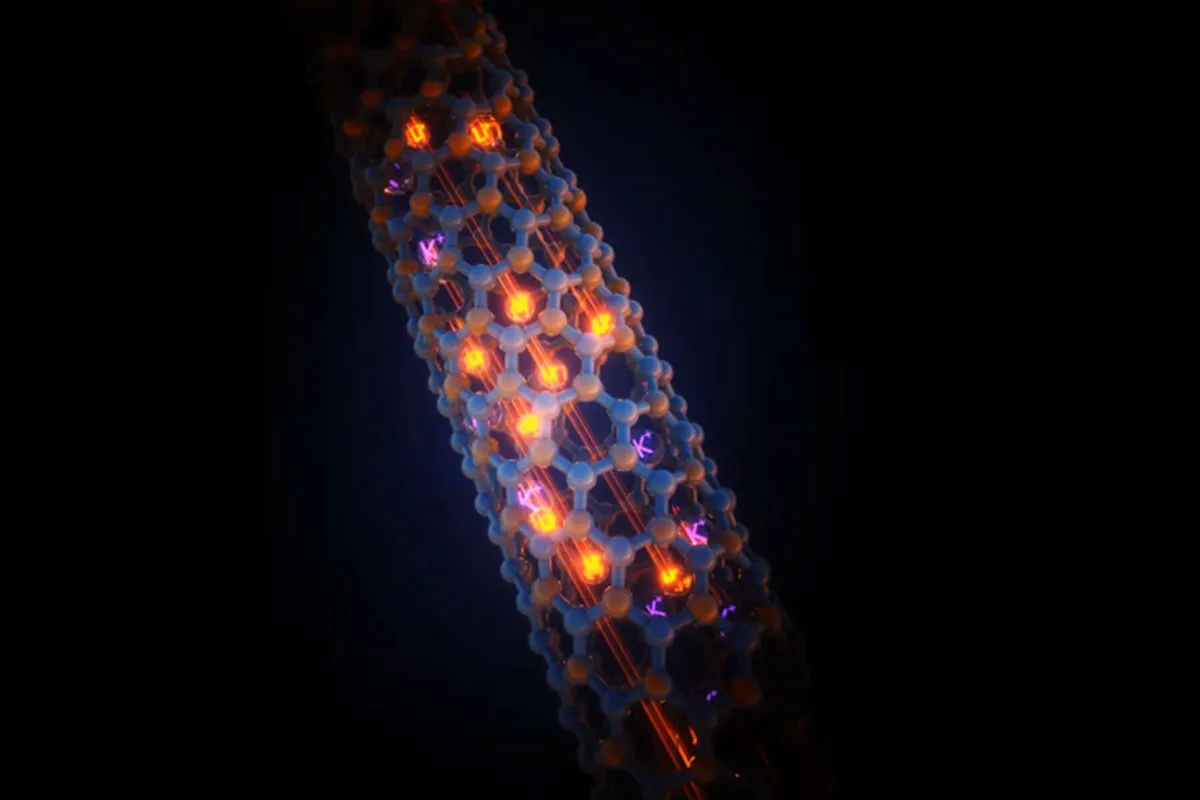
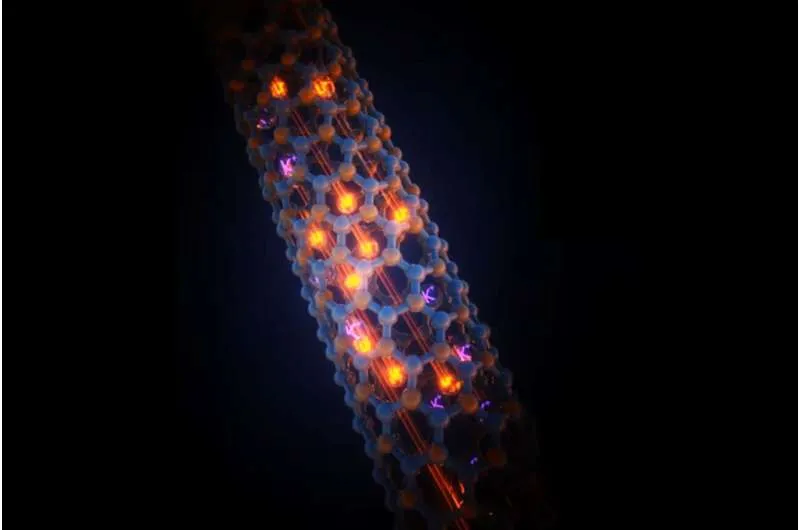
The study, published in Nature Nanotechnology, involved researchers from the University of Illinois Chicago. They found that tiny, tube-shaped channels made of boron nitride nanotubes (BNNTs) move certain ions much faster than expected.
A New Way to Move Ions
These nanotubes act like an express lane, moving lithium ions much faster than other types of ions. This suggests new possibilities for "blue energy," which creates power from mixing salt and fresh water. It could also help with extracting lithium for batteries.
We're a new kind of news feed.
Regular news is designed to drain you. We're a non-profit built to restore you. Every story we publish is scored for impact, progress, and hope.
Start Your News DetoxSangil Kim, a chemical engineering professor at UIC and an author of the paper, explained that this unique process transports lithium ions very quickly. He noted that the ion transport is much higher than both theoretical predictions and existing experimental systems.
Ion movement is key to many industrial processes. When salts dissolve in water, they form charged ions that move through tiny channels at different speeds. Controlling this movement is important for technologies like batteries, desalination, and renewable energy. However, making ions move both fast and selectively has been a big challenge.
The researchers built membranes with millions of these boron nitride nanotubes. These tubes have an unusual surface charge. When placed between salt solutions of different strengths, ions moved through the pores much faster than predicted. Lithium ions, in particular, moved 31 times faster than expected. They also moved much faster than other ions.
To show the system's potential, Kim and his team used their small membranes to power everyday electronics with just salt solutions. Kim said they could operate a watch and a calculator.
Inspired by Nature
Generating electricity from ion movement is not a new idea. Electric eels, for example, create electricity by controlling ion flow across special cells called electrocytes. These cells turn chemical differences into electricity. Scientists have long tried to copy this process in devices like the membranes in this study.
Kim and his colleagues plan to explore more uses for these membranes, especially their ability to separate lithium. He believes these findings could help recover lithium from old batteries. They also want to understand exactly how this unusually fast ion transport happens.
Kim started studying boron nitride nanotubes ten years ago at UIC. He thanked the College of Engineering for its support and the hard work of student researchers. He specifically mentioned former Ph.D. students Aaditya Pendse and Kun Wang for their contributions.
Other UIC co-authors of the study include Pavel Rehak, Volodymyr Koverga, Selva Selvaraj, Naveen K. Dandu, Roya Jafari, Anh T. Ngo, and Petr Kral.
Deep Dive & References
Anomalous ultrafast lithium-ion transport through boron nitride nanotube membranes - Nature Nanotechnology, 2026