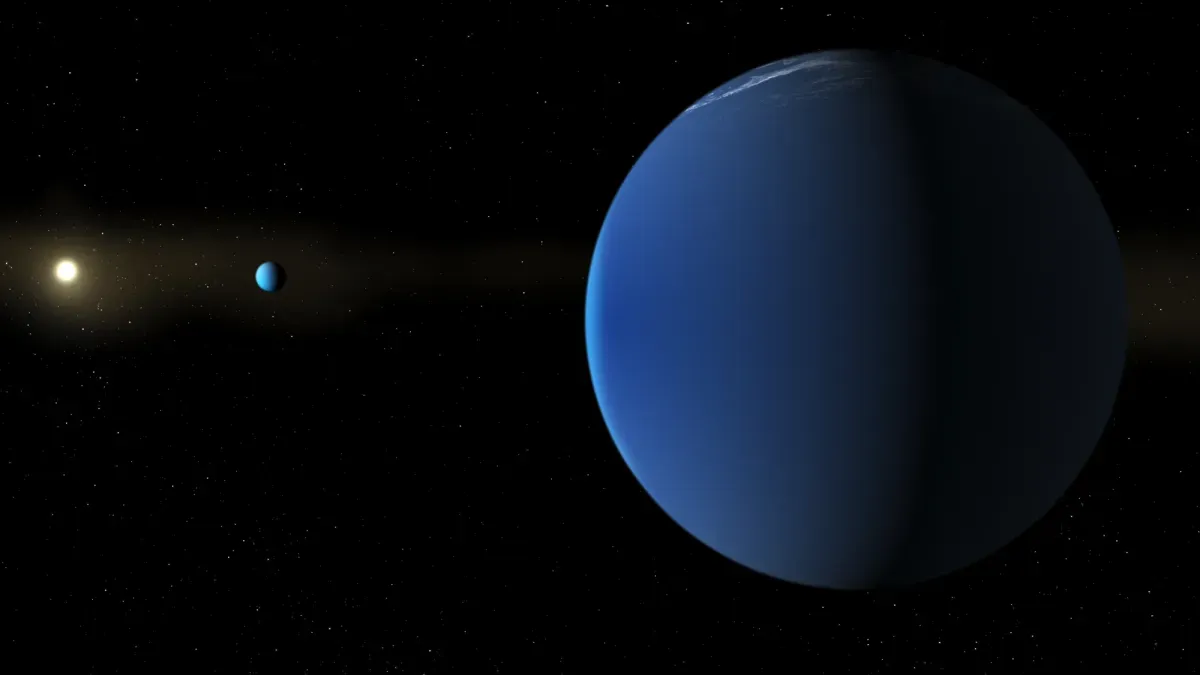
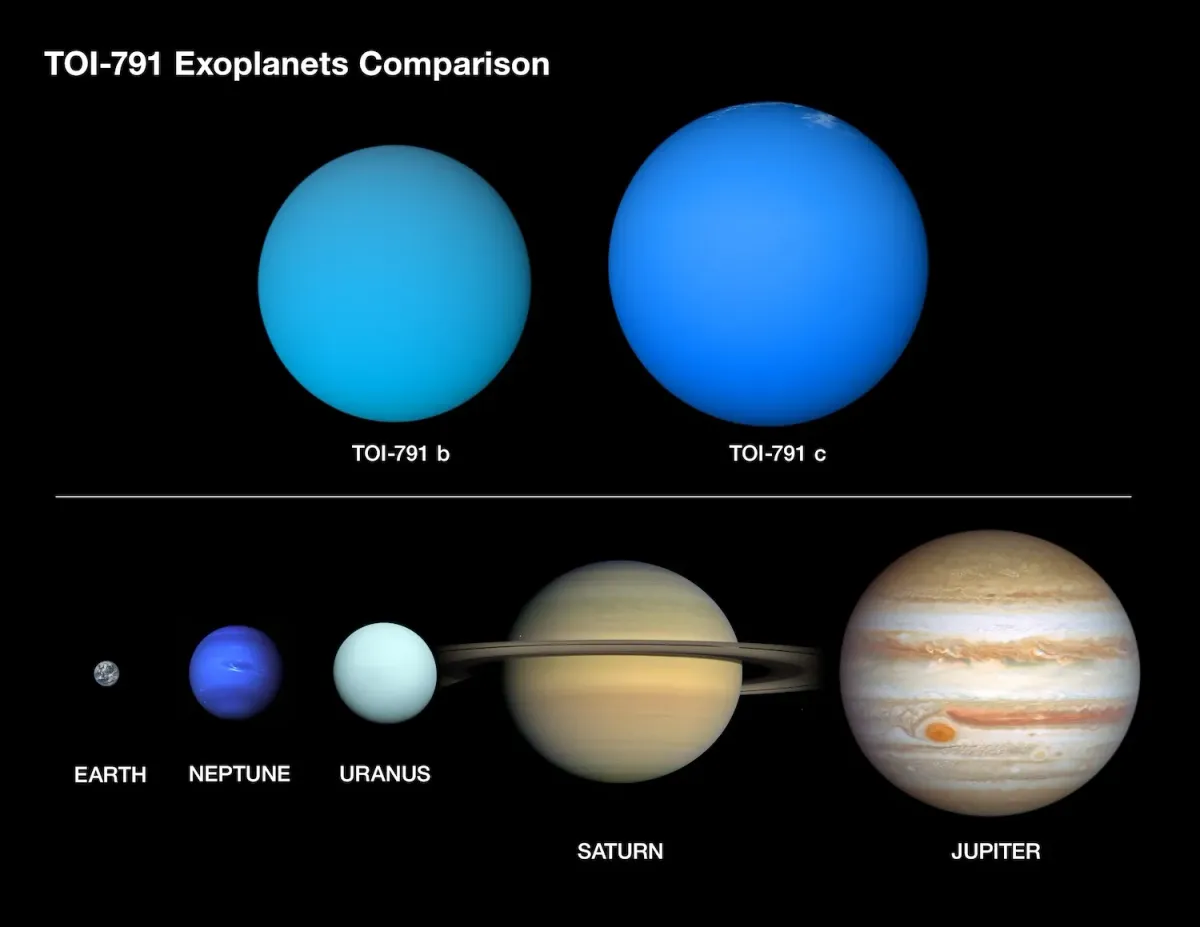
Imagine a gas giant the size of Jupiter. Now imagine it's so incredibly light, it's less dense than actual cotton candy. That's the cosmic absurdity we're dealing with, thanks to a pair of newly observed "super-puff" planets named TOI-791 b and TOI-791 c.
Discovered by citizen scientists (because apparently, some people's hobbies involve finding entire planets), these two celestial oddities are making astrophysicists scratch their heads. Only a handful of these super-puffy worlds are known, and finding two in the same system? That's like winning the intergalactic lottery, but for science.
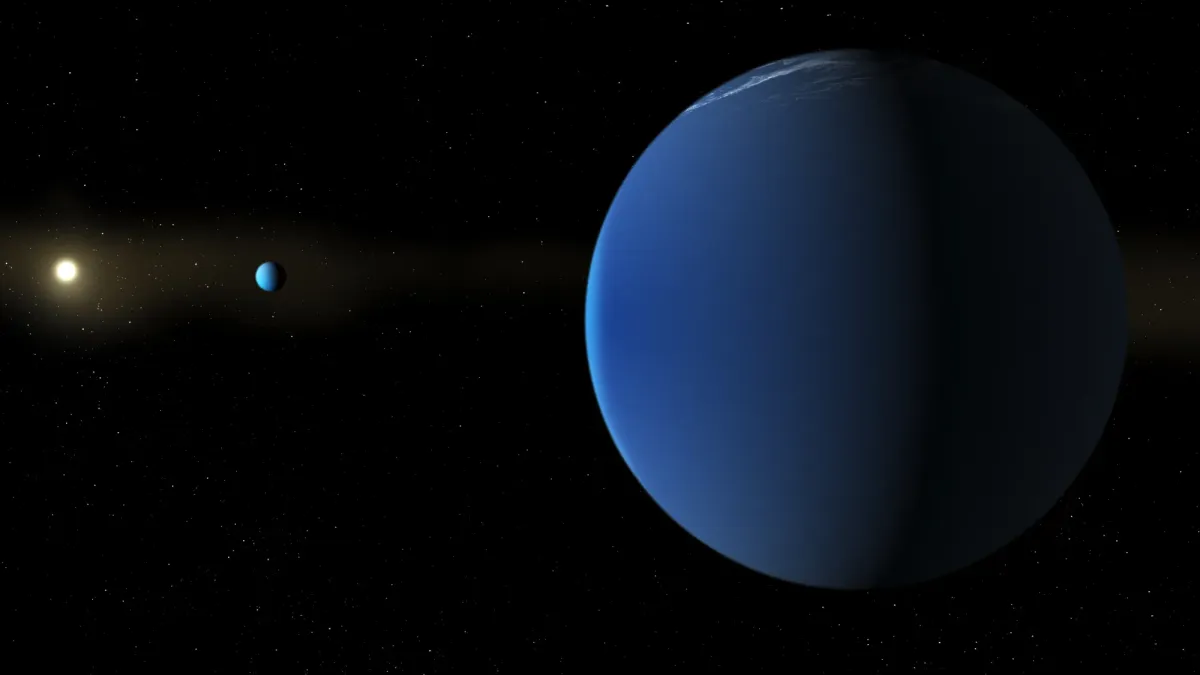
These wispy wonders reside about 1,110 light-years away in the constellation Volans. To put their density into perspective: Earth clocks in at a solid 3.18 ounces per cubic inch. Jupiter, a gas giant, is 0.76 ounces. Cotton candy, for a delicious visual, is about 0.29 ounces per cubic inch. Our new friends, TOI-791 b and c, are 0.022 and 0.027 ounces, respectively. So, yes, significantly less dense than your average carnival treat.
We're a new kind of news feed.
Regular news is designed to drain you. We're a non-profit built to restore you. Every story we publish is scored for impact, progress, and hope.
Start Your News DetoxA Gravitational Ballet and Cosmic Questions
These planets might be Jupiter-sized, but they pack 28 to 35 times less mass into that volume. It's like a giant, ethereal balloon floating through space. And just to make things even more interesting, these two planets are locked in a rare gravitational dance: for every five times the inner planet orbits its star, the outer one completes three. It's a cosmic rhythm section, if you will, but with far more complex gravitational implications.
For eight years, astronomers worldwide, including a team at the exoplanet telescope in Antarctica (because where else would you look for cotton candy planets?), studied these objects. They watched for the tiny dimming of their host star's light as the planets passed, using those flickers to calculate their size, mass, and general floatiness.
The big question now is how these super-puffs even form. One theory suggests they're basically giant hydrogen and helium bubbles, possibly coalescing far from their star where things were colder. But honestly, nobody's entirely sure. Researchers are already eyeing the James Webb Space Telescope to get a closer look at these unbelievably light, incredibly rare, and frankly, quite delicious-sounding worlds. Because apparently, the universe is full of things that defy common sense, and sometimes, they just happen to be the consistency of spun sugar.