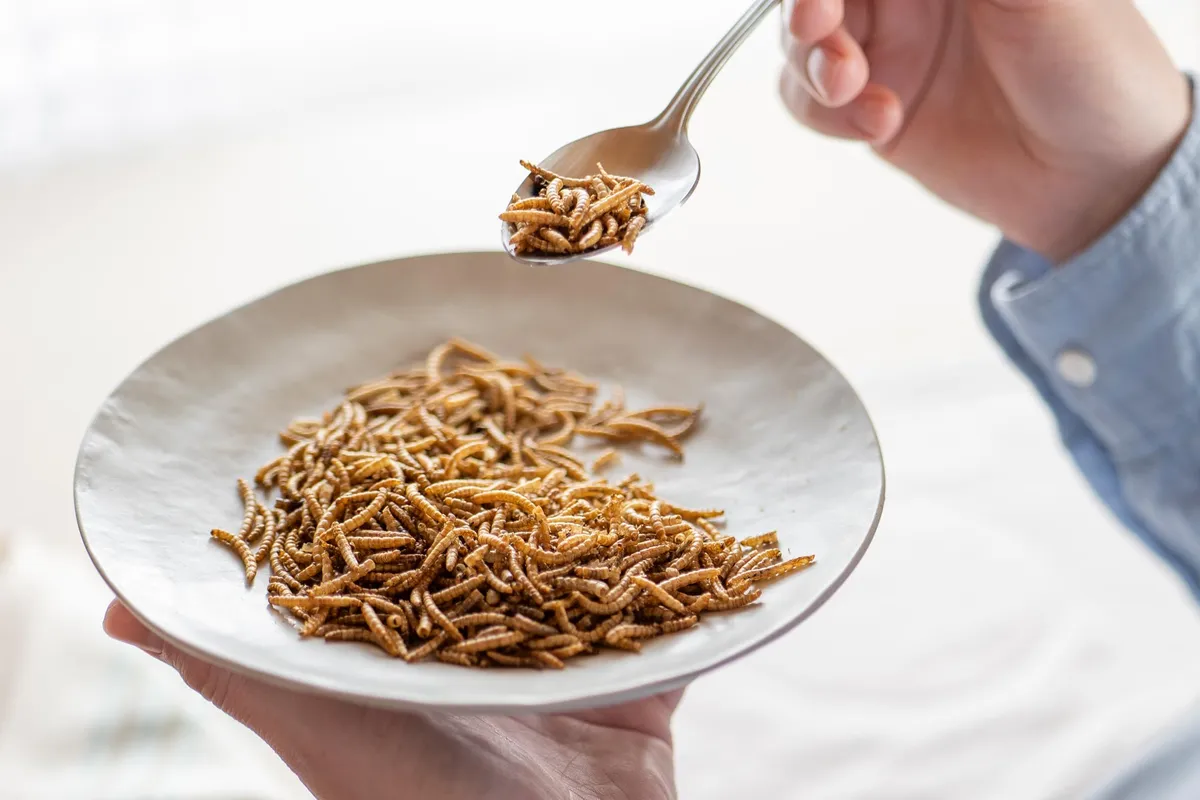
Most of the world happily crunches on crickets, but for many in Europe and North America, the mere thought of a bug buffet sends shivers down the spine. We usually chalk this up to culture, but a new study just dropped a bombshell: your disgust might be 9,000 years old, baked right into your DNA.
Turns out, while the UN's Food and Agriculture Organization is busy promoting insects as a sustainable superfood (there are 1,611 edible species, by the way), Western societies have been giving them the side-eye for millennia.
The Ancient Aversion
Researchers at the Institute of Evolutionary Biology (IBE) dug into thousands of years of human genomes and ancient dental plaque – yes, plaque – to figure out why. Their findings, published in Science Advances, suggest that for most of our ancestors in Europe, Central Asia, and East Asia, eating insects was a rare, largely accidental affair.
We're a new kind of news feed.
Regular news is designed to drain you. We're a non-profit built to restore you. Every story we publish is scored for impact, progress, and hope.
Start Your News DetoxThey analyzed 745 dental calculus samples, some as old as 33,000 years. Dental calculus, that delightful tartar dentists scrape off your teeth, is a goldmine for ancient food DNA. What they found? Modern humans in northern Eurasia weren't regularly munching on bugs.
Even more telling, their genes for digesting chitin (the tough stuff in insect exoskeletons) show mutations that reduce this ability. This genetic trait, which basically makes bug digestion a pain, has been around for about 9,000 years, right when farming became a thing. "Avoiding insects isn't just a recent cultural thing," noted study lead Pablo Librado. "It also comes from a long history of ecology and evolution."
Neanderthals and Tropical Treats
Neanderthals, on the other hand, had a different menu. Their dental plaque contained significantly more insect DNA, similar to modern chimpanzees who use bugs as a dietary supplement. The most common insect DNA? Flies and mosquitoes. Which, if you think about it, is both impressive and slightly terrifying. Imagine having enough mosquito DNA in your teeth to make a scientific discovery.
Their chitin-digesting genes were also far more efficient. Meanwhile, for modern humans, the further a population lived from the equator, the less active their chitin-digesting enzymes. Why? In the tropics, social insects like termites and locusts are abundant, providing a steady, high-energy food source. Up north? Not so much. It just wasn't worth the foraging effort.
This genetic pattern, showing a decline in insect eating in European populations, has also held steady for at least 9,000 years. So, next time you recoil from a plate of crickets, you can blame your ancestors.
But here's the kicker: modern food processing could change everything. Industrial methods can break down chitin for us, making insects more palatable and scalable for farming. So, while your ancient DNA might scream "no bugs!" your future diet might just whisper "...maybe just a little."