This week, the world of science decided it was tired of the old scripts. From long-held medical beliefs to the very maps we use, researchers and institutions overturned conventions, proving that even the most established truths are just theories waiting for a better explanation.
The Doctors Are In (And They're Rewriting History)
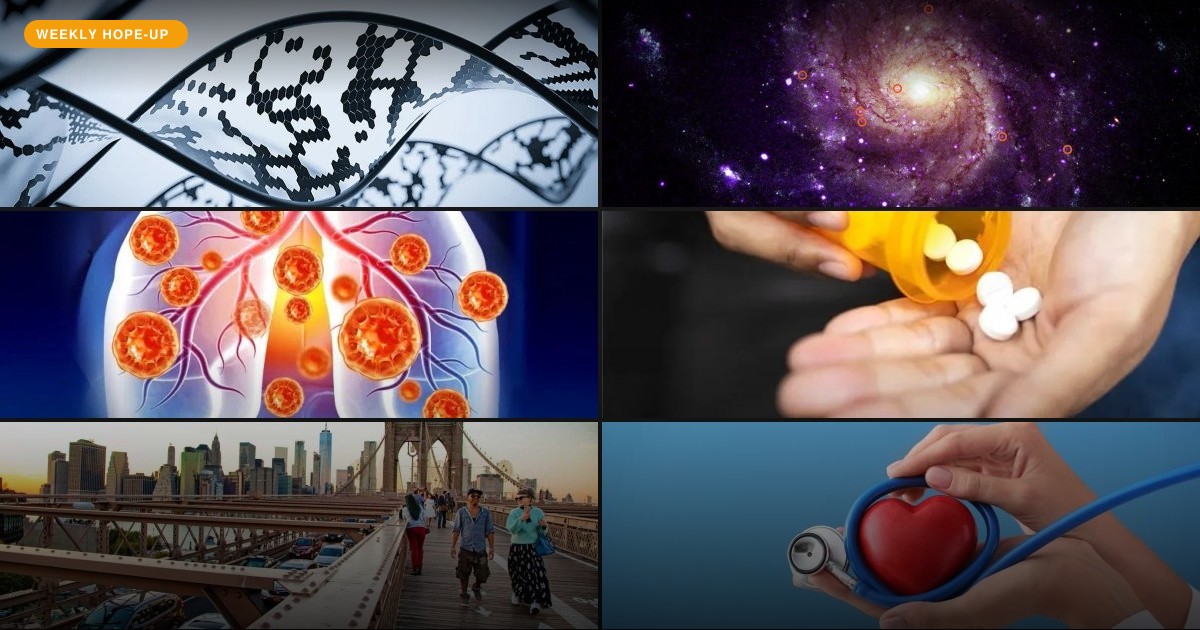
For decades, women experiencing heart attacks were often misdiagnosed, their symptoms dismissed or misunderstood. This week, that decades-long misdiagnosis for women just got a global fix with the world's four leading cardiovascular organizations finally agreeing on a universal heart attack definition. This isn't just an update; it's a recalibration of how we understand heart health, acknowledging the critical differences in how symptoms present across genders. It's a reminder that progress isn't always about inventing something new, but sometimes about correcting past oversights.
Meanwhile, an even older medical theory about our own bodies was flipped on its head. For over a century, scientists believed the lungs were largely sterile, devoid of bacteria. This week, a 100-year-old lung bacteria theory just got flipped on its head, with new findings raising questions about the role of microbes living in the lungs. This opens up entirely new avenues for understanding respiratory health and disease, challenging a fundamental assumption that has guided medical research for generations. If you've ever felt like your doctor wasn't quite seeing the full picture, this week showed that the medical community is actively working to expand its view.
We're a new kind of news feed.
Regular news is designed to drain you. We're a non-profit built to restore you. Every story we publish is scored for impact, progress, and hope.
Start Your News Detox"The world’s four leading cardiovascular health organizations just agreed on a universal heart attack definition for the first time." — Read the full story
The World Got a New Map (Literally)
If you've ever looked at a world map and felt something was off about the size of Africa or Greenland, you weren't imagining things. Most maps use the Mercator projection, which distorts landmasses, especially near the poles. This week, the UN just adopted a new world map, encouraging the use of projections that more accurately depict continents with their true sizes. This historic move followed months of lobbying by the African Union, who adopted their own new map earlier this year. It's a quiet revolution in cartography, driven by a desire for more accurate representation and a subtle but significant shift in how we visually understand our planet. When you next look at a globe, you'll be seeing a world that's been re-sized for accuracy, not just navigation.

AI Is Doing the Heavy Lifting (And Unlocking New Mysteries)
Artificial intelligence continued its relentless march this week, proving itself indispensable in fields ranging from health to astrophysics. UC Berkeley researchers unveiled a new AI translator for the human genome, called GPN-Star, that's already excelling at spotting genetic variants that impact human health. This isn't just about faster research; it's about potentially unlocking the deepest secrets of our own biological code, and with it, new pathways to treating diseases.
Meanwhile, in the cosmos, AI is helping us peer into the unknown. NASA's Chandra X-ray Observatory used AI to help scientists discover a new class of cosmic objects that might solve two long-standing space mysteries. From the infinitesimally small to the unimaginably vast, AI is becoming the co-pilot for human ingenuity, helping us ask — and answer — questions we couldn't before. If you've been wondering what AI is really for, this week offered a compelling answer: it's for seeing what we've missed, both within ourselves and across the universe.
Hope stat: 4 — the number of leading cardiovascular organizations that finally agreed on a universal heart attack definition, correcting decades of misdiagnosis.
Watch this space: The implications of those new lung bacteria findings could reshape respiratory medicine for years to come.