A very bright meteor recently exploded over New England, creating a loud boom. People from Delaware to Montreal reported seeing the glowing space rock or feeling its impact. Experts believe it was about three feet wide and moving at 75,000 miles per hour when it broke apart.
The Exploding Space Rock
On a Saturday afternoon, many people in eastern Massachusetts heard a huge boom. It was not a tree falling or an earthquake, but a "bolide." This is a very bright meteor that breaks apart in Earth's atmosphere.
The explosion happened on May 30 at 2:06 p.m. Eastern Daylight Time. The National Oceanic and Atmospheric Administration's GOES-19 weather satellite detected it. Many people also saw it, according to NASA.
We're a new kind of news feed.
Regular news is designed to drain you. We're a non-profit built to restore you. Every story we publish is scored for impact, progress, and hope.
Start Your News DetoxThe meteor was about three feet wide. People saw the glowing rock, heard the explosion, or felt tremors from Delaware to Montreal. Robert Lunsford, who tracks fireballs for the American Meteor Society, shared this with the Associated Press.
Meteors that shine brighter than Venus are called fireballs. If they break up in the atmosphere, they are called bolides.
One witness in Melrose, north of Boston, said their "whole house, actually all houses in the neighborhood, shook." They described it as much louder than a transformer exploding and definitely not an earthquake. Another witness in Newtonville, west of Boston, said the sound was enough to make their dog react and made them think a large tree had fallen.
The Impact and Aftermath
The space object was traveling at 75,000 miles per hour when it broke up. Jennifer Dooren, NASA’s deputy news chief, told Agence France-Presse that the breakup happened about 40 miles above northeast Massachusetts and southeast New Hampshire. Experts estimate the energy released was like 300 tons of TNT.
The loud boom was caused by the meteor's fast movement through the air and its breakup. Shauna Edson, an astronomy educator at the Smithsonian’s National Air and Space Museum, explained that the sound comes from the air compressing as the meteor moves quickly. Sometimes, you also hear the rock breaking apart.
Small meteors often enter Earth's atmosphere, but they usually don't make such a loud sound. Ken Mahan, lead meteorologist for the Boston Globe, noted this.
Scientists believe about 48.5 U.S. tons of space rock fall toward Earth daily. Most of it burns up, creating "shooting stars." Only about five to ten percent of these meteors partially survive the intense journey. Rocks that reach the ground are called meteorites, and they are usually the size of a pebble to a fist.
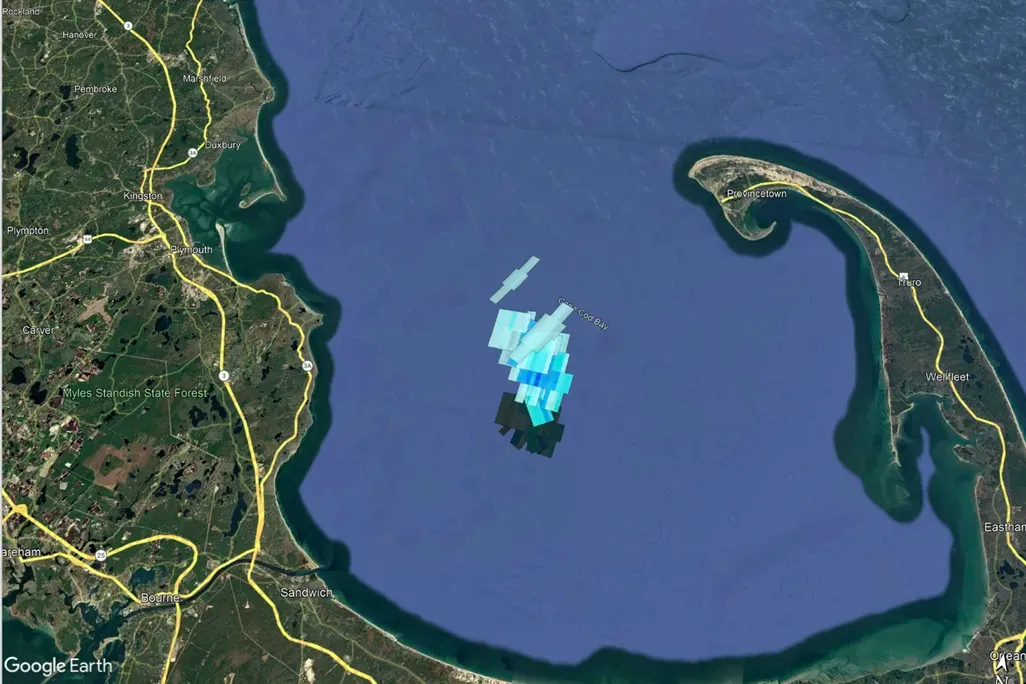
Weather instruments showed that meteorites might have fallen into Cape Cod Bay during Saturday's event. When space rocks land in water, NASA jokingly calls it a "fishy squisher."
This year has seen other celestial events. In March, a seven-ton asteroid exploded over Ohio. A suspected meteorite also crashed through a home in Texas. Two green meteors lit up the sky on the West Coast. Experts say these events are not related.