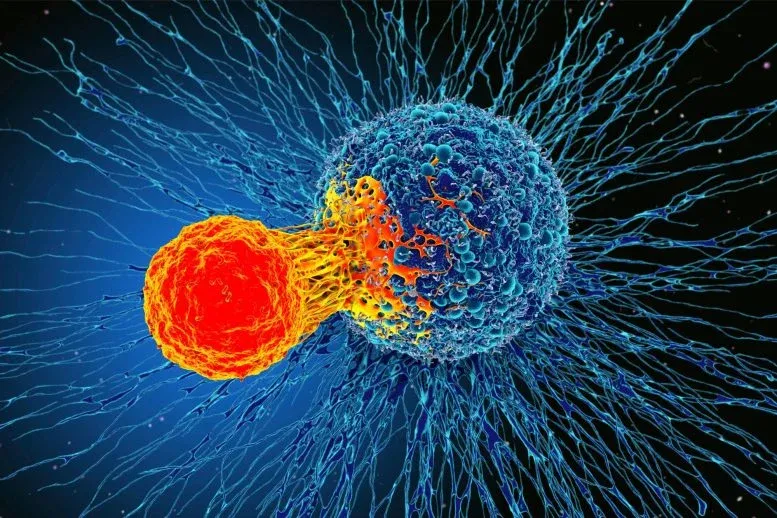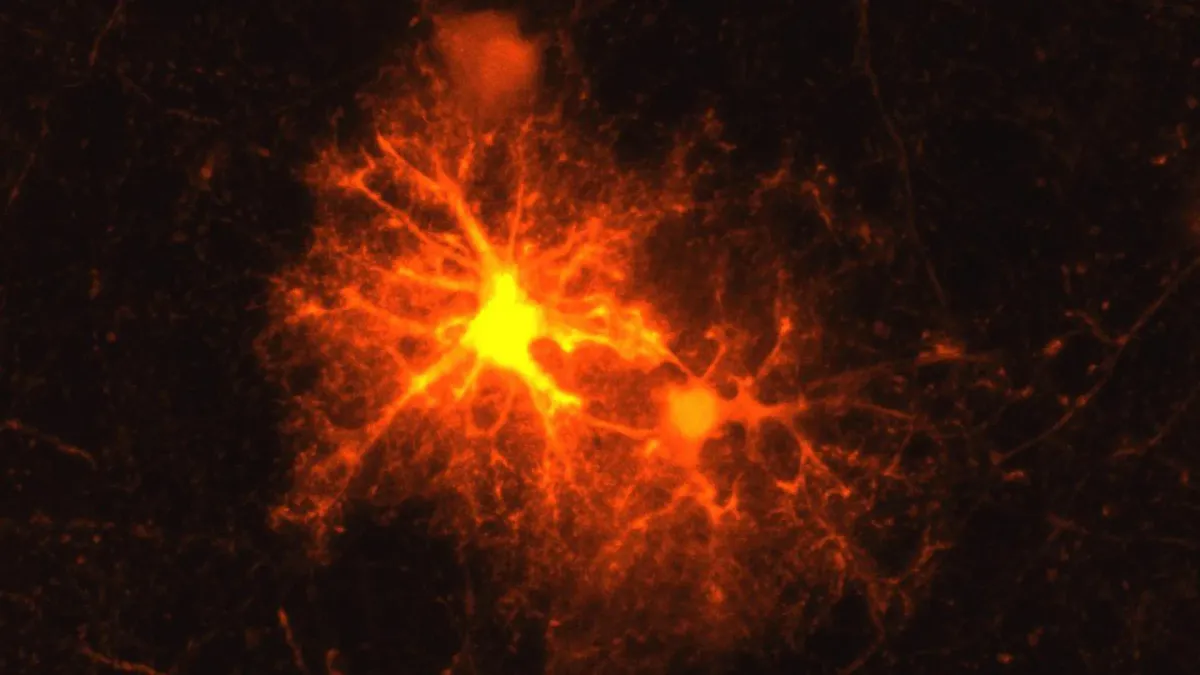
A surprising signal related to stress might help the brain fix itself after an injury. Researchers found that special cells, called precursor cells, quickly release a stress hormone called CRH near damaged brain tissue. This hormone helps control how these cells mature and rebuild the protective insulation around nerves.
This same system also affects how the brain develops and how thick myelin is later in life. These findings could offer new clues about how stress early in life contributes to mental health issues.
Identifying the Brain's Repair Cells
When lab mice had brain damage, researcher Jan Deussing noticed the same thing every time. A specific group of cells would appear and become active around the injured area. Deussing, a neurobiologist, had seen this many times but didn't know what these cells were.
We're a new kind of news feed.
Regular news is designed to drain you. We're a non-profit built to restore you. Every story we publish is scored for impact, progress, and hope.
Start Your News DetoxClemens Ries, a master's student, took on this mystery. He systematically tested markers for all known cell types in a mouse model. Only one marker responded: the one for oligodendrocyte progenitor cells (OPCs).
OPCs are precursor cells. They can mature into oligodendrocytes, which create the myelin sheath. Myelin is like the insulation around an electrical cable. It surrounds axons, which are parts of nerve cells that help them communicate. Myelin helps information travel efficiently and provides nutrients to axons.
Damage to myelin can be serious. In diseases like multiple sclerosis (MS), this protective coating breaks down. Physical injuries can also harm myelin. In severe cases, this damage can kill entire neurons. So, repairing myelin is a key part of the brain's healing process.
A Surprising Stress Hormone Appears After Injury
Ries continued studying these cells for his doctoral thesis. His research showed that these precursor cells multiply rapidly around brain wounds. Most then mature into oligodendrocytes, which can produce new myelin.
Ries and Deussing also discovered something new. Near the damaged tissue, about one-third of the OPCs activate corticotropin-releasing hormone (CRH). This hormone is central to the body's stress response. Researchers didn't know before that OPCs could produce neuropeptides like CRH. These findings were published in Cell Reports.
The CRH response starts very quickly, within hours of an injury. However, it stops after about three days. This short, rapid burst suggests CRH is important in the very early stages of healing.
CRH Helps Control Myelin Repair Timing
One of the two known receptors for CRH, called CRH receptor 1, seems crucial here. It's found on a different group of OPCs, allowing them to respond to the released CRH.
When CRHR1 is missing, OPCs multiply faster after an injury. But this initial increase doesn't lead to better repair. Ultimately, fewer mature oligodendrocytes are produced and remain.
This suggests that CRH helps manage the timing of OPC maturation. This timing is vital for producing enough mature oligodendrocytes to properly fix damaged myelin.
The Same System Shapes the Developing Brain
OPCs are important not just after injury, but also for building myelin as the brain develops. Much of this myelination happens after birth and continues into young adulthood.
Since CRH receptor 1 is on OPCs even without injury, Ries and Deussing wondered if it affects myelination during normal brain development. They studied myelin formation in other mouse models.
They found that mice without CRH receptor 1 produced more OPCs early in development. These changes lasted into adulthood. In adult brains, they saw changes in myelination, especially thicker myelin sheaths around thin axons. This suggests CRH receptor 1 on OPCs is important for both myelin repair and its initial development.
Where Does CRH Come From During Development?
After an injury, OPCs themselves make and release CRH. But during normal brain development, where does this stress hormone come from?
The scientists think neurons might be the answer. They hypothesize that developing neurons release CRH. This CRH then influences how OPCs multiply and mature into myelin-producing oligodendrocytes.
A Possible Link to Depression and Stress
Neurons are known to release CRH, especially during stressful times. Stress in early childhood is also a risk factor for psychiatric disorders.
These new results suggest the CRH system in OPCs could have wider implications for mental health. Deussing speculates that in stress-related psychiatric disorders like depression, the CRH system in OPCs might play a bigger role than previously thought.
If future research confirms this, understanding how CRH signaling affects OPCs, myelin, and brain development could lead to new treatments.