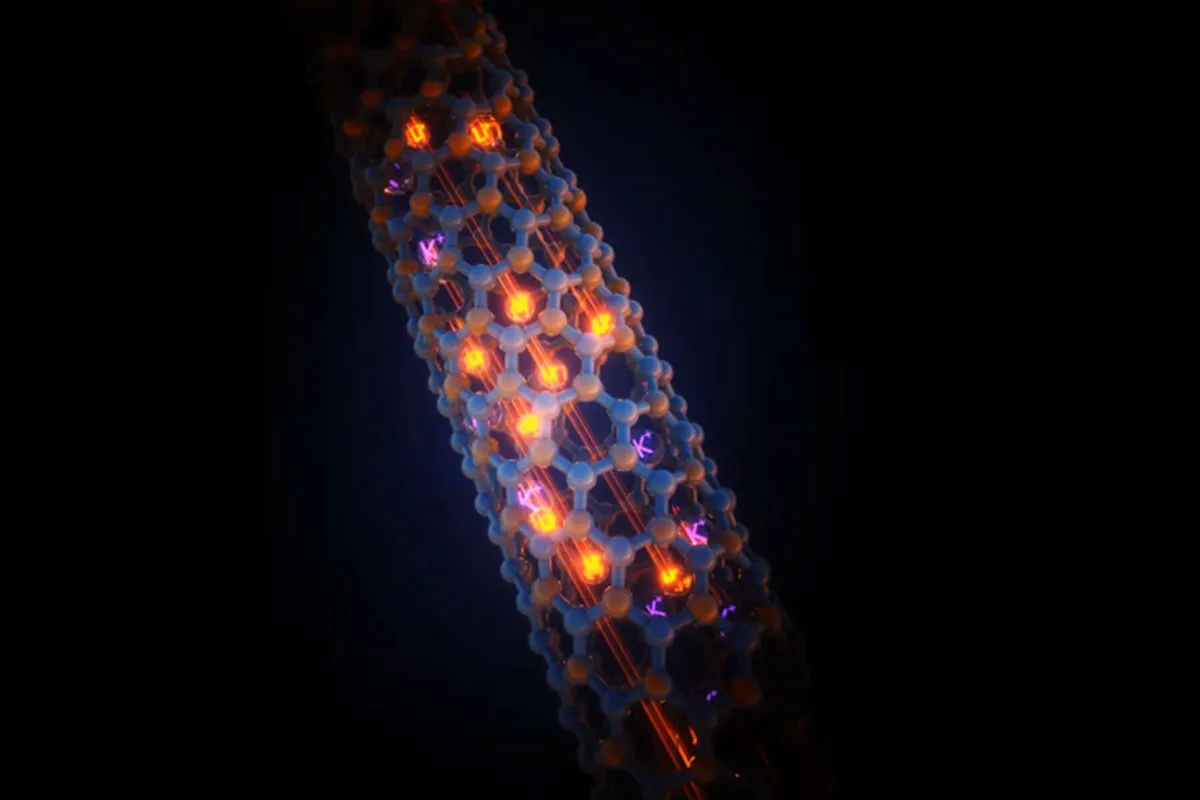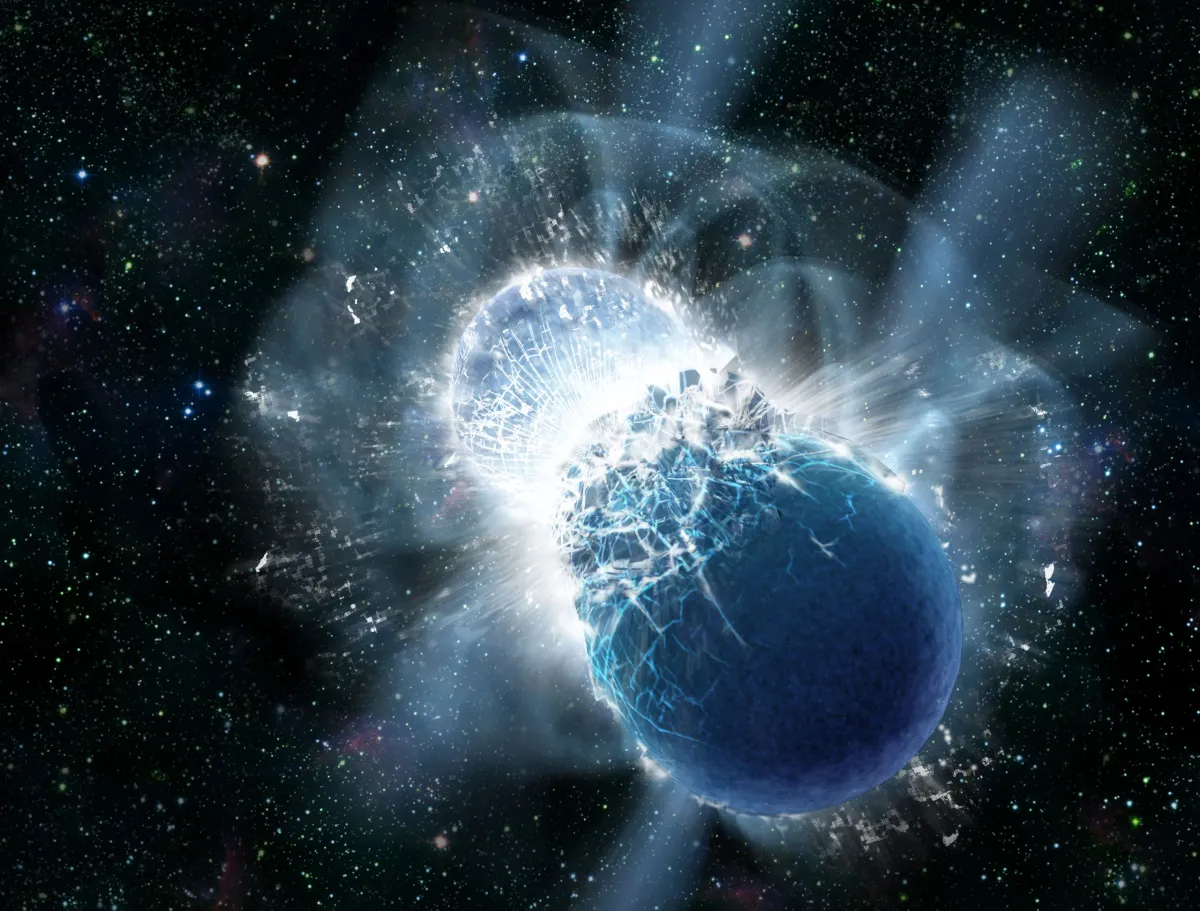
A new simulation powered by machine learning is helping scientists understand how the universe creates its heaviest elements. These elements include gold and uranium.
Scientists believe these heavy elements are made during violent cosmic events. These events include neutron star mergers. However, simulating these processes in detail has been very difficult.
Now, researchers from GSI/FAIR and their partners have created a new model. This model uses machine learning to better understand how elements form during extreme events like neutron star mergers.
We're a new kind of news feed.
Regular news is designed to drain you. We're a non-profit built to restore you. Every story we publish is scored for impact, progress, and hope.
Start Your News DetoxFor the first time, the team used a deep learning neural network in their simulations. This helped them model the energy released during the r-process, which creates heavy elements. Their findings were published in Physical Review D.
Many chemical elements are made in powerful events like supernova explosions and neutron star mergers. These events create huge amounts of energy and free neutrons. This allows for the rapid neutron-capture process, or r-process. This process makes many elements heavier than iron. During the r-process, atomic nuclei quickly absorb neutrons. These neutrons then turn into protons, building heavier and heavier elements.
Dr. Oliver Just, the lead author of the study, explained that modeling these complex reactions requires immense computing power. This often means models have to be simplified. He noted that their new model, RHINE, uses artificial intelligence and offers an efficient solution.
RHINE Uses Deep Learning for r-Process Heating
RHINE stands for "r-process heating implementation in hydrodynamic simulations with neural networks." It uses a deep learning neural network to show the energy released by nuclear reactions during the r-process in simulations. This energy release, called heating, can greatly affect how material moves during an explosion. It also impacts the light signals, like kilonovae, seen after neutron star mergers.
Dr. Zewei Xiong, who helped design the machine learning models, explained the process. First, the machine learning models are trained using many reference calculations. These calculations include a full set of nuclear reactions. Then, these models are used in hydrodynamic simulations to estimate the heating rates during the r-process with minimal effort.
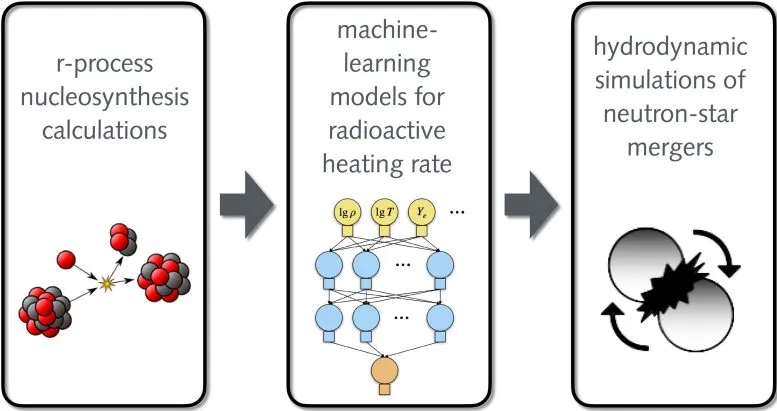
The researchers validated their machine learning method against reference data. The strong agreement shows that machine learning models can save a lot of computing time. They also found that r-process heating is an important effect that needs to be better included in future models.
The team believes RHINE will allow for more detailed simulations. This will help connect experimental results from the upcoming FAIR facility with astronomical observations of stellar explosions and neutron star mergers.
Deep Dive & References
- r-process heating implementation in hydrodynamic simulations with neural networks - Physical Review D, 2026
The RHINE source code is publicly available. The European Research Council (ERC) was among the co-funders of this project.