Turns out, how fast a planet spins isn't just a fun fact for trivia night. It's a cosmic fingerprint, a “fossil record” of its tumultuous formation. And new research just used this ancient clue to help solve a massive space mystery.
Astronomers have long suspected that a planet's heft and its hustle are linked. Think Jupiter and Saturn: colossal gas giants, yet they whip around their axes in just 10 hours. But what about worlds way out there, beyond our solar system's cozy confines?
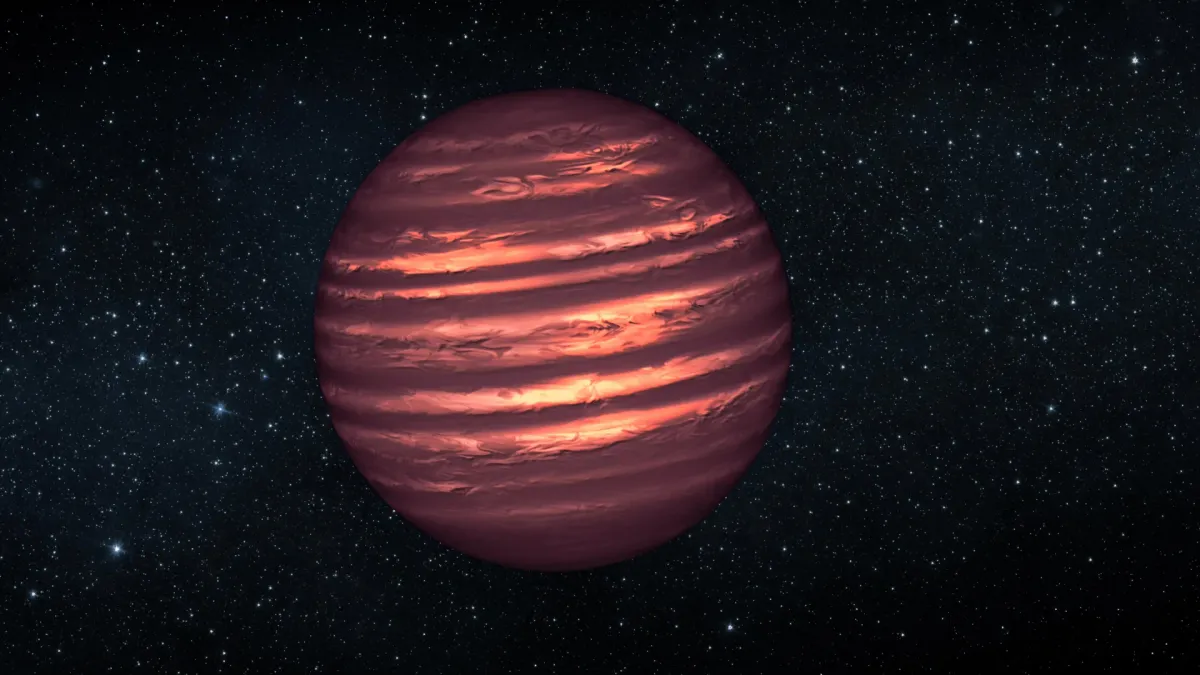
To find out, researchers aimed the W. M. Keck Observatory in Hawai'i at 32 giant gas planets and brown dwarfs orbiting other stars. (Brown dwarfs, for the uninitiated, are basically 'failed stars' — too big to be planets, too small to ignite.) What they found was a bit of a cosmic head-scratcher: giant gas planets generally spin faster than their more massive brown dwarf cousins, even when accounting for size and age. Let that sink in for a moment.
We're a new kind of news feed.
Regular news is designed to drain you. We're a non-profit built to restore you. Every story we publish is scored for impact, progress, and hope.
Start Your News DetoxThe Universe's Tiny Telltales
This international posse, led by Northwestern University, didn't just stop at 32. They pooled data from other studies, amassing a frankly ridiculous dataset of nearly 100 stellar companions, giant planets, and free-floating brown dwarfs. Their findings, published in The Astronomical Journal, are helping to untangle how these distant, often bafflingly far-flung worlds actually come into being.
Some might have slowly accreted from swirling disks of gas and dust around young stars. Others might have burst into existence more like stars do, through a dramatic gravitational collapse. The spin, it seems, is the key.
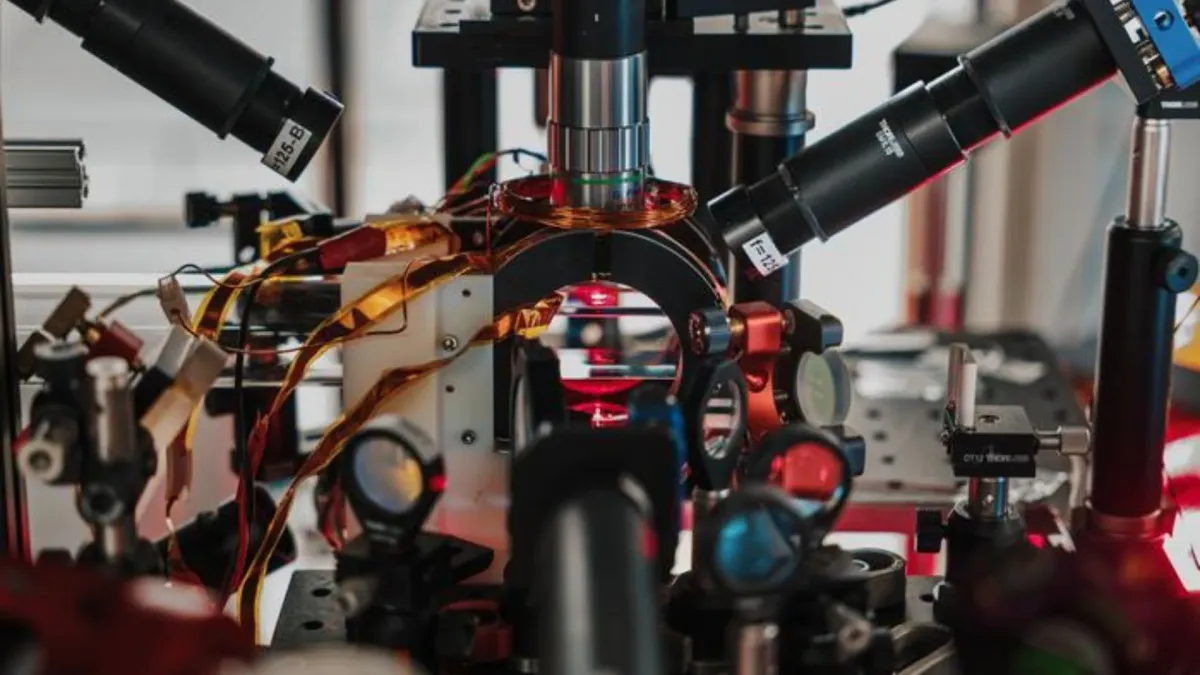
How do you measure the rotation of a celestial body hundreds of light-years away? With some seriously clever tech, naturally. They used the Keck Planet Imager and Characterizer (KPIC), an instrument that snags direct light from these distant worlds. As a planet rotates, atmospheric features create minuscule shifts in its light spectrum. Measuring those shifts is like watching a cosmic speedometer. According to Dino Chih-Chun Hsu, the lead author from Northwestern, a planet's spin is a direct link to the physical processes that sculpted it millions of years ago. The team's results suggest that both a planet's mass and its mass relative to its star's mass dictate its final spin speed. This helps scientists narrow down the formation story.
Magnetic Fields: The Cosmic Brakes
Take the HR 8799 system, for example. Here, a gas giant about seven times Jupiter's mass spins six times faster than a brown dwarf companion that's a whopping 24 times Jupiter's mass. Why the dramatic difference? Scientists suspect it's all down to magnetic fields.
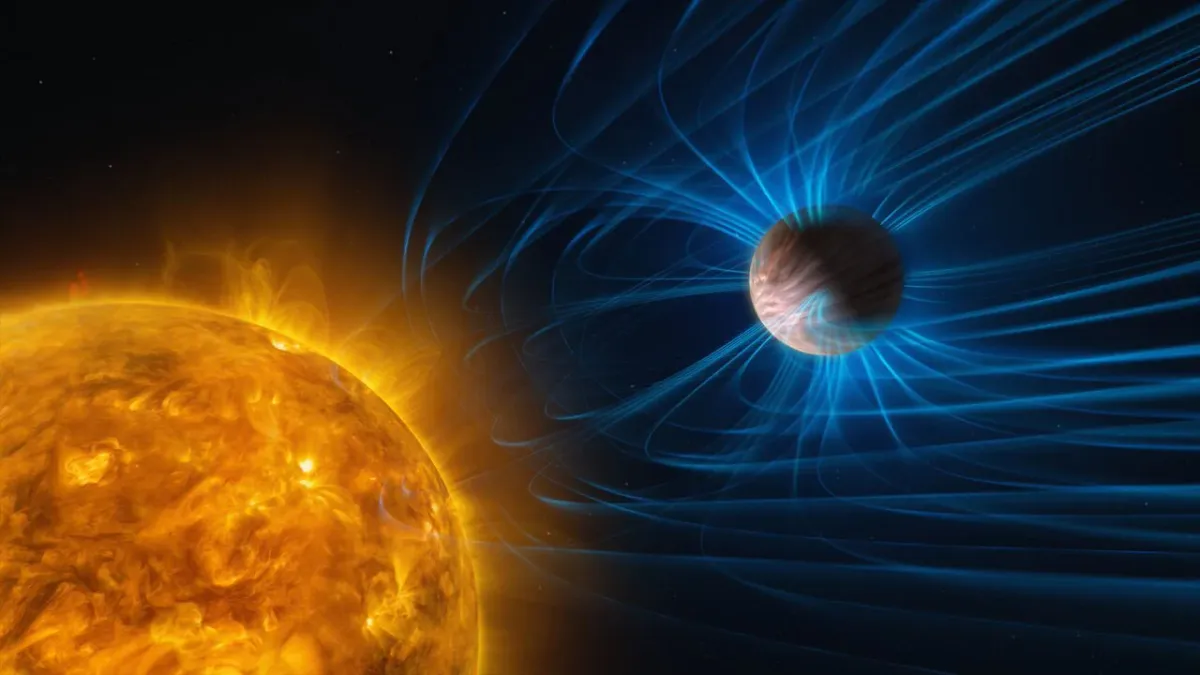
A stronger magnetic field can grapple more intensely with the surrounding disk of material in its early days, effectively putting the brakes on its rotation. The more massive brown dwarf likely had a beefier magnetic field, causing it to lose more of its initial spin. Which, if you think about it, is both impressive and slightly terrifying.
These findings aren't just for distant galaxies; they shed light on our own cosmic backyard. Hsu notes that how angular momentum gets divvied up among planets shapes an entire system. Even Earth’s rotation and magnetic field are tied to that initial spin-sharing agreement. KPIC is, to put it mildly, a groundbreaking instrument, letting scientists probe exoplanets in ways previously thought impossible.
The team isn't stopping there. Next up: rogue planets, the cosmic wanderers that float freely through space. They're also eyeing new tech like the Keck Observatory’s HISPEC (High-resolution Infrared Spectrograph for Exoplanet Characterization), set to launch in 2027. This will allow them to measure the spins of even smaller, more distant worlds, perhaps even confirming if our own Jupiter is just, well, average.
It seems we're just scratching the surface of what a little spin can tell us. And with bigger telescopes and fancier instruments, the universe's fossil record is about to get a whole lot clearer.