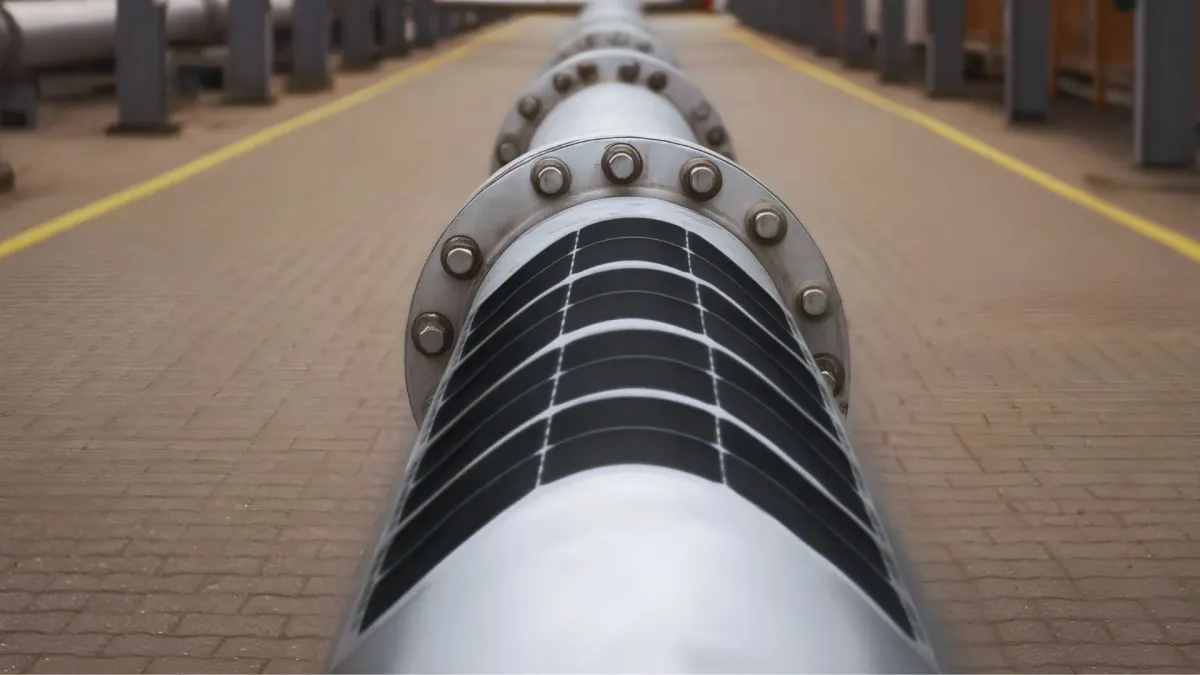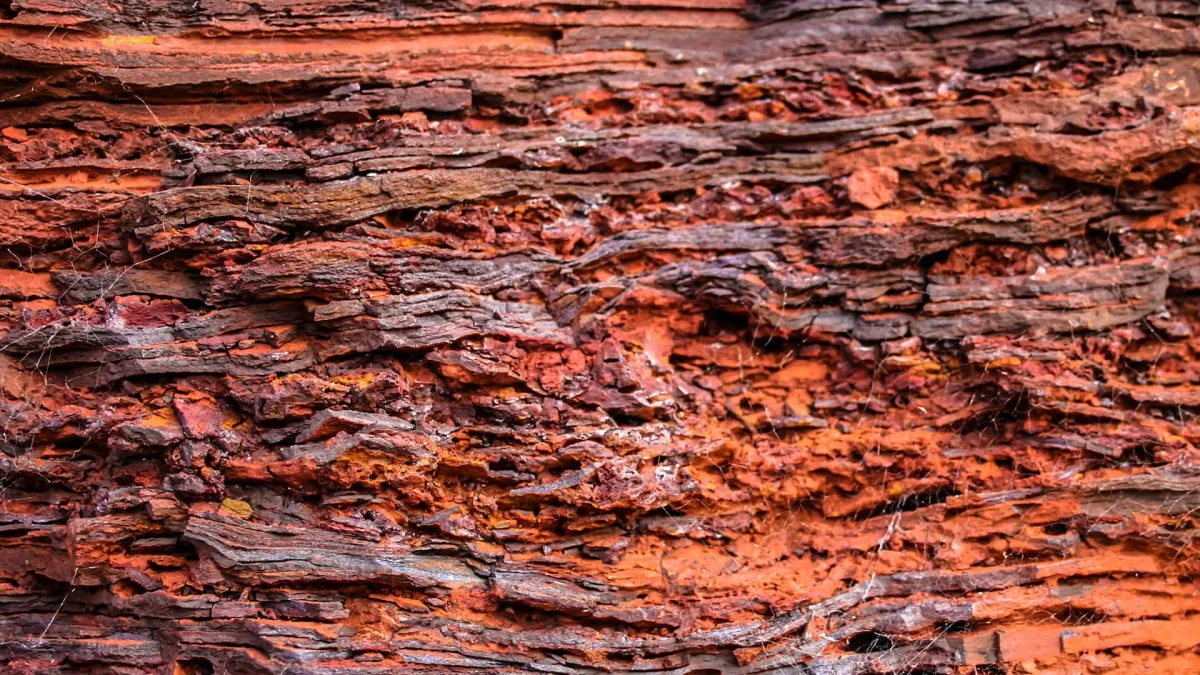
Researchers have found that iron-rich rocks in Western Australia can naturally create hydrogen. They also discovered a way to boost this process. If scaled up, the vast rock formations in the Pilbara region could become a major new source of clean energy for Australia and the world.
Magnetite Could Generate Hydrogen Underground
Scientists at Edith Cowan University (ECU) focused on magnetite. This mineral is common in Western Australia's large iron ore deposits.
The ECU team found that magnetite releases hydrogen gas. This happens when it reacts with hot water under conditions similar to those deep underground.
We're a new kind of news feed.
Regular news is designed to drain you. We're a non-profit built to restore you. Every story we publish is scored for impact, progress, and hope.
Start Your News DetoxThe researchers also found a way to make the process more active. By injecting a special solution into banded iron formations, they increased hydrogen generation. This suggests that naturally produced hydrogen could be enhanced underground.
Associate Professor Alireza Keshavarz noted that Australia could have a huge, untapped energy reserve. He believes there is enough hydrogen for Australia to benefit for generations. It could also allow Australia to become a major exporter of clean energy.
Recreating Deep Underground Conditions
To study the process, researchers put magnetite samples in water. They heated the water to 200°C and kept it under high pressure for 60 days. These conditions mimicked the hot, pressurized environment deep below Earth's surface.
The experiments showed how natural hydrogen forms within rock. They also revealed the conditions needed for continuous production.
These findings are especially important for Western Australia. The region has some of the largest banded iron formations on Earth.
Lead author Kaveh Moghanirahimi said unlocking this resource could transform Australia's energy future. He also sees potential for Western Australia to strengthen its energy independence.
From Lab to Natural Hydrogen Exploration
Professor Stefan Iglauer from ECU's School of Engineering said the results help bridge the gap. They connect lab experiments to real underground rock formations.
The study also found that the amount of magnetite isn't the only factor. The rock's structure also matters. Water needs to move through the rock and reach fresh mineral surfaces.
This means fractures, pores, and other pathways in the rock are crucial. They determine if natural hydrogen can be generated efficiently enough to be a practical energy source.
Deep Dive & References
Geometry-driven controls on hydrothermal natural hydrogen generation from magnetite mineral - International Journal of Hydrogen Energy, 2026