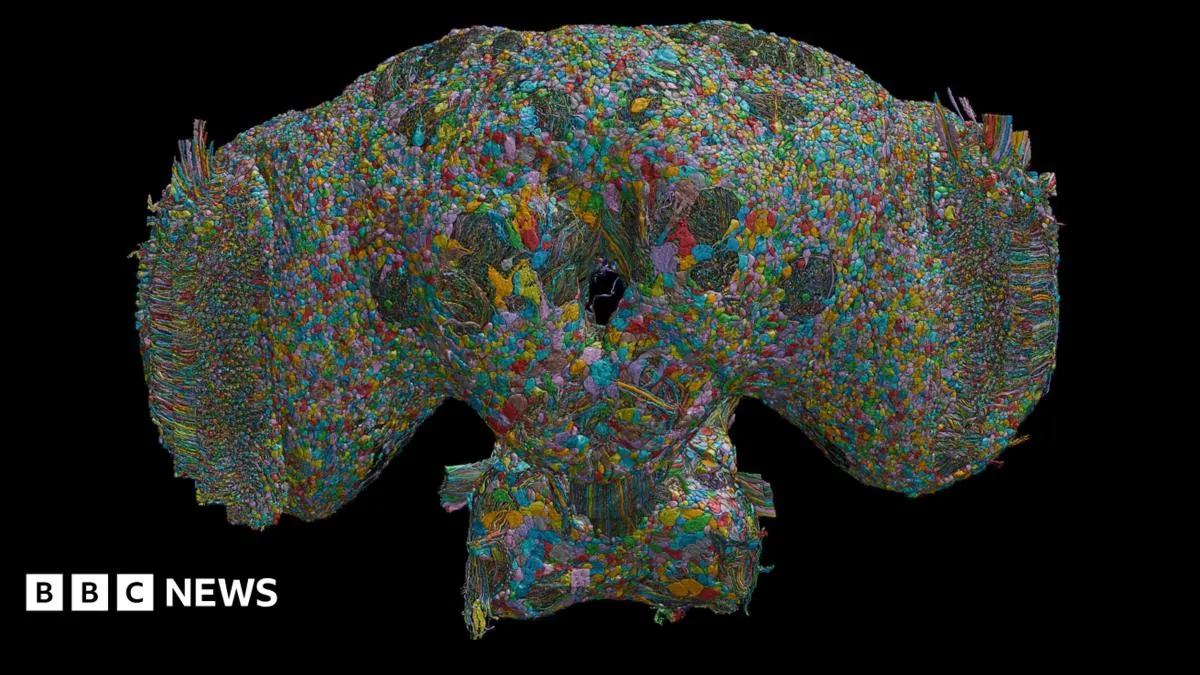
Scientists have mapped the brain connections of male fruit flies. This follows a similar map created for female flies two years ago. This detailed work could help us understand human behaviors and conditions like autism and schizophrenia.
Professor Gregory Jefferis, who co-led the research, called this a "really important new avenue in neuroscience." He compared it to inventing a powerful new telescope for understanding the universe.
Uncovering Brain Differences
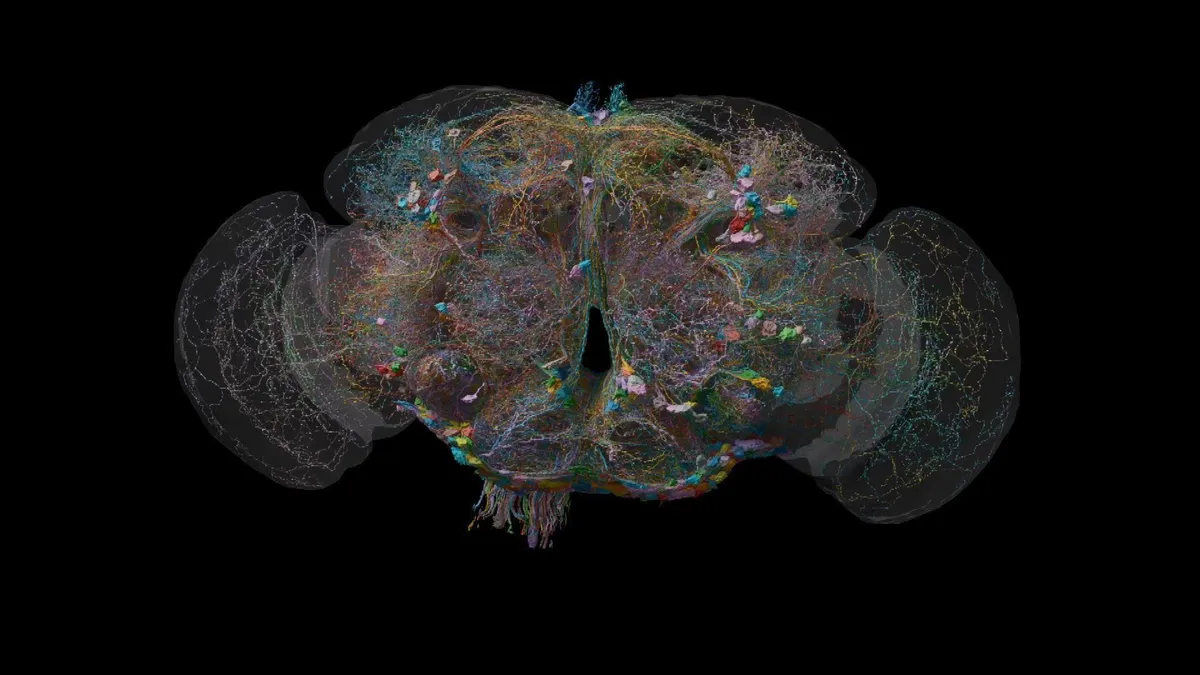
The fly brain is tiny, about the size of a pinhead. Yet, it is very efficient and can even outsmart advanced AI. Jefferis' team carefully analyzed every nerve cell and connection in a male fruit fly. They then created a 3D map and compared it to the female map.
We're a new kind of news feed.
Regular news is designed to drain you. We're a non-profit built to restore you. Every story we publish is scored for impact, progress, and hope.
Start Your News DetoxThey found that about 95% of the cells are the same in both male and female fly brains. However, the remaining 5% are enough to cause very different behaviors. Dr. Isabella Beckett, a lead author of the study, noted these small differences lead to big changes.
For example, during courtship, male flies track females. Researchers found specific brain circuits for this in males, which enhance their visual tracking. There are even bigger differences in circuits related to aggression, as males fight more often.
Male flies also have unique wiring for their "love song" circuit. They vibrate their wings to make a specific sound to attract females. If the song isn't right, the female might reject the male.
Genes and Behavior
These differences in male and female fly brains are controlled by two main genes. Scientists have known about these genes and their link to behaviors for years. But they could not see how the genes actually shaped the brain. Now, they can see the exact wiring these genes produce.
The research helps scientists understand how genes influence behavior. Dr. Jefferis explained that the fly brain comparison gives a good way to study this. He noted that human behaviors, like those seen in schizophrenia and autism spectrum disorders, also have a strong genetic basis.
Future Applications
This research could also help improve AI and computer systems. Dr. Jefferis believes that efficient AI will need more inspiration from biology. Real biological wiring diagrams could be key. Some researchers are already using the fly brain in artificial networks to help control AI systems.
This study involved collaborators from HHMI Janelia Research Campus, the University of Cambridge, Google Research, and the Champalimaud Foundation.