Remember that neat, tidy line of ape-to-human evolution you saw in textbooks? Yeah, about that. Scientists are now saying our ancestral family tree might need a serious pruning, or perhaps, a complete re-drawing by someone who prefers abstract art.
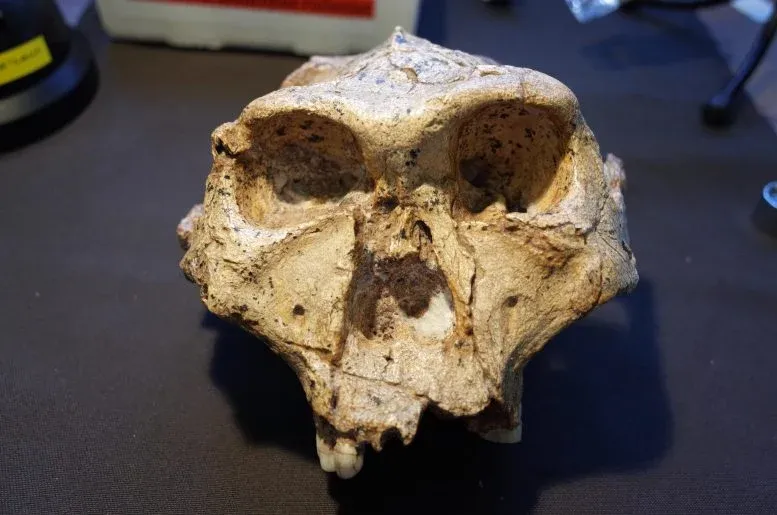
New research from Monash University suggests we should lump all human species and their close fossil relatives from the last 4 to 5 million years under the genus Homo. That's right, your old pals Paranthropus and Australopithecus? They might just be honorary members of the Homo club now.
For decades, human evolution was presented like a ladder: ape-like ancestors, then Australopithecus, then early Homo, finally culminating in us, Homo sapiens. Simple. Understandable. Also, apparently, increasingly wrong. Recent fossil finds have been blurring those once-distinct lines faster than a toddler with a crayon.
We're a new kind of news feed.
Regular news is designed to drain you. We're a non-profit built to restore you. Every story we publish is scored for impact, progress, and hope.
Start Your News DetoxDr. Ian Towle, a researcher at Monash, dryly noted that our current classification system is becoming about as useful as a chocolate teapot. The old distinctions based on behavior, environment, and even physical traits are dissolving. It turns out some Homo members had surprisingly small brains, while Paranthropus and Australopithecus were doing some rather sophisticated things we previously thought were exclusive to Homo.
The Ancestral Group Chat
Modern science likes to group species based on shared ancestry – a common ancestor and all its descendants. Think of it like a very exclusive, very ancient group chat. Human evolution has been a bit slow to join this party, still clinging to older, more linear ways of thinking.
Dr. Towle argues that bringing Australopithecus and Paranthropus into the Homo fold would create a more consistent, less headache-inducing view of our complex origins. It would also reduce the need for scientists to constantly rewrite the textbooks every time some ancient bone pops out of the ground looking suspiciously like three different species at once.
Because, as he points out, the more we learn, the more we realize our family tree isn't a straight line at all. It's more like a tangled, sprawling bush with branches going every which way. And maybe, just maybe, that's a more accurate, and certainly more entertaining, way to look at where we came from.