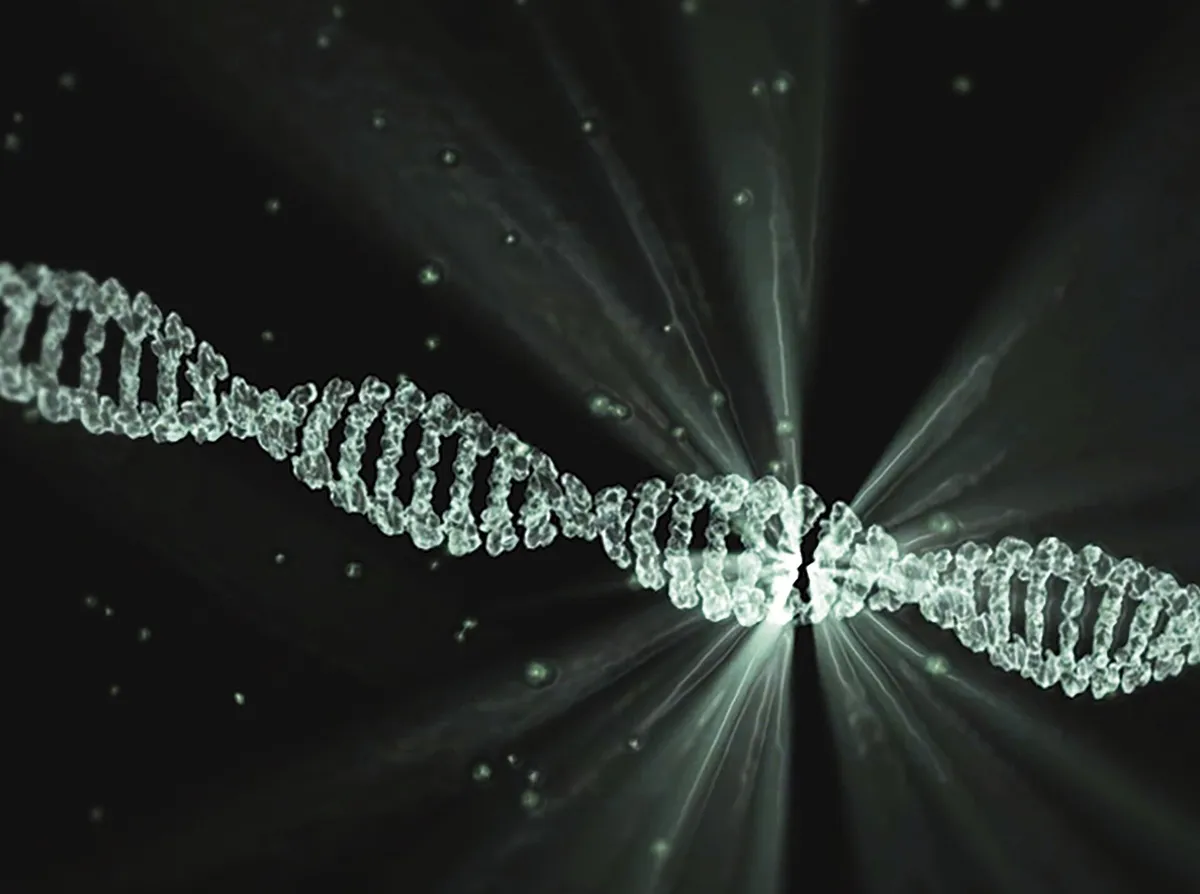
For billions of years, life on Earth has been playing with a four-letter genetic alphabet: A, T, C, G. It’s worked out pretty well. But what if you could add more letters to the biological lexicon?
Scientists at UC San Diego just dropped a bombshell: a key natural enzyme, RNA polymerase, can accurately read and copy an eight-letter genetic alphabet. Because apparently, four just isn't enough anymore.
Think of it as upgrading from a basic rotary phone to a smartphone. The core function is the same, but the possibilities just exploded. This isn't just a lab curiosity; it's a massive leap for synthetic biology, showing that our cells' natural machinery is surprisingly open-minded about new genetic information.
We're a new kind of news feed.
Regular news is designed to drain you. We're a non-profit built to restore you. Every story we publish is scored for impact, progress, and hope.
Start Your News DetoxThe Enzyme That Just Got Smarter
The star of this show is RNA polymerase. Its usual gig is reading DNA and making RNA, which is basically the first domino in the whole gene expression process. But in a move that would make any English teacher proud, it just aced a much tougher spelling test.
Using some seriously high-tech imaging (cryo-electron microscopy, for the curious), researchers watched E. coli's RNA polymerase doing its thing. And what it was doing was recognizing and using two synthetic base pairs – genetic letters that simply don't exist in nature. The enzyme handled them like old friends, showing the same recognition patterns it uses for the natural A, T, C, and G.
This wasn't a fluke, either. In a separate study, the same team found that RNA polymerase could also recognize another pair of synthetic letters, even ones that don't need hydrogen bonds to stick together. Which, if you think about it, is both impressive and slightly terrifying. Your biological machinery is more adaptable than you might have given it credit for.
Why This Matters (Beyond Just Showing Off)
So, why teach an old enzyme new tricks? The implications are huge. Imagine designing biological systems that can create compounds we've never seen, diagnose diseases with unprecedented precision, or even treat them in entirely new ways.
Previous work has already used expanded genetic alphabets to create synthetic DNA capable of finding liver cancer cells. Now, by understanding how our cellular tools can process these new letters, we're laying the groundwork for a future where biology isn't just read, but rewritten, with a much richer vocabulary. Get ready for some wild new biological novels.