Japan's Ministry of Economy, Trade and Industry (METI) is dropping ¥60 billion — a cool $400 million — into private fusion projects. The goal? To finally yank fusion power out of the lab and into the real world, with a demonstration by the 2030s. Because apparently, the future needs more continuous, sun-like energy, and fewer power bills.
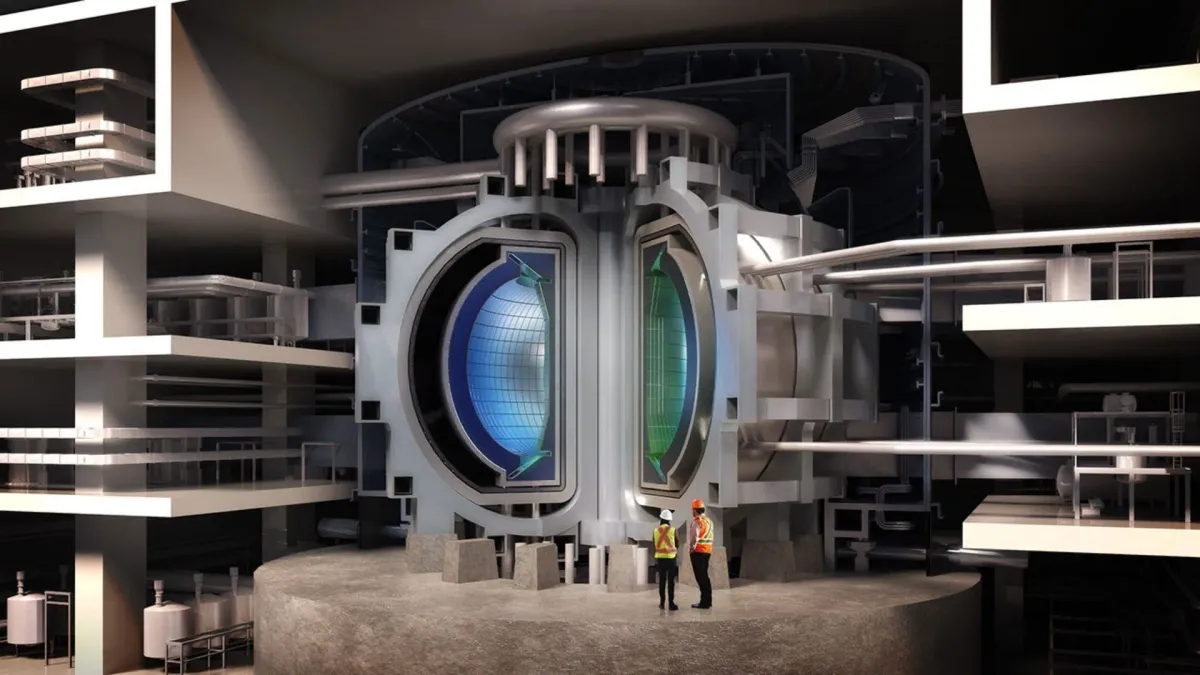
While the funding isn't officially in anyone's pocket just yet, Helical Fusion is a front-runner. They're not just aiming for fusion; they're aiming for continuous fusion, using something called a Helical Stellarator. Think of it as a really, really complicated, magnetic pretzel designed to hold plasma hotter than the sun for an extended period. Which, if you think about it, is both impressive and slightly terrifying.

The Quest for Infinite Power
METI isn't just handing out cash for a good idea. Companies need to hit specific technical and commercial milestones. This isn't just about keeping plasma stable (though that's a big part of it). It's about safety protocols, maintenance plans, and — get this — actually figuring out how to work with communities that might have one of these giant magnetic pretzels in their backyard. Because apparently that's where we are now.
We're a new kind of news feed.
Regular news is designed to drain you. We're a non-profit built to restore you. Every story we publish is scored for impact, progress, and hope.
Start Your News DetoxHelical Fusion's tech is built on decades of stellarator research from Japan's National Institute for Fusion Science (NIFS). NIFS operates the Large Helical Device (LHD), which has already held plasma stable for an astonishing 3,268 seconds and hit temperatures over 180 million°F. Let that satisfying number sink in.
Helical Fusion plans to take this research and turn it into something that actually generates power. They've got a roadmap, the Helix Program, which includes developing high-temperature superconducting magnets and an integrated blanket and divertor system. These parts will eventually come together in a demonstration device called Helix HARUKA, before moving on to Helix KANATA — their first power-generating fusion plant. Sounds like a sci-fi novel, doesn't it?

Work on the magnets is already underway at Helical Fusion's site on the NIFS campus. Over 30 Japanese companies are involved, bringing expertise in everything from precision manufacturing to complex systems engineering. Because building a star on Earth turns out to be a team sport, requiring more than just working plasma. Magnets, heat management, structural parts, and power equipment all have to play nice under conditions that would melt most things.
Takaya Taguchi, CEO and co-founder of Helical Fusion, sees this as Japan's moment to leverage its deep fusion knowledge. The Helical Stellarator, he believes, is a prime candidate for commercial fusion. Now, they just need to prove it can move from a lab experiment that wows scientists to a power plant that keeps the lights on. No big deal, right? Japan's fusion sector is about to face its biggest test yet: making experimental systems act like actual, reliable infrastructure.