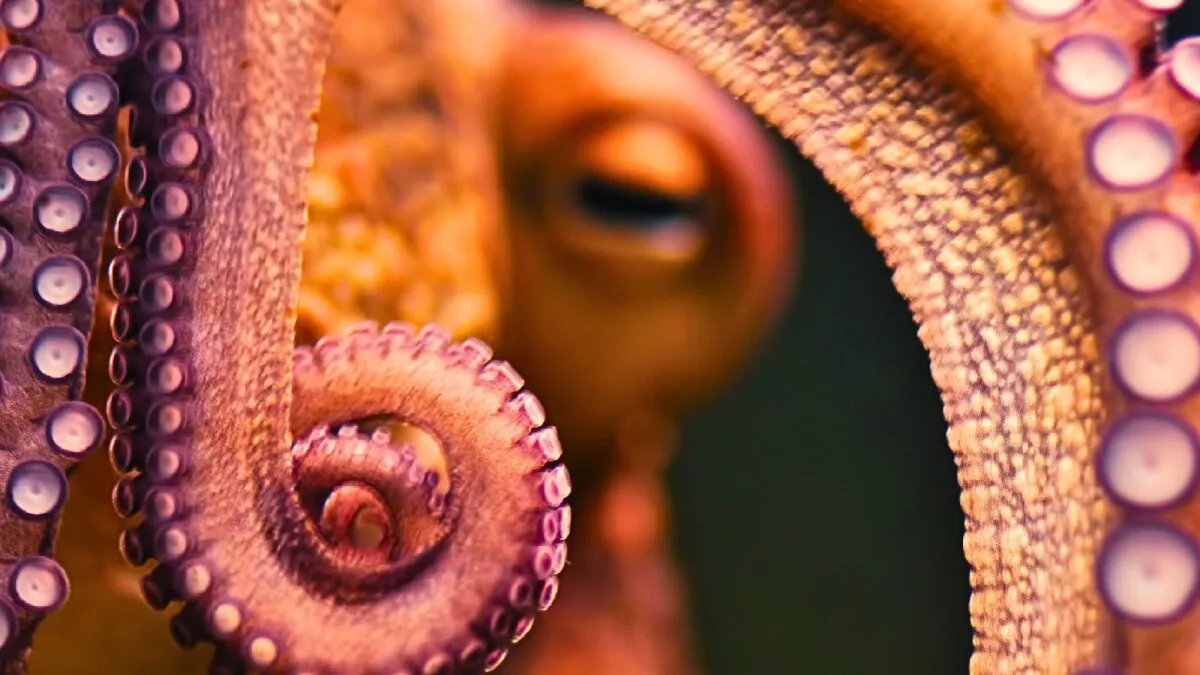
Bus-sized cephalopods, like the legendary kraken, might have been top predators 100 million years ago. These intelligent creatures likely hunted prey in the Late Cretaceous oceans.
For a long time, scientists thought large vertebrates like mosasaurs, plesiosaurs, sharks, and big fish were the main ocean predators. Invertebrates like squid and ammonoids were usually seen as prey.
Giant Octopuses Ruled the Seas
New research suggests that some giant octopuses also belonged to this top predator group. Scientists described two species of finned octopus, Nanaimoteuthis haggarti and N. jeletzkyi. These lived about 100 million to 75 million years ago and could grow up to 60 feet (about 19 meters) long.
We're a new kind of news feed.
Regular news is designed to drain you. We're a non-profit built to restore you. Every story we publish is scored for impact, progress, and hope.
Start Your News DetoxThese octopuses could be among the largest invertebrates ever to exist.
Yasuhiro Iba, a paleontologist at Hokkaido University, noted that the Cretaceous ocean likely had giant octopuses as important predators, alongside marine reptiles and sharks. He explained that these large predatory invertebrates were previously overlooked, making ancient food webs more complex than imagined.
Around 200 million years ago, during the late Mesozoic era, many shell-crushing predators emerged. This led to an evolutionary phase that shaped modern marine ecosystems. During this time, invertebrates were typically small prey. To survive, these soft-bodied animals developed hard, mineralized shells for protection.
However, some octopuses evolved differently. They demineralized their outer shells. This led to soft-bodied creatures with better swimming, improved eyesight, and higher intelligence.
Fossils of these non-tentacled octopuses (Octobrachia) have been found. But their place in the food chain was unclear because there was no direct evidence, like stomach contents. Clues from fossils, such as jaw shape, are not always reliable for understanding eating habits on their own.
Uncovering Ancient Eating Habits
To figure out the ecological role of the earliest finned octopuses, Iba and his team used a new method. They looked at the physical wear and tear on fossilized jaws to understand their carnivorous diet.
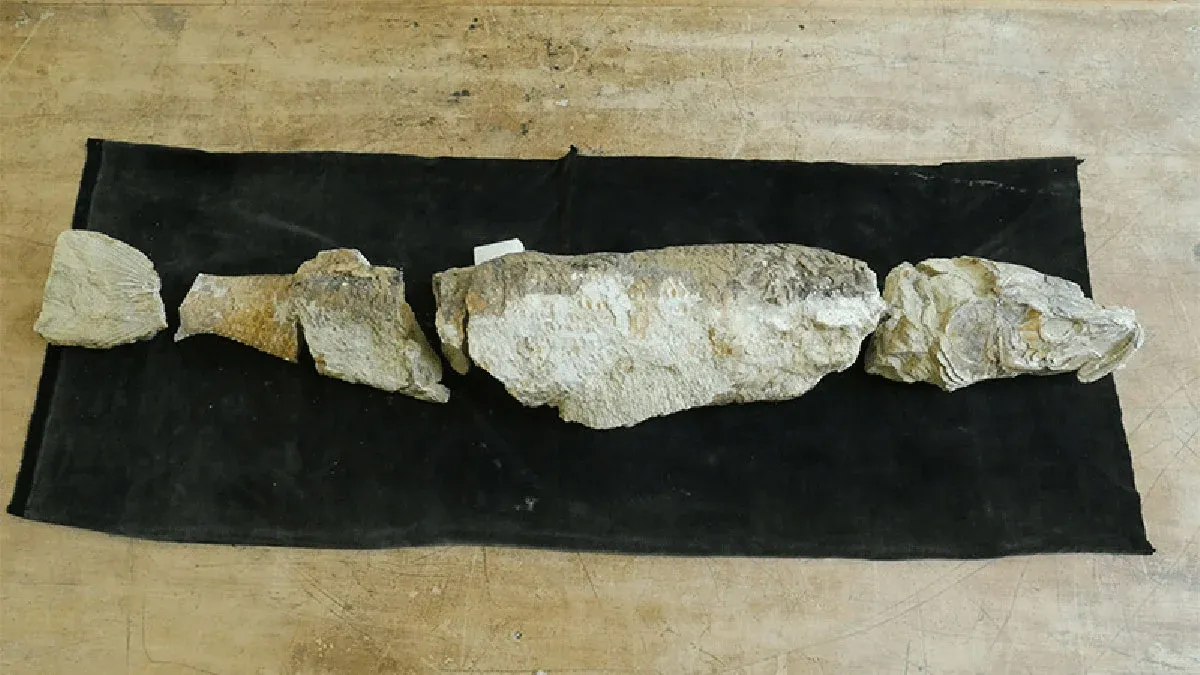
They analyzed 27 large fossilized jaws. The researchers searched for specific damage like chips, deep scratches, and polished surfaces. These types of damage occur when modern cephalopods (like squid, octopus, or nautilus) crack open hard-shelled prey.
N. jeletzkyi* and (B) N. haggarti, and (C) a lower jaw of the extant giant squid Architeuthis dux. Image: Ikegami et al., Science, 2026*
The team found significant wear, with up to 10% of the original jaw length missing due to severe rubbing. This suggests these octopuses had a strong bite force. They used it to crush the hard shells and bones of large prey.
Iba stated that the wear on Nanaimoteuthis jaws shows they ate prey with hard structures. This included ammonites, large bivalves, crustaceans, and fish bones.
Based on the largest fossilized jaw, N. jeletzkyi might have been 2.8 to 7.7 meters long. N. haggarti was estimated to be 6.6 to 18.6 meters long. Iba found the size of the jaws and the estimated body size from them to be the most surprising part.
The paleontologists also noticed uneven wear on the jaws. This suggests lateralized behavior, meaning the animals might have used one side more often when eating. In animals, this trait is linked to complex brain development and advanced intelligence.
Iba noted that while they cannot directly measure intelligence from fossils, these octopuses likely had some complex behaviors seen in modern octopuses.
Based on fossil deposits from that period, researchers think Cretaceous finned octopuses lived in different environments than their modern relatives. Today, finned octopuses prefer deep-sea habitats.
Iba believes this lineage might have later moved towards the smaller, mainly deep-sea lifestyles seen today.
Marine ecosystems changed a lot from the end of the Cretaceous into the Cenozoic era. Iba suggests that changes in predators, prey, and competition might have made it hard for giant octopuses to keep their ecological role. He added that future Cenozoic fossil records are needed to test this idea.
Deep Dive & References: The ecological role of Late Cretaceous finned octopuses inferred from jaw functional morphology - Science