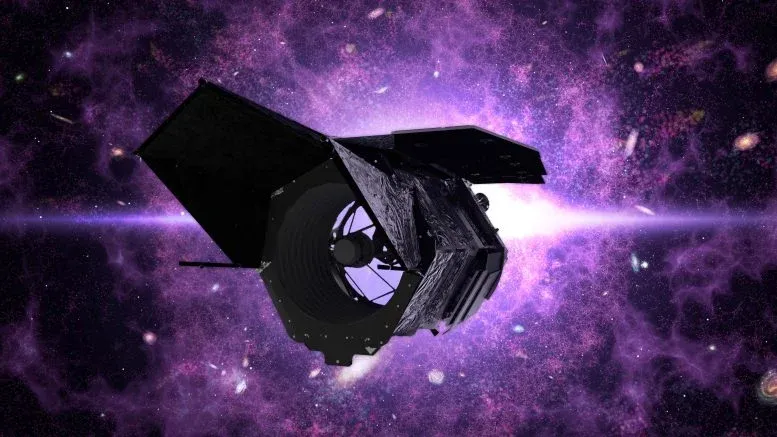
The universe, as it turns out, is full of exploding stars, ancient galaxies, and enough unseen worlds to keep scientists busy for millennia. Soon, they'll have a new toy to play with: the $4.3-billion Nancy Grace Roman Space Telescope.
Named after NASA's first chief astronomer, this observatory is set to launch on August 30th. Its mission? To untangle the universe's mysterious expansion and sniff out countless planets orbiting distant stars. But before it gazes upward, let's talk about how it came to be.
From Spy Satellite to Stargazer
Turns out, this cosmic detective has a past. About 15 years ago, NASA was cooking up plans for a telescope to hunt for Type 1A supernovas — those explosive stellar events that help measure the universe's expansion. This expansion is powered by the ever-elusive dark energy, a discovery so profound it snagged a Nobel Prize in 2011. Finding more of these cosmic fireworks is key to truly understanding what's going on out there, according to cosmologist Daniel Scolnic.
We're a new kind of news feed.
Regular news is designed to drain you. We're a non-profit built to restore you. Every story we publish is scored for impact, progress, and hope.
Start Your News DetoxThen, the plot thickened. The National Reconnaissance Office (NRO), the folks who handle surveillance satellites, gave NASA a ring. As Scolnic tells it, the NRO had an "amazing satellite sitting in a hangar" that they weren't using. Their question: Could NASA use it, you know, by pointing it upwards instead of downwards?
NASA, apparently not one to look a gift horse-turned-space-observatory in the mouth, said yes. After some serious re-engineering, that old spy satellite is now poised to become NASA's next big eye on the cosmos. Scolnic thinks it could fundamentally rewrite our understanding of the universe, especially since recent measurements are hinting that our current cosmic model might be, well, wrong. Roman is here to settle the debate.
Hubble's Speedy, Wide-Angle Cousin
While Hubble is known for its stunning, deep-field images, Roman brings a different kind of superpower: speed and scope. Julie McEnery, Roman's project scientist, explains that it has similar sensitivity and sharpness to Hubble, but its design lets it zoom through the cosmos at an astonishing pace.
"One month of observations to survey our Milky Way galaxy would take about a century with Hubble," McEnery casually observes. Let that satisfying number sink in.
Instead of zeroing in on single objects, Roman will be creating vast catalogs of the sky, making its data accessible to everyone, not just academics. A high school teacher in Kentucky and their students will get to see Roman's data at the same time as a Princeton professor. Because apparently, that's where we are now.
A Galaxy of Discoveries
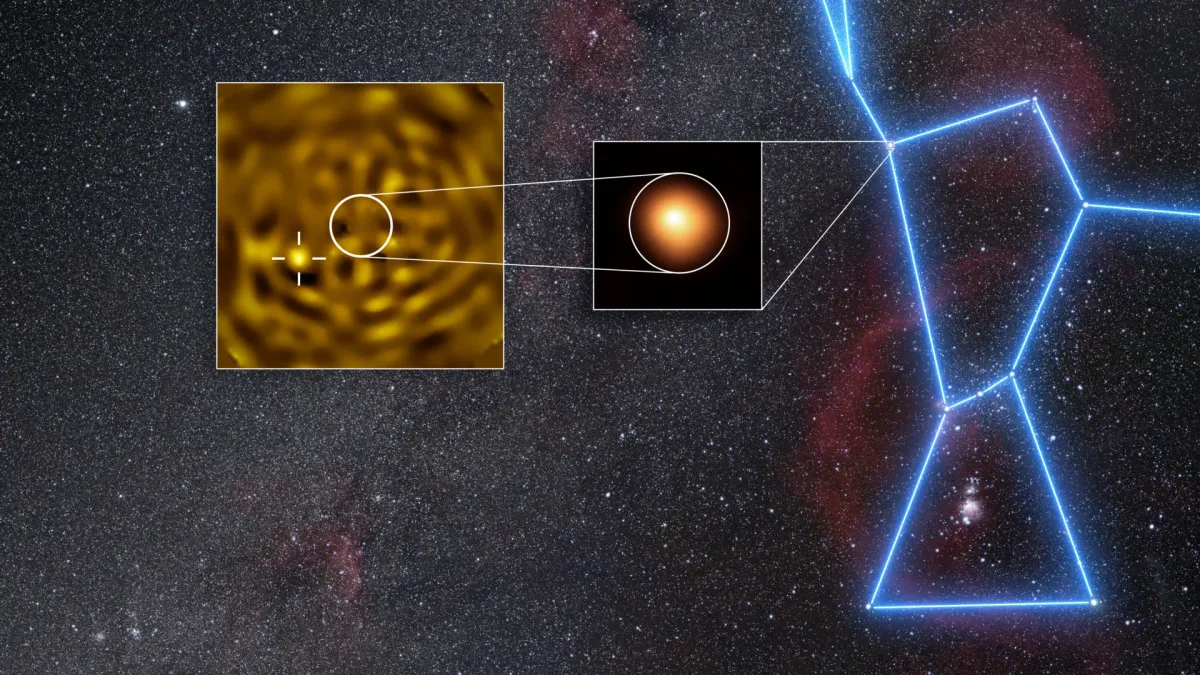
Scott Gauti, a professor at The Ohio State University, is practically vibrating with anticipation. His team developed a method called gravitational microlensing to spot planets around distant stars, measuring how planets subtly bend starlight as it passes by. Albert Einstein thought this idea, described in 1936, would be impractical. New technology, and Roman, are proving him delightfully wrong.
Gauti expects Roman to unearth planets "completely undetectable by any other method." This includes Jupiter- and Saturn-sized worlds chilling in the crowded center of our galaxy. Beyond new planets, Roman should also unveil new galaxies, giving us a clearer picture of the universe's grand design.
Predicting Roman's greatest hits over its five-year mission is tough. As Wendy Freedman, an astronomer at the University of Chicago, points out, "the history of astronomy really has shown that when you get a new capability, and especially a survey capability, you learn something new, something unexpected." She's completely open to what this telescope will find, and frankly, so are we. Because the best discoveries are always the ones you weren't even looking for.