A new prehistoric crocodile relative, Eosphorosuchus lacrimosa, has been identified from fossils found in New Mexico. These fossils are 210 million years old. The discovery was made alongside another crocodile species.
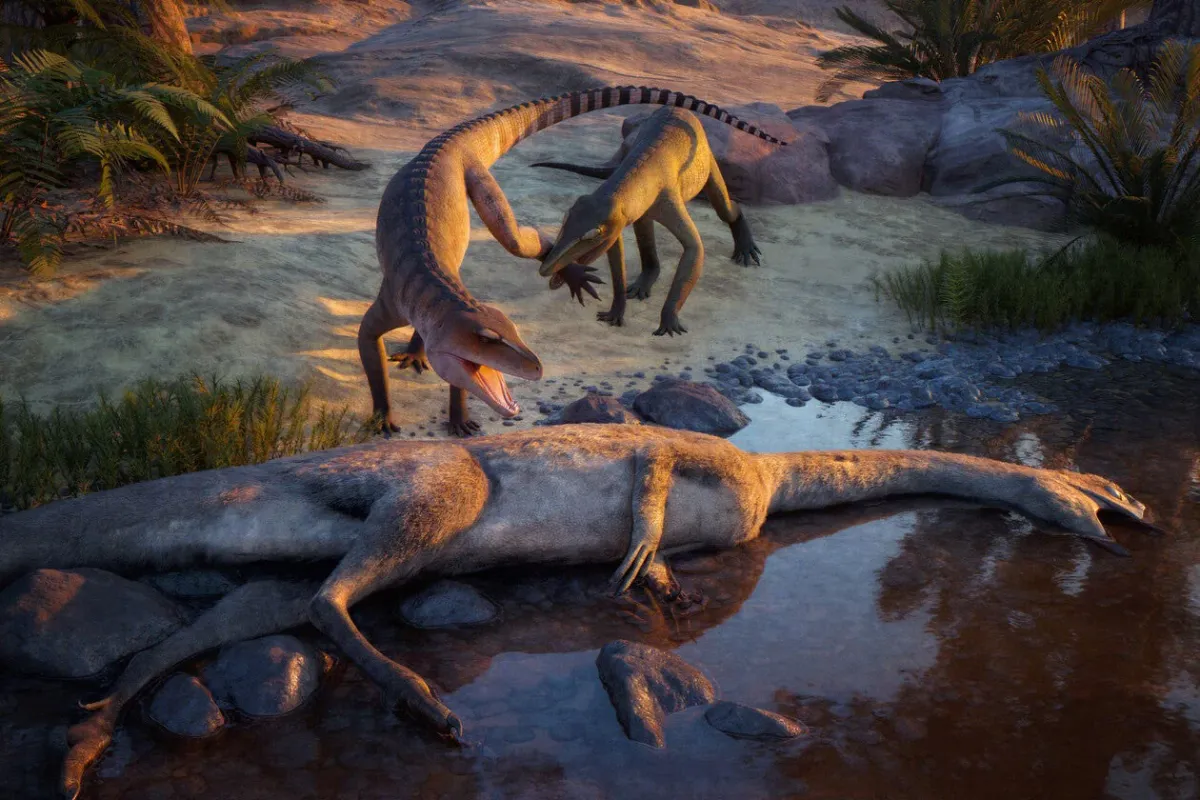
About 210 million years ago, two crocodile relatives lived near a humid riverbank in what is now northern New Mexico. Both were about the size of modern jackals.
One was Hesperosuchus agilis. It had a long snout, strong back legs, and smaller front legs. This animal lived on land, moved fast, and hunted near rivers.
We're a new kind of news feed.
Regular news is designed to drain you. We're a non-profit built to restore you. Every story we publish is scored for impact, progress, and hope.
Start Your News DetoxThe second crocodile relative was similar in size but built differently. It had a shorter snout, a stronger skull, and bigger jaw muscles. These features helped it bite larger prey. Both animals died at the same time.
They likely died during a sudden natural event, like a mudslide or flash flood. Their bodies were buried together. Unique conditions preserved their bones through many eras, including the Age of Reptiles and the rise of mammals. Eventually, their remains were dug up from large rock blocks now at Yale’s Peabody Museum of Natural History.
New Species Shows Early Crocodile Diversity
This discovery led Yale paleontologists to identify the short-snouted animal as a new species. They named it Eosphorosuchus lacrimosa.
Bhart-Anjan Bhullar, a Yale professor and curator at the Peabody Museum, said this shows how early crocodile relatives diversified. He is the senior author of the new study, published in Proceedings of the Royal Society B.
During the late Triassic period, two reptile groups competed for dominance. One group led to crocodiles and alligators. The other led to birds, which are dinosaurs. Dinosaurs at this time were slender, delicate animals that walked on two legs. Crocodiles were fast, four-legged predators, built low to the ground, similar to a jackal or a large fox.
Ghost Ranch Fossils Offer a Rare Glimpse
Bhullar explained that it's often hard to reconstruct ancient ecosystems. Fossils are usually incomplete, and it's not always clear if remains found together are from the same time and place. However, some fossil sites are exceptionally well-preserved.
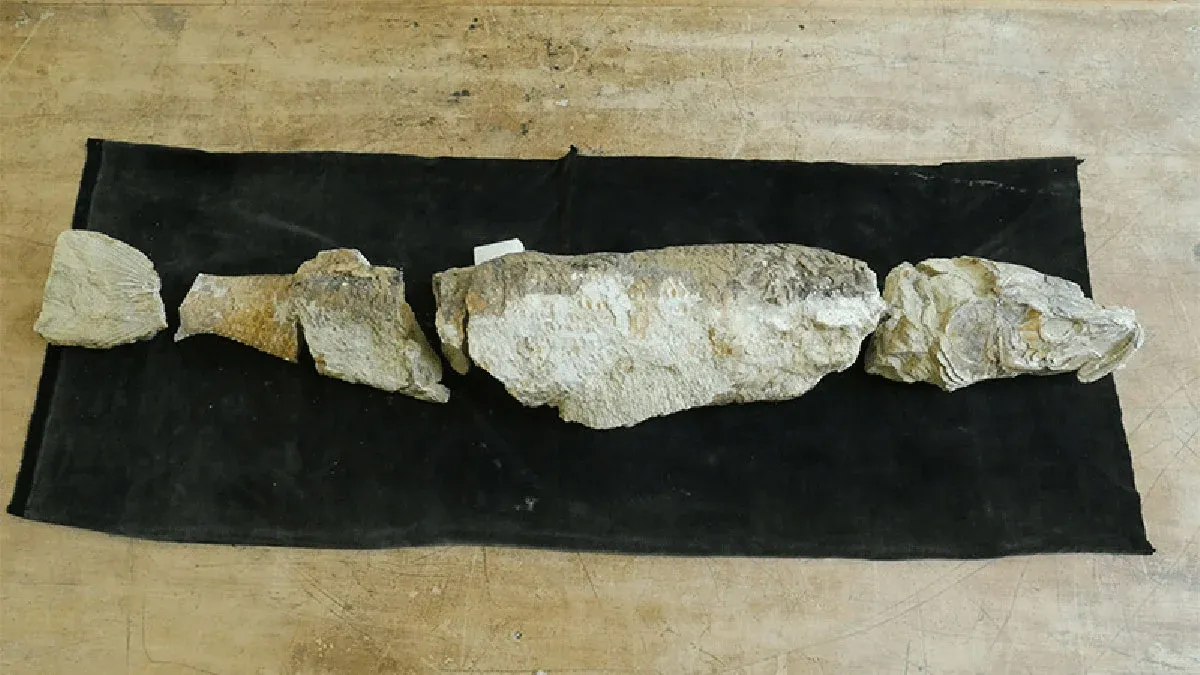
One such site is Ghost Ranch in New Mexico. Scientists have studied fossils there for decades. They found crocodile relatives, lizard relatives, fish, and dinosaurs like Coelophysis bauri. Two large sections from the "Ghost Ranch Bone Bed," about the size of a car, are kept at the Yale Peabody Museum.
The fossil was dug up in 1948. It was known for about 75 years but not fully studied or identified. Bhullar noticed that the Yale animal seemed to have a different face structure than other Hesperosuchus examples.
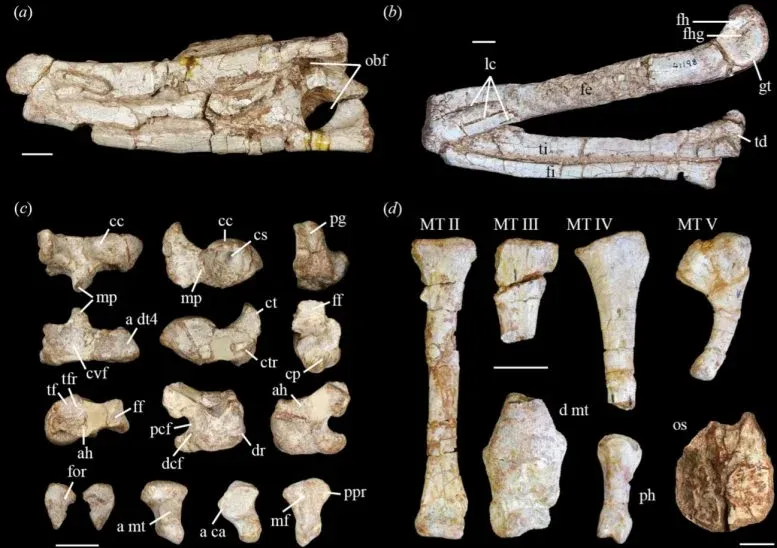 Left hindlimb of Eosphorosuchus lacrimosa: pelvis (a), leg bones (b), ankle (c), and foot (d). Credit: Miranda Margulis-Ohnuma
For the new study, Miranda Margulis-Ohnuma, a Ph.D. student at Yale, analyzed a CT scan of the fossil. The scan was done by Marilyn Fox, a former preparator at the Peabody Museum.
CT Scans Reveal a New Crocodile Relative
Using the scans, Margulis-Ohnuma digitally separated the fossil bone by bone. She found several differences from known Hesperosuchus specimens.
The new species, Eosphorosuchus, gets its name from the Greek god Eosphorus, meaning "dawn-bringer," and "soukhos," meaning crocodile.
Margulis-Ohnuma, the study's first author, noted that Eosphorosuchus is one of few well-preserved early crocodile relatives. Its presence with Hesperosuchus shows the "dawn" of different feeding styles in the lineage that led to modern crocodiles. She added that the specimen highlights how existing museum collections can still reveal new insights into life's history.
Fossil Discovery Captures a Frozen Moment
Researchers say this discovery offers a rare look into an ancient ecosystem. Closely related species had different roles by developing specialized ways of eating.
Bhullar said it's like a snapshot of a single moment 210 million years ago. These two animals competed and interacted. They might have even been looking at each other when they died.
Deep Dive & References
A short-snouted ‘sphenosuchian’ with unusual feeding anatomy demonstrates that ecological specialization occurred early in crocodylomorph evolution - Proceedings of the Royal Society B: Biological Sciences, 2026