For over a century, a fossil site in northwestern China has been giving paleontologists a serious headache. It's absolutely packed with beautifully preserved bird fossils, but scattered among them were these unsettling clusters of broken bones. They looked suspiciously like the regurgitated pellets modern birds of prey hack up after a meal. Everyone figured a predator was feasting, but the culprit was nowhere to be found.
Turns out, the missing piece of this very ancient, very gross puzzle has finally materialized. And it's a feathered dinosaur that might make you rethink everything you thought you knew about Velociraptors.
The Feathered Culprit
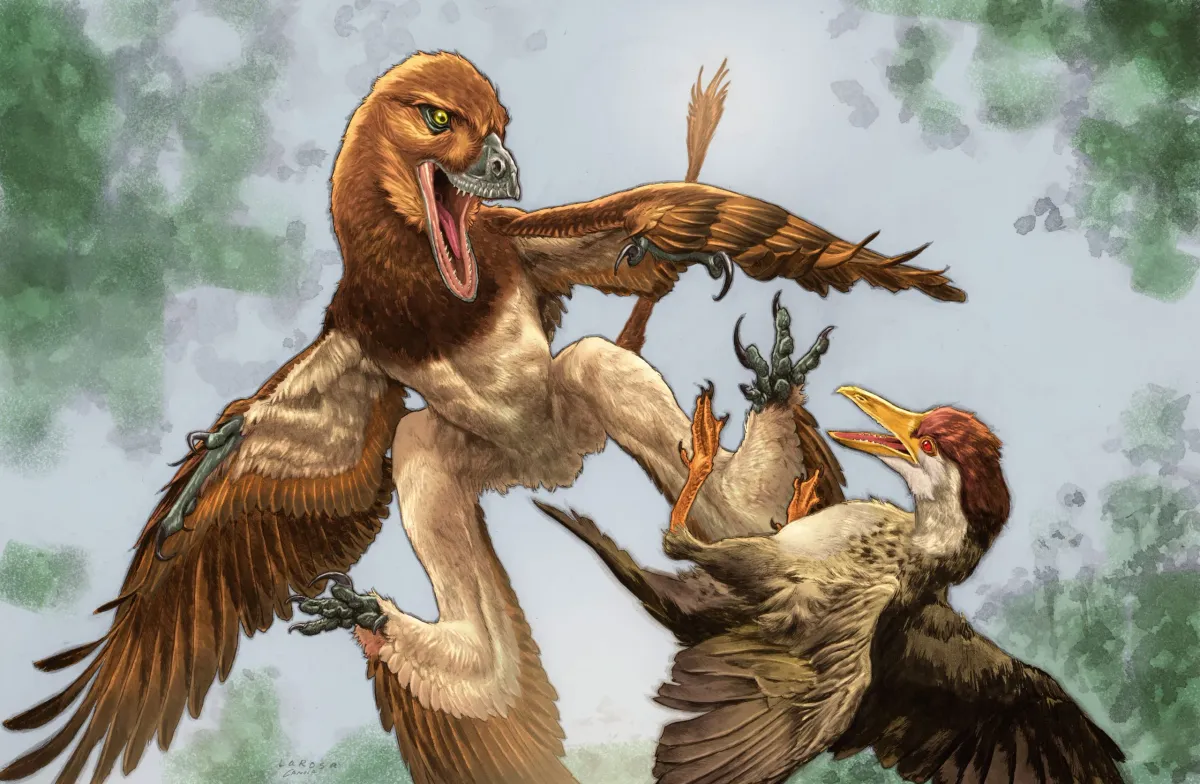
Meet Jian changmaensis, a newly identified feathered dinosaur that's related to the famed Velociraptor. Its fossil is only a partial, but here's the kicker: it’s the only known non-bird carnivorous dinosaur ever found at this particular site. Let that sink in.
We're a new kind of news feed.
Regular news is designed to drain you. We're a non-profit built to restore you. Every story we publish is scored for impact, progress, and hope.
Start Your News DetoxThis discovery pretty strongly suggests that Jian was the prehistoric equivalent of a kid in a candy store, except the candy was ancient birds. Its remains now dominate the fossil bed, finally giving scientists a prime suspect.
Jingmai O’Connor, a curator at the Field Museum in Chicago, summed it up perfectly: “We found these clusters of broken bird bones, but we didn’t know what made them.” Now, Jian changmaensis is the leading candidate. It’s the sole non-bird dino, it’s a carnivore, and it was significantly larger than its feathery prey. Case closed, perhaps?
A Four-Winged Glider
Birds, as you might recall, are the only dinosaurs that made it past the asteroid impact 66 million years ago. Before that, they were just one of many dino groups strutting (or gliding) their stuff. Dromaeosaurs, like our friend Jian, were close relatives. Think of them as the cool, feathered cousins.
While Jurassic Park gave us a terrifying, scaly Velociraptor, the real ones were smaller, much fluffier, and probably more inclined to stare at you with intelligent, bird-like eyes than rip you apart. Jian changmaensis is a type of dromaeosaur called a microraptor. Most microraptors were pretty petite, some no bigger than a crow.
But Jian? Not so much. O’Connor notes it's one of the largest microraptors ever discovered. Just a piece of its upper arm bone is about four inches long, meaning the full dinosaur likely sported a four-foot wingspan, putting it in the same league as a barn owl. Which, if you think about it, is both impressive and slightly terrifying.
Researchers only found part of Jian's arm, but they believe it looked like other microraptors, which had long feathers on both their arms and legs. This gave them the appearance of having four wings. These weren't for active flight, mind you. O’Connor explains they likely glided, much like a prehistoric flying squirrel, from tree to tree.
The name itself is pretty cool: “Jian” refers to a winged creature from Chinese mythology, and “changmaensis” points to the Changma Basin in China’s Gansu Province, its discovery site. It’s a fitting name for a creature that finally brought clarity to a 120-million-year-old cold case, and perhaps, a new appreciation for what it meant to be a dinosaur before the big lights went out.