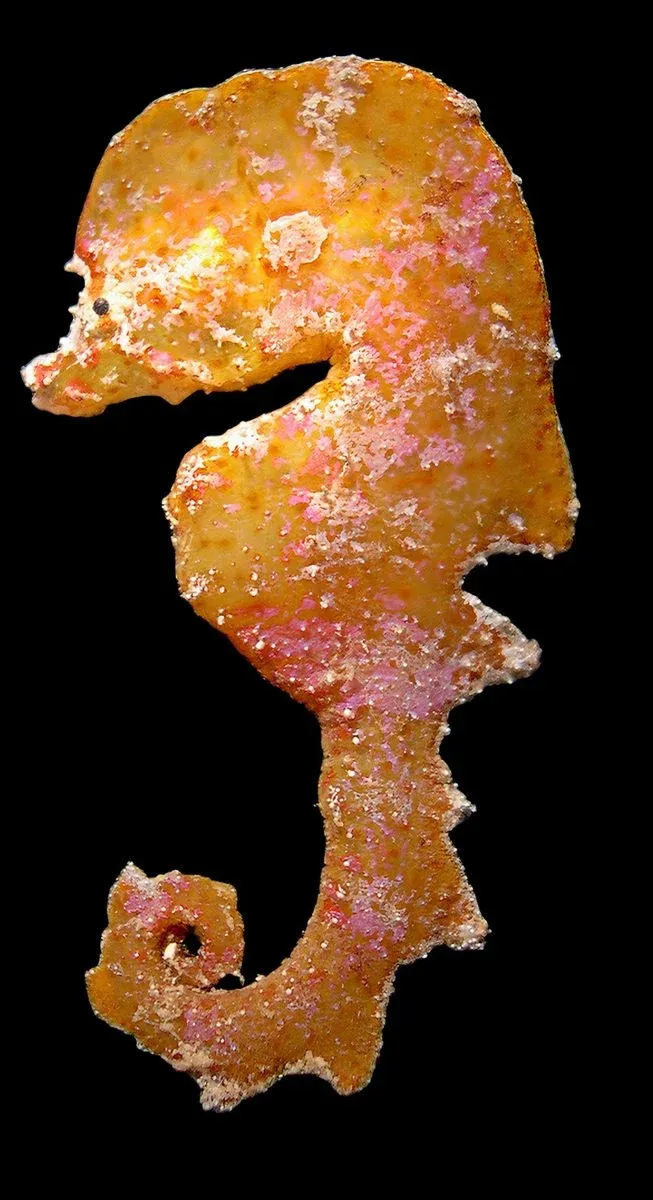
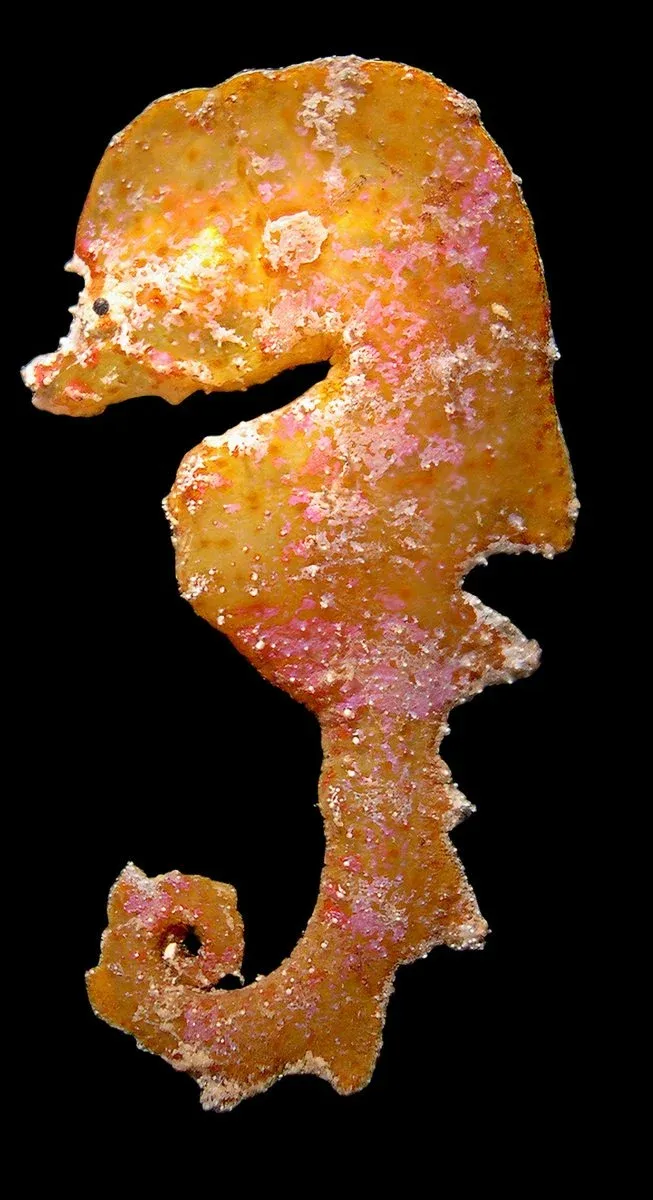
A small fish from southern Australia looks just like a seahorse. It has a horse-shaped head, a curling tail, and males even carry their young in a pouch. But new research shows it's not a seahorse at all.
This fish, called Australyichthys aegis, is a newly discovered species. Researchers named it the helmethead sea muppet because of a helmet-like crest on its head. It lives in deep reefs off southern Australia.
A New Evolutionary Branch
Australyichthys aegis and its two relatives, the bullneck sea muppet (A. minotaur) and the paradoxical sea muppet (A. paradoxus), are informally known as "sea muppets." Scientists found that these three species belong to their own unique branch of the evolutionary family tree.
We're a new kind of news feed.
Regular news is designed to drain you. We're a non-profit built to restore you. Every story we publish is scored for impact, progress, and hope.
Start Your News DetoxTheir resemblance to seahorses is a case of convergent evolution. This means they developed similar body shapes independently, not because they share a direct seahorse ancestor. The clues to this discovery were hidden for decades in museum collections, where the fish had been misidentified.
Discovering the Sea Muppets
These fish live in deep waters, about 50 to 125 meters down. This makes them hard to find. All known specimens were caught by accident in fishing nets or dredges.
The only known A. aegis specimen was found in 2006. It was mistakenly placed in an invertebrate collection at the South Australian Museum. It remained there, unrecognized, for years.
In total, only seven specimens of the entire genus have been collected over about 65 years. No new ones have been found in nearly two decades.
Skeletons and DNA Reveal the Truth
Since the specimens are rare, scientists couldn't dissect them. Instead, they used micro-CT scanning, a detailed X-ray technology. This allowed them to create 3D models of the fish skeletons.
They compared these skeletons to true seahorses (Hippocampus). Seahorses have a specific internal structure, including fused bony plates around their belly and a bony crown on their head. The scans showed that Australyichthys has neither of these features. Its belly bones are arranged differently, unlike any seahorse.
Only one specimen, A. aegis, had usable DNA. It had been preserved in ethanol, which keeps genetic material intact. DNA sequencing confirmed that the fish was not a seahorse. It belongs to a closely related but separate branch of the family tree.
Based on this evidence, the researchers created a new genus, Australyichthys. This name comes from Latin for "southern" and Greek for "fish."
Convergent Evolution and Lost Species
Convergent evolution happens when different species evolve to look alike, often because they live similar lives. The seahorse body shape, with its bent head, gripping tail, and brood pouch, has evolved at least twice within the Syngnathidae fish family. This family includes seahorses, pipefishes, pipehorses, and seadragons. Understanding this process could show why evolution keeps finding similar solutions.
These sea muppets live along the Great Southern Reef, a system of kelp forests and rocky reefs around southern Australia. Many species there are unique to the area, and deeper parts are still largely unexplored.
Since no one has ever seen these fish alive, they are now considered "lost species." This doesn't mean they are extinct. Instead, it highlights them as a priority for future research. Scientists hope to conduct targeted surveys to find them, rather than waiting for accidental catches.
Deep Dive & References
Australyichthys gen. nov. (Teleostei, Syngnathidae), a lost mesophotic lineage from southern Australia, with description of A. aegis sp. nov. and reclassification of Hippocampus minotaur and H. paradoxus - Journal of Lost Species, 2026