Imagine winning a Nobel-level prize for a language. Not a spoken one, but a programming language. That's exactly what happened for the creators of 'R,' a statistical powerhouse that just snagged the Rousseeuw Prize in Statistics, often dubbed the 'Nobel Prize for statisticians.' And yes, it comes with a cool $1 million.
This isn't just about some code; it's about three decades of relentless innovation, starting way back in the early 1990s. The prize money is split, with half going to five key laureates — Brian Ripley, Martin Maechler, Kurt Hornik, Peter Dalgaard, and Luke Tierney — who are essentially the rockstars of R.
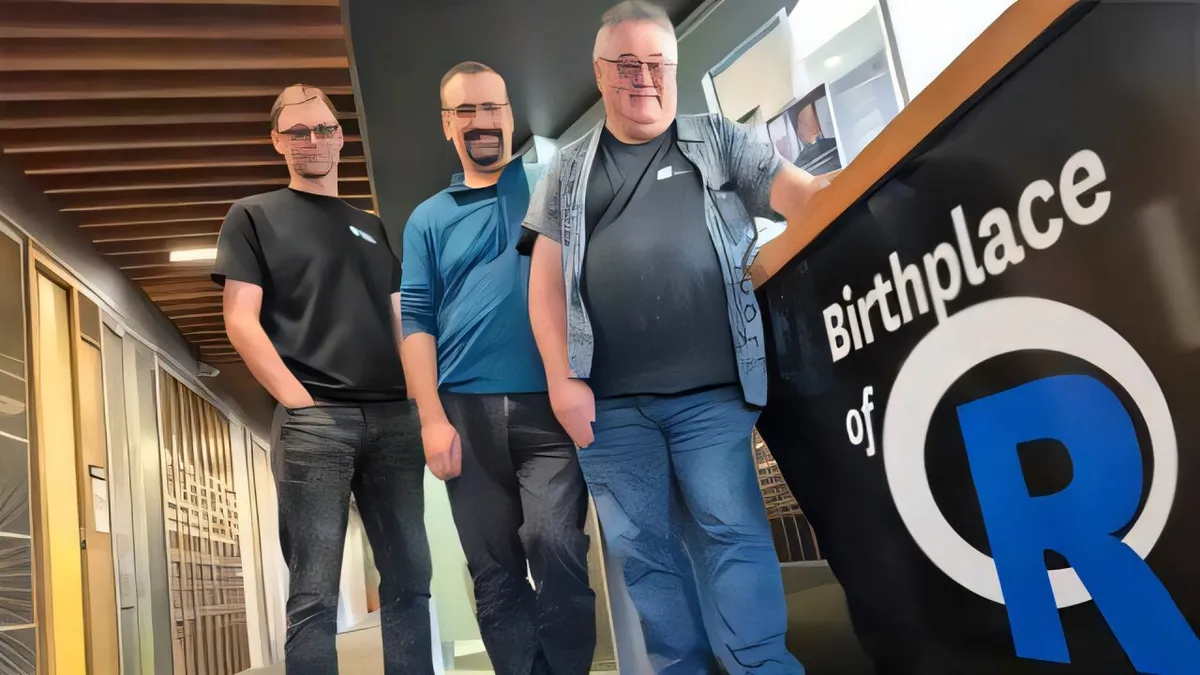
The other $500,000 is divvied up among a larger crew of R Project scientists, including a trio from the University of Auckland: Professor Thomas Lumley, Associate Professor Simon Urbanek, and Associate Professor Paul Murrell. The interim Dean of Science, Professor Michael Kingsley, rightly called R "one of the great achievements" from the university, noting it basically rewrote the rules for data science.
We're a new kind of news feed.
Regular news is designed to drain you. We're a non-profit built to restore you. Every story we publish is scored for impact, progress, and hope.
Start Your News DetoxSo, who cooked up this linguistic marvel? It was Ross Ihaka from Waiuku, New Zealand, and Canadian statistician Robert Gentleman. They became known as 'R&R' (because of course they did) while developing the statistical computing and graphics language at the University of Auckland in the 90s. Ihaka's pretty chuffed that R's still thriving, regularly popping up in the top 10 most popular programming languages. Let that satisfying number sink in.
The Rousseeuw Prize citation describes R as a "global public good." Think about that: a tool so fundamental it's become the common tongue for stats and data science. Millions use it — researchers, students, hospitals, governments. It means everyone gets access to the same high-caliber statistical resources, no matter their budget. Which, if you think about it, is both impressive and slightly terrifying for anyone still using spreadsheets for everything.
Even better, R transformed statistics from a bunch of isolated number-crunchers into a collaborative community. Ideas and code are now shared and built upon, like a global, open-source brain trust. The R Core Team itself has 19 members, including the aforementioned Auckland crew and the five laureates, with original 'R&R' members Ihaka and Gentleman still on the roster.
Professor Peter Rousseeuw, the Belgian statistician who created the prize, hopes it'll finally give statisticians the profile they deserve, much like Nobel Prizes do for other fields. The King Baudouin Foundation in Belgium will present the award on November 4th. Because apparently, even code can get a fancy ceremony now.