Orcas in the Gulf of California have been seen using a new hunting method. They work together to break apart giant sunfish. This behavior has never been formally described before.
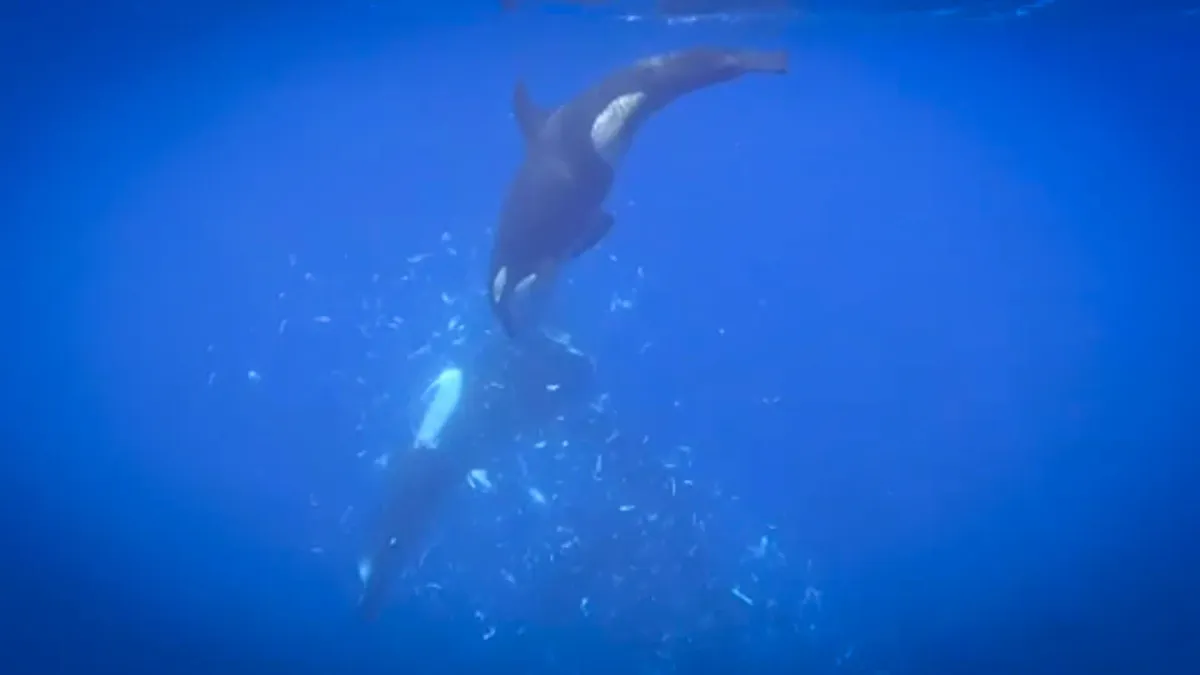
One orca holds a dead sunfish by its fin. Then, another orca charges into it at high speed. This impact blasts the fish into thousands of small pieces.
Orcas Shatter Sunfish for Easier Eating
Sunfish can grow very large, up to three meters long and weighing 2,000 kg. They often come to the ocean surface to rest or get rid of parasites. This makes them easy targets for predators like orcas.
We're a new kind of news feed.
Regular news is designed to drain you. We're a non-profit built to restore you. Every story we publish is scored for impact, progress, and hope.
Start Your News DetoxResearchers documented this new behavior in two separate events. The first was in July 2024. A female orca held a dead sharp-tail sunfish. A male orca then rammed it. The female let go just before the impact.
The collision broke the fish into many fragments. A young orca then ate these smaller pieces. The adult orcas ate the rest of the carcass. A second event in September 2025 showed the same pattern.
Dr. Kathryn Ayres, a scientist at Beneath The Waves, explained this finding. She said the orcas might be helping younger orcas feed more easily. It could also just be a form of play, as orcas are known for playing with their food.
A New Way to Process Food
This forceful ramming helps process the prey. Researchers believe the orcas use this method to break down already dead fish, not to kill them. The orcas work together, with one holding the fish steady for the other to strike.
Sunfish have a gelatinous outer layer and skin with a unique microbiome. When the fish breaks apart, these microbes spread into the water. This changes the water's nutrient makeup. Researchers think this might offer nutritional benefits or help with immune regulation for the orcas.
This behavior also shows parental care. Breaking the fish into smaller parts makes it easier for young orcas to eat. Orcas often share torn-apart prey with calves and juveniles.
The observations also suggest something unique about sharp-tail sunfish. This type of fragmentation has only been seen with this species so far. Their tissue might break apart differently than other, larger sunfish species.
Scientists are not sure if the same orcas were involved in both events. More footage is needed to identify individual animals. Ayres noted that orcas continue to surprise researchers with their hunting techniques.
Deep Dive & References
Fragmentation of sharp-tail sunfish (Masturus lanceolatus) caused by high-impact ramming behavior in orcas (Orcinus orca) - Frontiers in Ethology, 2026