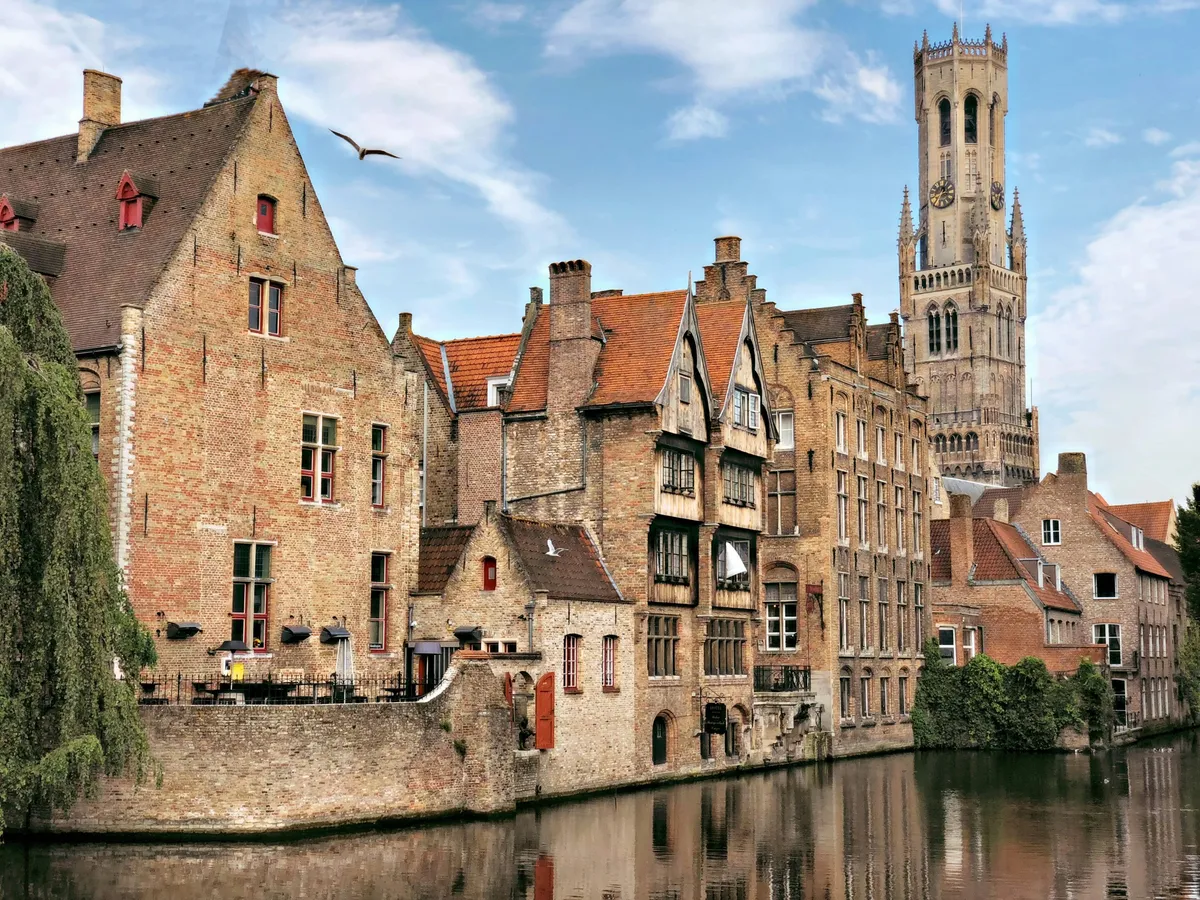
Imagine a city so thoroughly annihilated by war that its entire history vanished. That was Ypres, Belgium, after WWI. Its archives? Gone. Its stories? Silenced. Until now. Because apparently, even centuries of destruction can't keep a good skeleton down.
Researchers from Vrije Universiteit Brussel (VUB) have spent years sifting through over 1,000 excavated skeletons, giving a voice back to the medieval inhabitants of this once-thriving metropolis. Think of it as a centuries-old crime scene investigation, but with more dirt and significantly less CSI Miami.
Thanks to recent urban development projects, thousands of perfectly preserved remains — courtesy of Ypres' clay soil — popped up from three sites: two churchyards and a leper colony. And with them, an unprecedented scientific advantage, as VUB Professor Bart Lambert put it.
We're a new kind of news feed.
Regular news is designed to drain you. We're a non-profit built to restore you. Every story we publish is scored for impact, progress, and hope.
Start Your News DetoxYpres: The Original Textile Town
In the 13th century, Ypres was a bustling hub of about 30,000 souls, famous for its booming cloth industry. Chemical analyses of the bone material have now revealed some genuinely surprising details about who these people were.
VUB's Rachèl Spros, Charlotte Van Riet, and Lucy Koster, under the guidance of Christophe Snoeck, used isotope analysis to map out migration patterns. The big takeaway? Most people buried in Ypres were locals. Long-distance movers were a rarity, which challenges some long-held notions about medieval mobility. Even more interesting: both men and women moved regionally, pushing back against the idea that medieval women were largely homebodies.
One particularly intriguing discovery is the 11th-century skeleton of a man buried in a stone tomb. Osteologists, led by Barbara Veselka, found he suffered from "horse-rider syndrome" — a bone overgrowth on the hip, a clear sign of intense equestrian activity. This guy was an early local elite, a self-made leader from Ypres, as isotope analysis confirmed his local upbringing.
And for the ordinary folks? Many 13th-century skeletons showed deep notches in their teeth. The culprit? Repeatedly cleaning or tightening threads in the textile industry. Because apparently, even your teeth had to earn their keep back then.
The "wONDERLAND" exhibition at the Yper Museum is now showcasing all these discoveries, letting visitors get hands-on with the science. Interactive models, CT scanners, and isotope analysis demonstrations reveal how these ancient bones are finally spilling their secrets.
It turns out, even without city archives, the dead still have plenty to say. You just need the right scientists (and a lot of clay) to listen.