Prepare for computers that might make your current laptop feel like a dial-up modem. Researchers at Monash University just cooked up a tiny chip that ditches electricity for light when processing information. This isn't just a neat trick; it's a leap that could lead to computers so fast they make your head spin, and communication systems that transmit data at truly wild speeds.
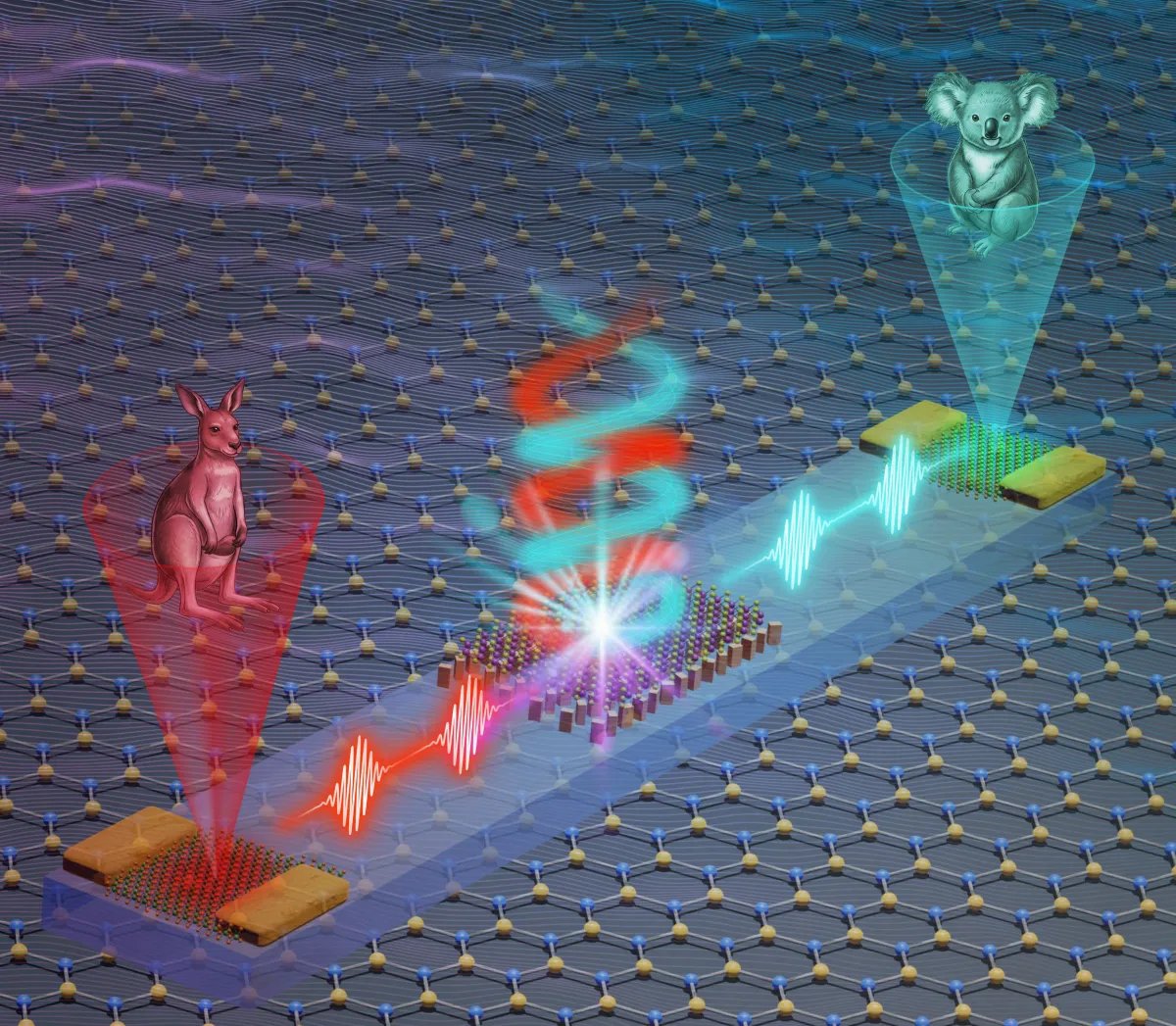
This new chip is a one-stop shop for light-based signals: it can generate them, control them, and read them, all on a single device. Which, if you think about it, is both impressive and slightly terrifying for anyone still using a floppy disk. It's a massive stride for a field called "valleytronics," which leverages the quirky quantum properties of materials to store and process data.
How It Works (Without Getting Too Technical)
Instead of shuffling electrons around like traditional chips, this little marvel uses light to carry information. Why light? Because light travels faster and generates less heat, which is excellent news for anyone whose laptop currently doubles as a personal space heater. The chip encodes information using something called the "valley degree of freedom," a quantum property that allows for data storage in ways old-school electronics can only dream of.
We're a new kind of news feed.
Regular news is designed to drain you. We're a non-profit built to restore you. Every story we publish is scored for impact, progress, and hope.
Start Your News DetoxDr. Chi Li, the lead author, pointed out that previous attempts could only manage one part of the equation — generating or detecting these signals. This new system, however, handles the whole shebang: creating, routing, and reading information with impressive precision.
They pulled this off by combining materials just a few atoms thick with incredibly tiny, engineered structures called metasurfaces. These metasurfaces are like microscopic traffic cops for light, controlling it on a scale smaller than a human hair. Co-first author Dr. Kaijian Xing noted they used a simple stacking method to combine these delicate materials, avoiding the damage that plagued earlier efforts.
Perhaps the best part? This chip works its magic at room temperature. Many experimental quantum technologies demand super-chilly conditions, requiring complex and expensive cooling equipment. By sidestepping that frozen hurdle, the Monash device becomes far more practical for, you know, actual use in the real world. Plus, it's tiny, making it perfect for future commercial devices that won't require their own dedicated freezer unit.
Senior author Dr. Haoran Ren sees this research sparking a whole new generation of compact, programmable photonic tech. Think huge bandwidths, lightning-fast data, and drastically lower energy use — perfect for quantum computing, advanced imaging, and the next wave of optical communication. As a proof of concept, the researchers even encoded and processed two separate images simultaneously, just to show off its multi-tasking chops.
Professor Stefan A. Maier wrapped it up nicely, stating this work is a crucial step towards making valleytronics a practical reality. By merging light and quantum materials on a chip, scientists are literally illuminating new ways to encode and process information. And that, friends, is pretty bright.