Today, it seems the universe decided to pull back the curtain just a bit, revealing both deeper mysteries and refreshingly practical blueprints for our future. From the subatomic realm to the lunar surface, and even inside our own brains, the theme of the day was discovery – whether of fundamental forces or overlooked pathways.
The Cosmos: Stranger Than Fiction
Just when we thought we had a handle on things, the cosmos sent a few curveballs. Scientists at CERN’s Large Hadron Collider are seeing strongest hints yet of physics beyond the Standard Model, observing peculiar “penguin decays” that defy our current understanding. It’s the kind of news that makes you wonder if our textbooks are about to get a serious rewrite. Meanwhile, NASA’s Fermi telescope may have unlocked the secret behind superluminous supernovae, those unbelievably bright explosions that outshine entire galaxies. It turns out a rapidly spinning magnetar, an exotic neutron star, might be the culprit. And for a dose of pure cosmic whimsy, the James Webb Space Telescope spotted a planet nearly 700 light-years away where rock clouds appear every morning and vanish by nightfall. If you've ever felt like the universe was a bit too predictable, today's news should set you straight.
"Every remyelination drug candidate tested in multiple sclerosis research has failed. A doctoral thesis from the University of Helsinki, defended earlier this month, reports two that didn’t." — Read the full story
Wait—What is Brightcast?We're a new kind of news feed.
Regular news is designed to drain you. We're a non-profit built to restore you. Every story we publish is scored for impact, progress, and hope.
Start Your News Detox
The Body: Rewiring for Better
Back on Earth, our understanding of the human body also took some significant leaps, with multiple stories pointing to clever ways we might be able to repair or enhance ourselves. A doctoral student at the University of Helsinki, Tapani Koppinen, identified two drug molecules that successfully repaired myelin damage in MS models – a breakthrough where all previous attempts have failed. 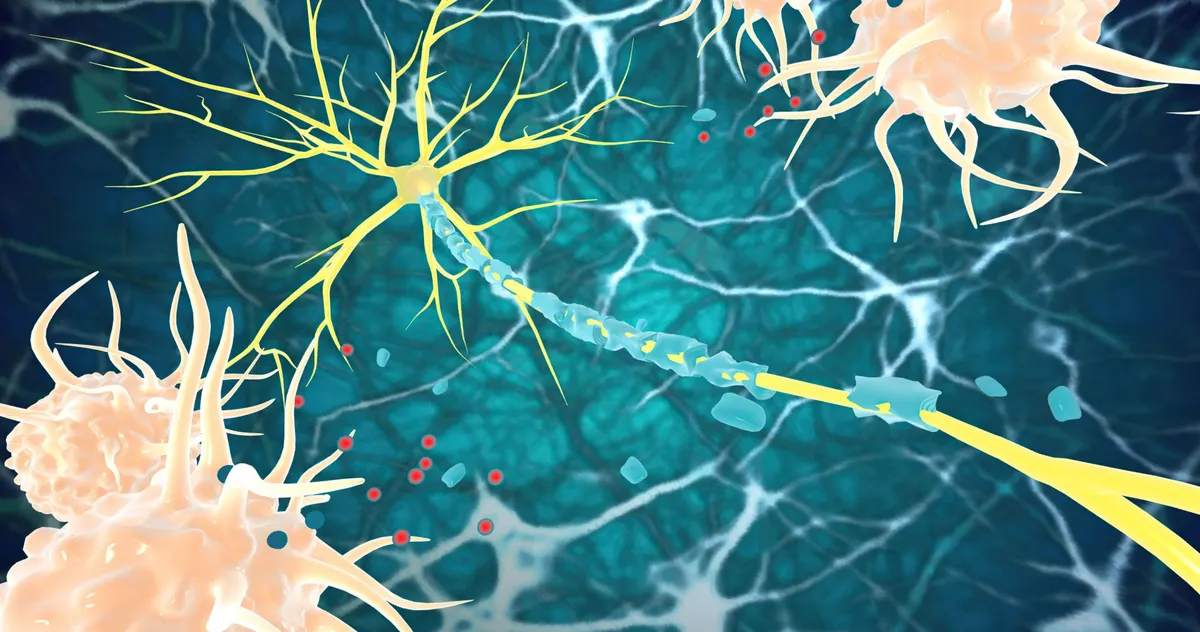 Simultaneously, researchers at Texas A&M developed a nasal spray that appears to reverse brain aging by calming inflammation, leading to months of improved memory and cognitive function after just two doses. And in a wonderfully unexpected twist, scientists created spinach-powered eye drops that use light-sensitive plant particles to heal eye damage. These aren't just incremental improvements; they're genuine shifts in how we approach some of the most stubborn health challenges. If you've been anxious about the future of human health, this week just changed the math.
The Moon: Our Next Home's Blueprint
While we were busy pondering cosmic mysteries and biological fixes, NASA quietly got down to business, laying out the first phase of its moon base plans with landers, buggies, and drones front and center. The agency awarded hundreds of millions in contracts to four U.S. companies, moving beyond theoretical sketches to concrete hardware. This isn't just about planting a flag; it's about building a sustainable presence.  It means that the moon isn't just a destination anymore; it's rapidly becoming a construction site. If you've been wondering when humanity would actually do something about living off-world, today's news is your answer.
Hope stat: 2 — drug molecules discovered this week that successfully repaired MS damage, where all previous candidates failed. Watch this space: How quickly these promising health interventions move from lab to clinic.