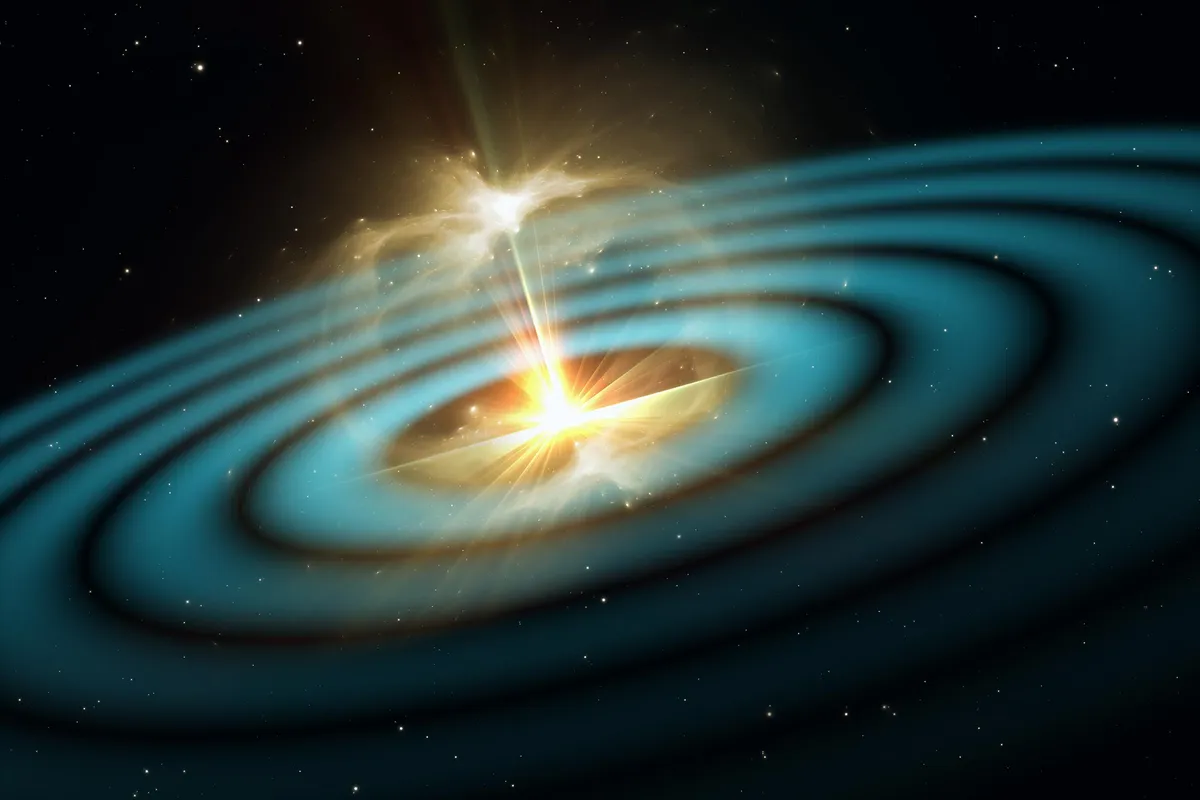
Imagine trying to measure a ripple in a swimming pool while the pool itself is getting bigger, wavier, and also full of increasingly agitated swimmers. That, in a nutshell, is the cosmic headache scientists have been wrestling with when trying to measure gravitational waves in our ever-expanding universe.
Since the first detection in 2015, we've gotten pretty good at spotting these spacetime shivers from dramatic events like black holes doing an interstellar tango. But those are typically in the relatively calm, empty bits of space. The signal is clear: a tiny disturbance moving through a stable background.
The Universe Doesn't Do 'Stable Background'
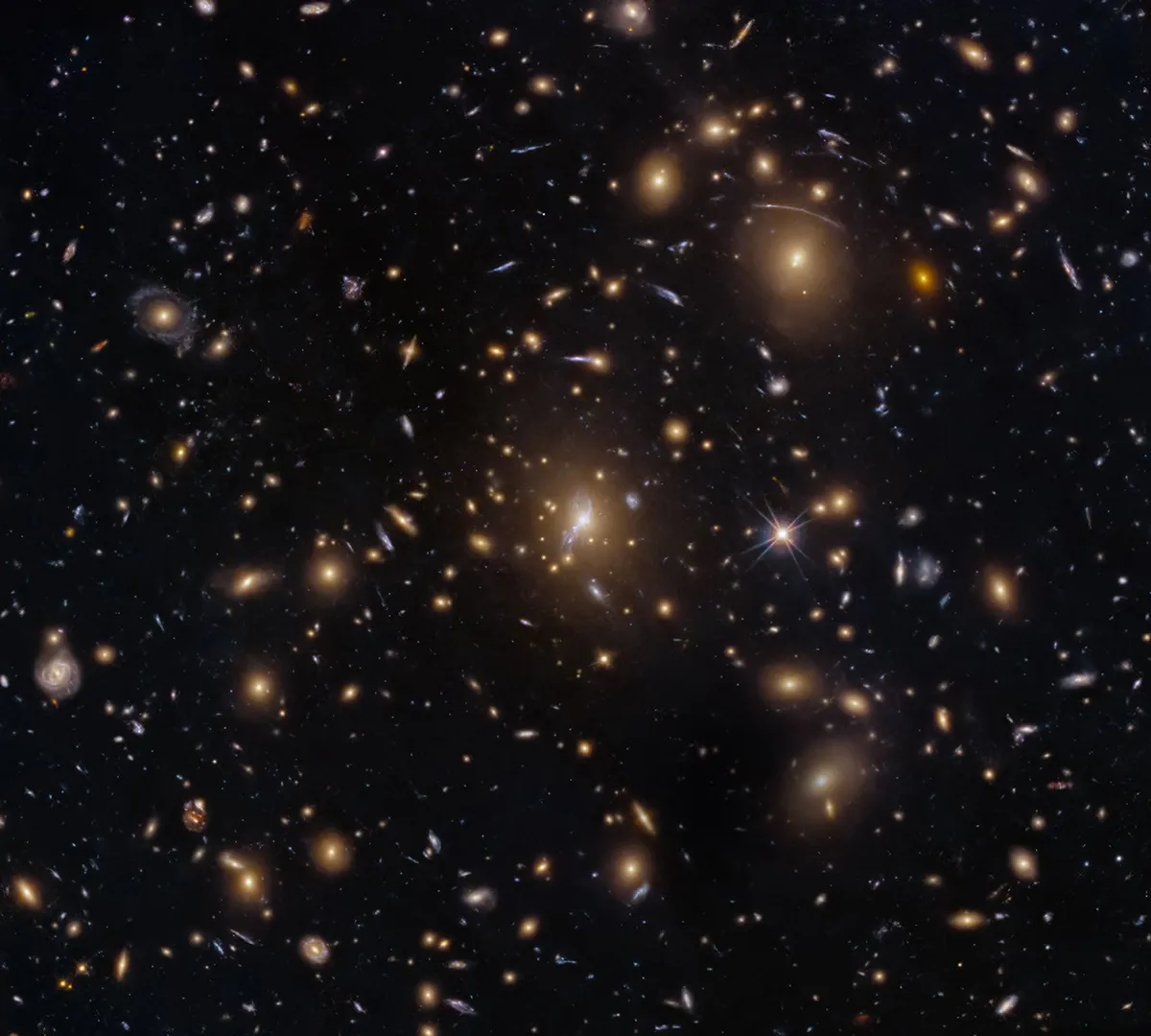
The problem gets wonderfully, gloriously messy when you zoom out to the whole universe. Here, the 'background' isn't still. It's expanding. Matter is lumpy. Everything is in motion. It's like trying to find one specific violin note in an entire orchestra that's simultaneously performing a chaotic, avant-garde piece while slowly inflating.
We're a new kind of news feed.
Regular news is designed to drain you. We're a non-profit built to restore you. Every story we publish is scored for impact, progress, and hope.
Start Your News DetoxThis leads to a rather profound question: What exactly is a gravitational wave detector measuring when the whole cosmos is a dynamic, squishy mess?
Enter Dr. Guillem Domènech and his team at Leibniz University Hannover. Instead of getting lost in abstract mathematical ideas, they went practical. They asked: What would a real experiment actually record?
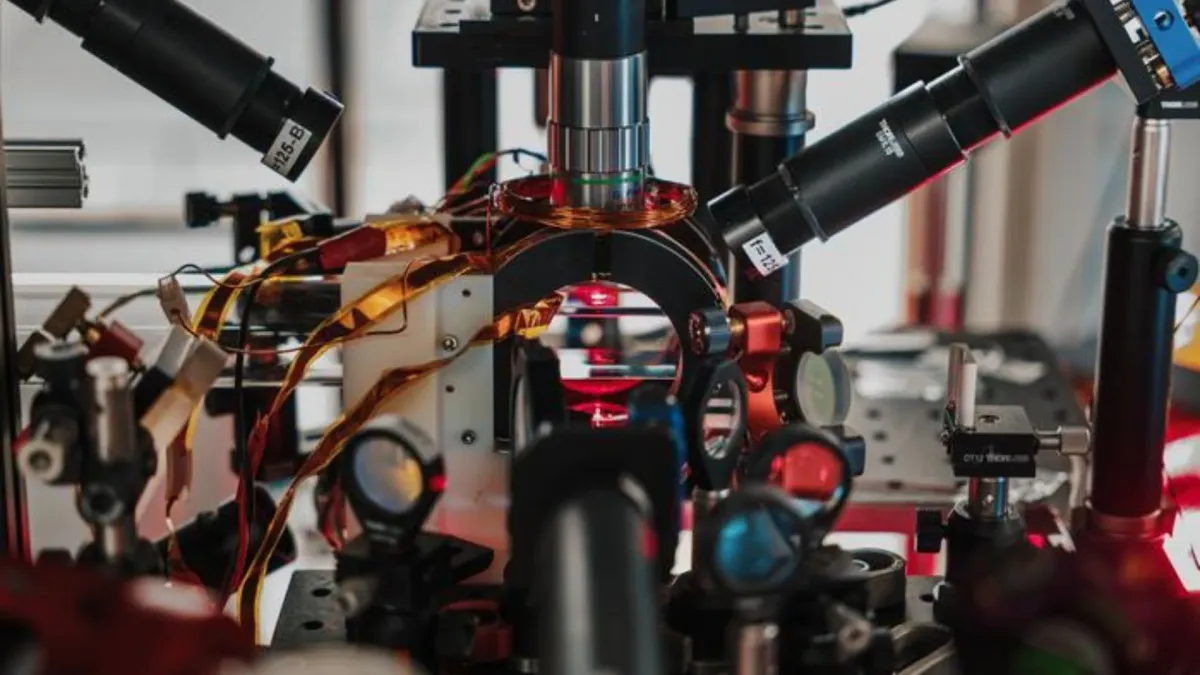
Their model envisions two freely falling test masses — think super-precise atomic clocks — linked by a beam of light. When a gravitational wave passes, it subtly changes the time it takes for light to travel between them. It's a tiny, measurable shift in timing or frequency, because apparently, that's how spacetime says hello.
The team figured out how to describe this measurable quantity in a way that doesn't depend on where you're standing or how you're doing the math. They essentially isolated the physical effect from any mathematical artifacts that might sneak in. As Domènech put it, their calculations "precisely isolate what is truly measurable from effects that depend on mathematical descriptions."
Which, if you think about it, is both impressive and slightly terrifying. We're talking about untangling the fabric of reality itself.
This new framework gives scientists a common language, connecting the theoretical squiggles on a whiteboard to the actual data coming out of detectors. It's particularly useful for hunting down primordial gravitational waves – those faint whispers from the universe's infancy – and other subtle signals spread across the cosmos. It'll be a boon for projects like pulsar timing arrays and the upcoming space-based LISA observatory.
So, the next time you hear about a gravitational wave detection, remember the cosmic pool party. And the scientists who just figured out how to hear the ripples over the din.