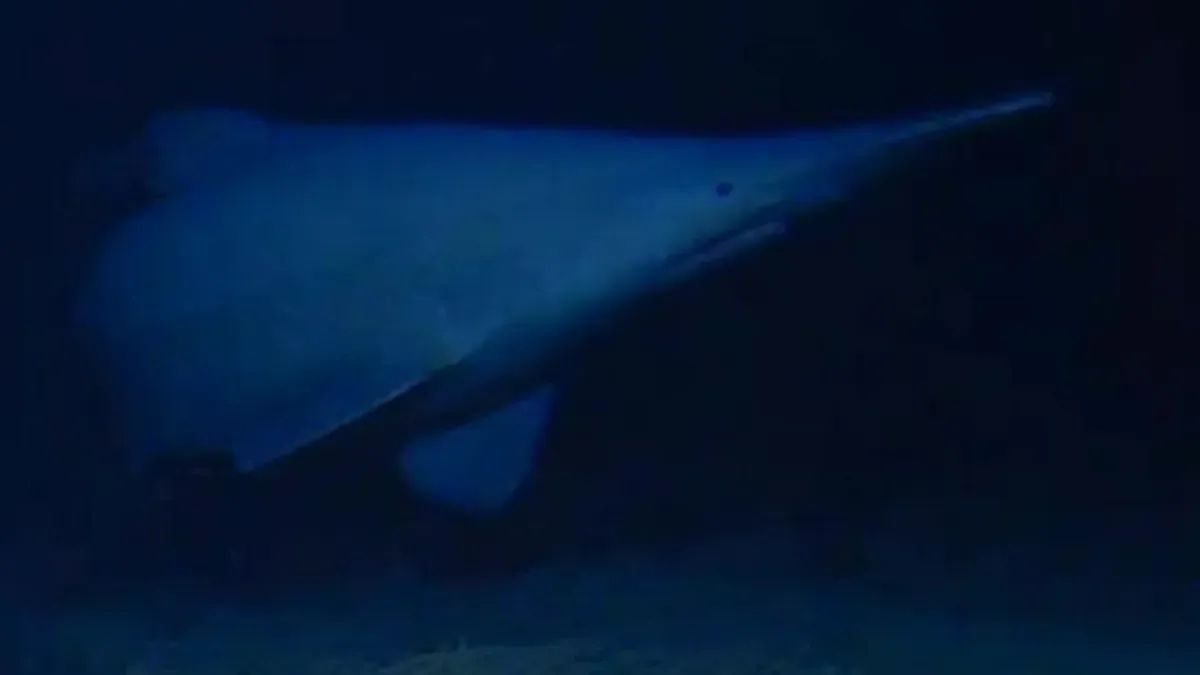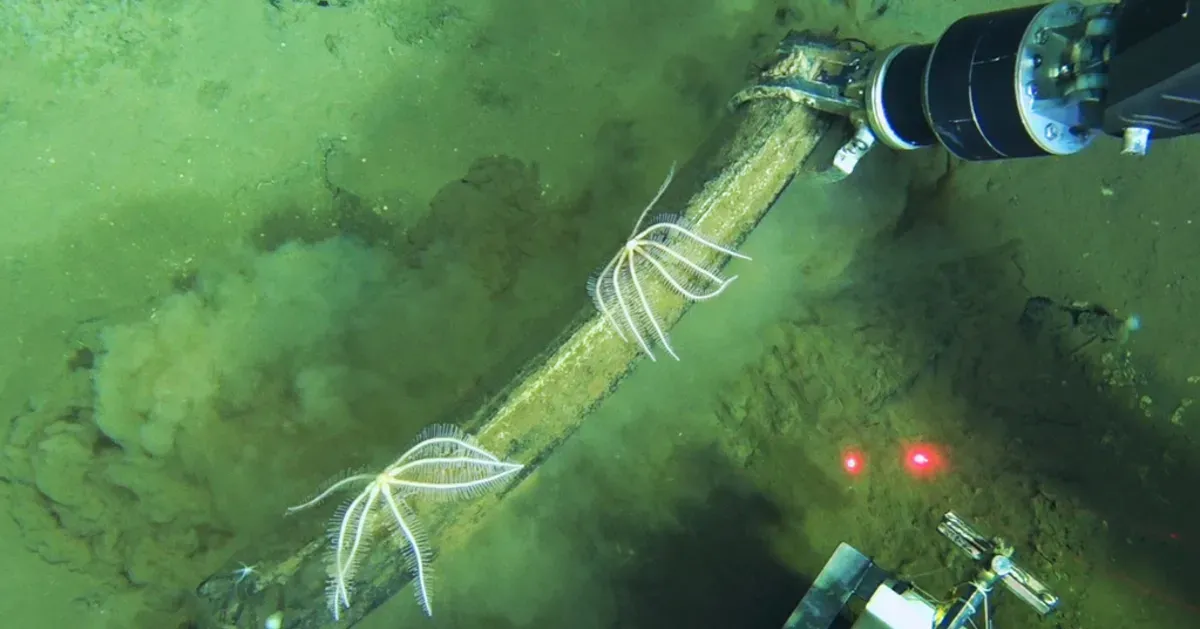
Turns out, even in death, whales are still hosting the party. Scientists recently stumbled upon an ancient whale graveyard in the southeastern Indian Ocean, teeming with marine life that's been feasting for millions of years. We're talking jellyfish, tubeworms, and brittle stars, all living it up on bones that are up to 5.3 million years old.
This isn't just any old boneyard. At 23,000 feet (7 kilometers) deep, it’s the largest, deepest, and oldest whale graveyard ever discovered. Think of it as the deep sea's most exclusive, long-running buffet, powered by the sheer scale of a whale and the unique chemistry of its bones.
The Ultimate Deep-Sea Feast
Biologist Xikun Song from the Chinese Academy of Sciences pointed out that finding these deep-sea neighborhoods is incredibly difficult. But during several deep-sea trips in 2023, researchers hit the jackpot. They mapped the area, collected samples, and found five carcass sites, complete with skulls from beaked and baleen whales.
We're a new kind of news feed.
Regular news is designed to drain you. We're a non-profit built to restore you. Every story we publish is scored for impact, progress, and hope.
Start Your News DetoxAnd who were the guests at this ancient banquet? Sea cucumbers, squat lobsters, and saltwater clams, to name a few. Many of these species are likely entirely new to science, which, if you think about it, is both impressive and slightly terrifying. Paleontologist Stephen Godfrey, who wasn't involved in the research, called the sheer number of specimens “astounding.”
So, how did these bones last for eons? Turns out, whale bones are dense enough to resist those pesky bone-eating worms. Plus, they were deep enough to avoid being buried by seafloor dust and got a nice mineral coating from the seawater, essentially fossilizing them in place.
Why so many whales ended up in this particular spot is still a bit of a mystery. Perhaps they lived and died there naturally, or maybe the V-shape of the area acted like a giant funnel, guiding their remains to this final resting place. Either way, it’s a testament to life's tenacity.
These ancient graveyards aren't just fascinating — they're crucial for understanding how life adapts to extreme conditions. We're talking crushing pressure, zero light, and minimal oxygen. As Giovanni Bianucci, a paleontologist and co-author of the study, noted, these discoveries give us vital clues to how vibrant communities can thrive even in the most remote, hard-to-reach corners of our planet.