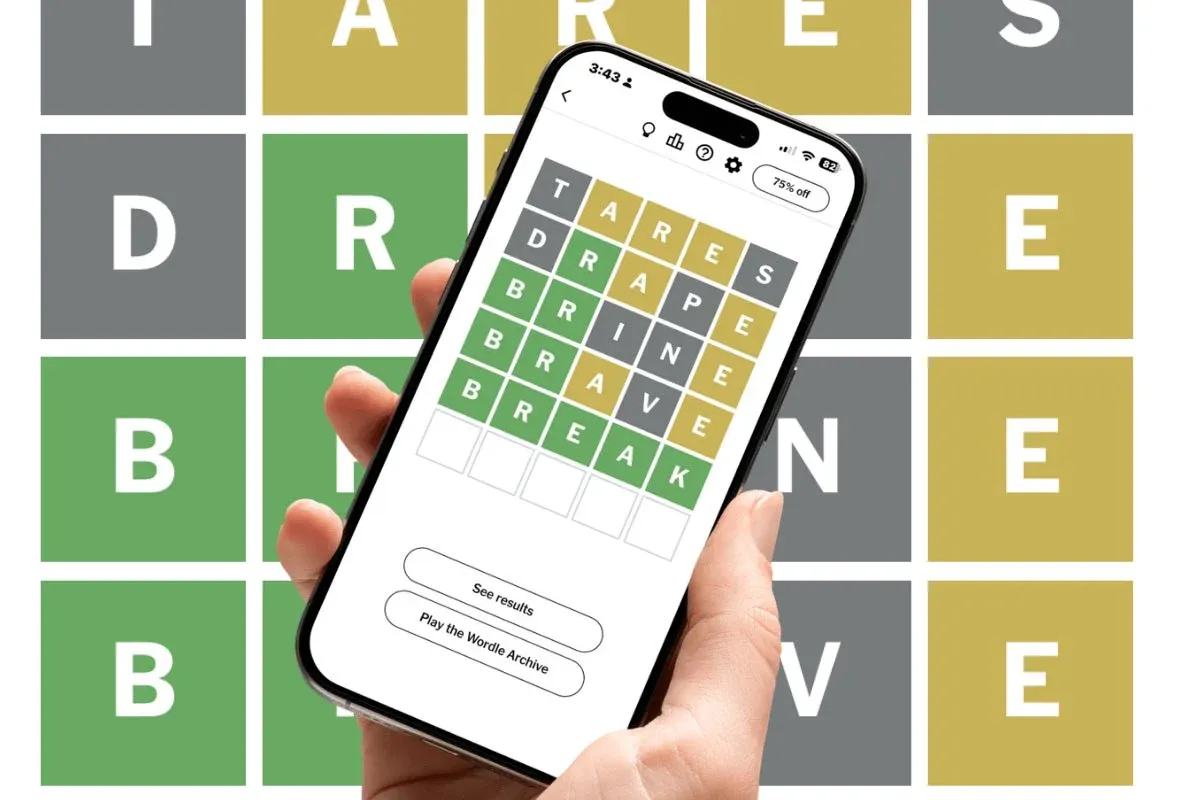
For those of us who've stared blankly at a Wordle grid, six guesses dwindling, wondering if our brain cells were also turning gray, relief might be on the horizon. Researchers at Binghamton University have officially cracked the code, devising a strategy that solves a staggering 99% of Wordle puzzles. Apparently, the secret wasn't just a bigger vocabulary; it was math.
Turns out, the answer lies in something called Shannon entropy, a concept from information theory. Instead of just trying to guess the right word, this method figures out which word, when guessed, gives you the most useful information to eliminate other possibilities. It’s like playing 20 Questions, but with five-letter words and a PhD in the room.
The Information Age of Wordle
Most of us play Wordle by picking a starting word, then trying to incorporate the green and yellow letters we find. You know, the usual: grey means "nope, not in the word"; yellow means "it's in there, just not there"; and green means "bingo, perfect spot." Rinse, repeat, and hope you don't end up with five attempts at CRANE and a blank stare.
We're a new kind of news feed.
Regular news is designed to drain you. We're a non-profit built to restore you. Every story we publish is scored for impact, progress, and hope.
Start Your News DetoxThe Binghamton team, led by Assistant Professor Congyu "Peter" Wu, decided to get scientific. They realized that previous guesses clear out a bunch of options, but certain new guesses can supercharge the information gain. Doctoral student Donald Stephens noted that a guess doesn't have to be the most likely answer; it just needs to be the most informative. Which, if you think about it, is both brilliant and slightly counter-intuitive to how most of us approach a puzzle.
This strategy, which involves plugging Wordle's color clues into a separate program that suggests the next best guess, sounds a bit like cheating at first. But the results speak for themselves. In computer tests, their information theory approach solved 99% of puzzles. For comparison, the common human strategy of just picking words with frequently appearing letters only managed 90%. Let that satisfying 9% difference sink in.
What started as a class assignment — a challenge to show how information theory could solve a real-world problem — ended up as published research. Because apparently, even our daily dose of word-guessing can benefit from a little academic rigor. And now, thanks to some very smart people, we can finally stop wondering if ADIEU is still the best first guess.