What makes one volcano ooze like a sleepy syrup while another blows its top like a Champagne bottle shaken by a toddler? Turns out, it's not just about what's in the magma, but how hot it used to be.
Researchers from the University of Manchester just cracked a long-standing mystery: magma can get a "superpower" called superheating. This means it can stay crystal-free for way longer than anyone thought possible. And a crystal-free magma is a happy, fluid, explosive magma.
The Magma's Hot Past
It all comes down to the magma's temperature history, deep inside the Earth, long before it even thinks about seeing daylight. Geologists always knew that crystals make magma thick and sluggish. Think cold honey versus hot honey. The more crystals, the slower it moves, the less likely it is to put on a dramatic show.
We're a new kind of news feed.
Regular news is designed to drain you. We're a non-profit built to restore you. Every story we publish is scored for impact, progress, and hope.
Start Your News DetoxBut this new study, published in Nature Communications, found that if magma gets significantly hotter than its usual crystal-forming temperature, it essentially hits a "reset button." It delays the formation of those pesky crystals for hours. Like hitting snooze on a geological alarm clock.
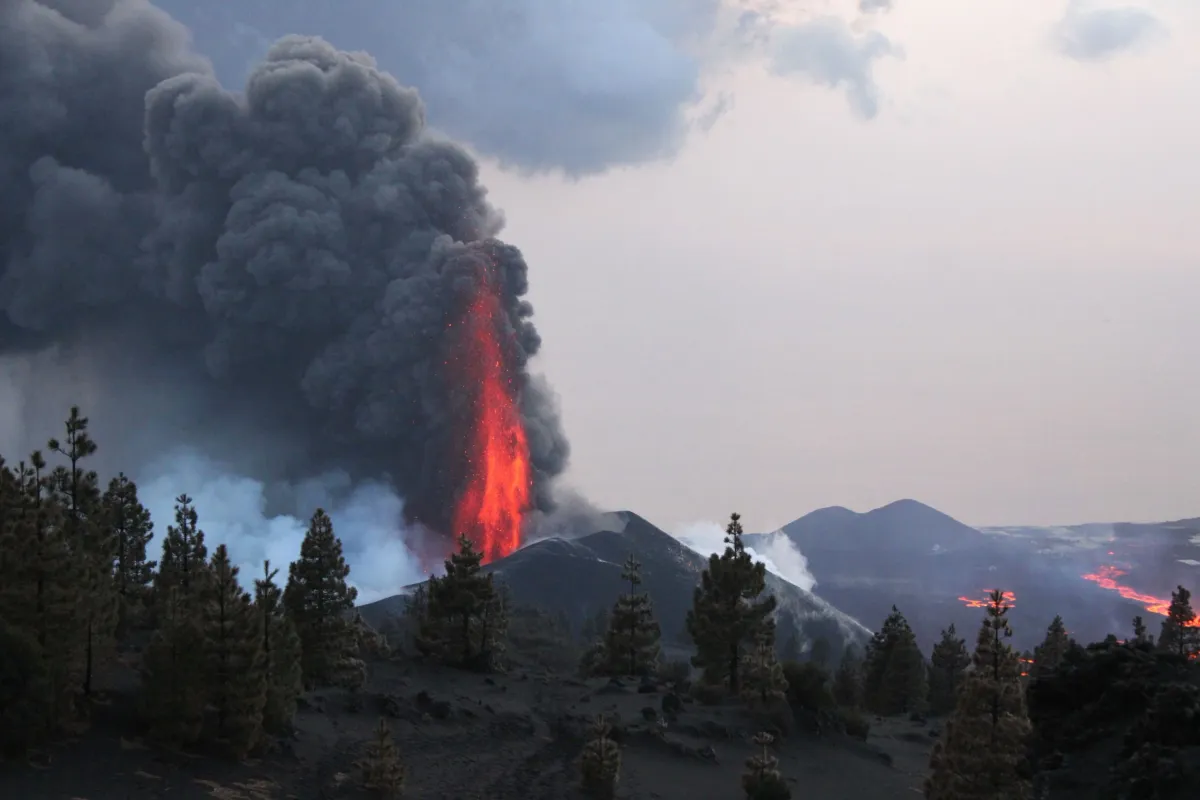
They figured this out by studying samples from the 2021 Tajogaite eruption in La Palma, Spain. And how do you watch magma do its thing without, you know, falling into a volcano? With a new X-ray transparent pressure vessel and synchrotron X-ray microtomography. Because apparently that's where we are now.
Watching Crystals Not Form
In the lab, they recreated the intense conditions inside a volcano. Magma that wasn't superheated started growing crystals in about 20 minutes. Which, if you're a crystal, is pretty prompt.
But the superheated stuff? Eight hours. Over eight hours of pure, unadulterated fluidity. Imagine the difference that makes when you're talking about a column of molten rock rising thousands of feet.
These delayed crystallization times were then plugged into computer models. The results were clear: fluid magma rises quickly, leading to those dramatic, intense lava fountains and explosive eruptions. Thicker, more crystallized magma rises slower, giving gases more time to escape, which results in a much gentler, oozier eruption.
So, next time you hear about a volcano rumbling, remember it's not just about the chemistry. It's also about whether that magma had a particularly hot past. Because sometimes, a little extra heat can make all the difference between a gentle burp and a full-blown geological tantrum.