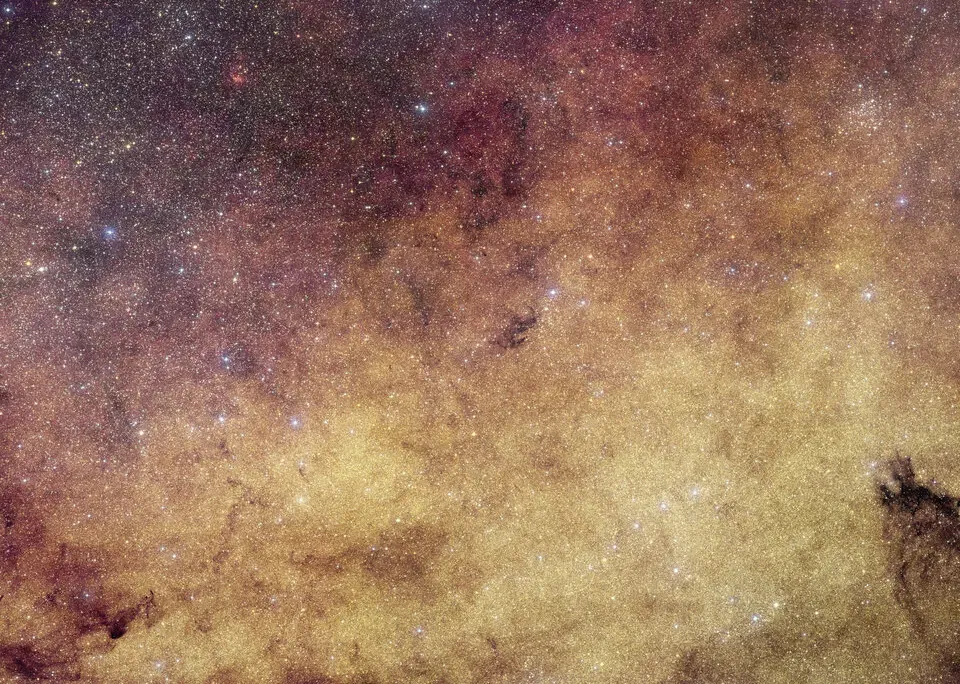
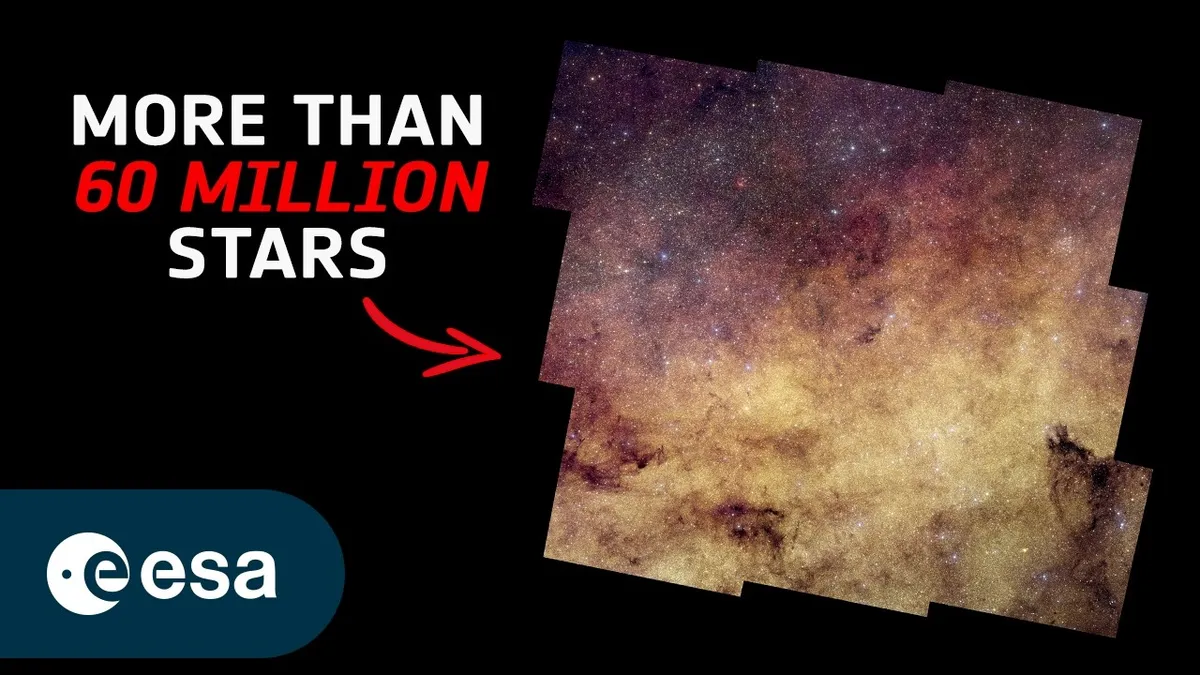
A new image offers the most detailed look yet at the Milky Way's crowded center. This sparkling snapshot, released by the European Space Agency (ESA) on June 24, shows over 60 million stars. This is only a small part of the estimated 100 billion stars in our galaxy.
This image is the largest and most detailed photo of the Milky Way's middle ever taken in visible light. It could help scientists find exoplanets, which are planets far beyond our solar system.
Euclid's Unexpected Discovery
The ESA's Euclid space telescope launched in 2023. Its main job is to map the night sky and study dark matter and dark energy. However, last March, astronomers used its powerful technology for a different purpose.
We're a new kind of news feed.
Regular news is designed to drain you. We're a non-profit built to restore you. Every story we publish is scored for impact, progress, and hope.
Start Your News DetoxJean-Charles Cuillandre, an astronomer working on the Euclid mission, noted that they pointed Euclid at the brightest area of the sky. He said it worked "superbly" and was "extraordinary."
Over about 26 hours, the telescope's visible light camera took nine "pointings." Each covered an area of sky larger than the full moon. These were then stitched together to create the stunning mosaic of the Milky Way's center. The ESA also released a video showing where this snapshot fits within the galaxy's larger bulge. Euclid's original observations were in black and white, but color was added later using data from the Canada-France-Hawaii Telescope (CFHT).
Eamonn Kerins, an astrophysicist at the University of Manchester, explained that Euclid was not built for this kind of science. Yet, it has proven to be an excellent tool for this work.
Hunting for Exoplanets
Despite the extreme brightness in this part of the galaxy, Euclid's camera could tell individual stars apart. This ability makes it a great tool for finding exoplanets.
Kerins believes this data will kickstart a new era of exoplanet discovery. He expects the number of known exoplanets to grow from about 6,000 to over 100,000 across the galaxy.
Starlight can reveal nearby exoplanets through a process called microlensing. When one star passes in front of another from our view, the closer star's gravity bends and brightens the background star's light. This acts like a "cosmic magnifying glass."
This bending of light can show if the front star has a planet. The planet's gravity would also bend the background light, making it appear uneven. The dense cluster of stars at the Milky Way's heart is an ideal place to catch these tiny changes.
Jean-Philippe Beaulieu, an astronomer at the Institut d’Astrophysique de Paris, noted that nearly 300 exoplanets have been found using this method over the last 20 years. All were found with ground-based telescopes looking towards the galaxy's center. This new Euclid image includes 51 known planetary systems and will help study many more.
Future Missions and Insights
Documenting a microlensing event takes about 20 days, which is longer than Euclid's photographing limit. So, this new image will serve as a reference for past and future planet-hunting missions.
NASA plans to launch its Nancy Grace Roman Space Telescope on August 30. This mission aims to find thousands of new exoplanets. Having Euclid's detailed image of the Milky Way's center will give astronomers more accurate measurements. It will also help them better understand the galaxy beyond our solar system.
Deep Dive & References: ESA’s Euclid captures the Milky Way’s crowded heart - ESA, 2026