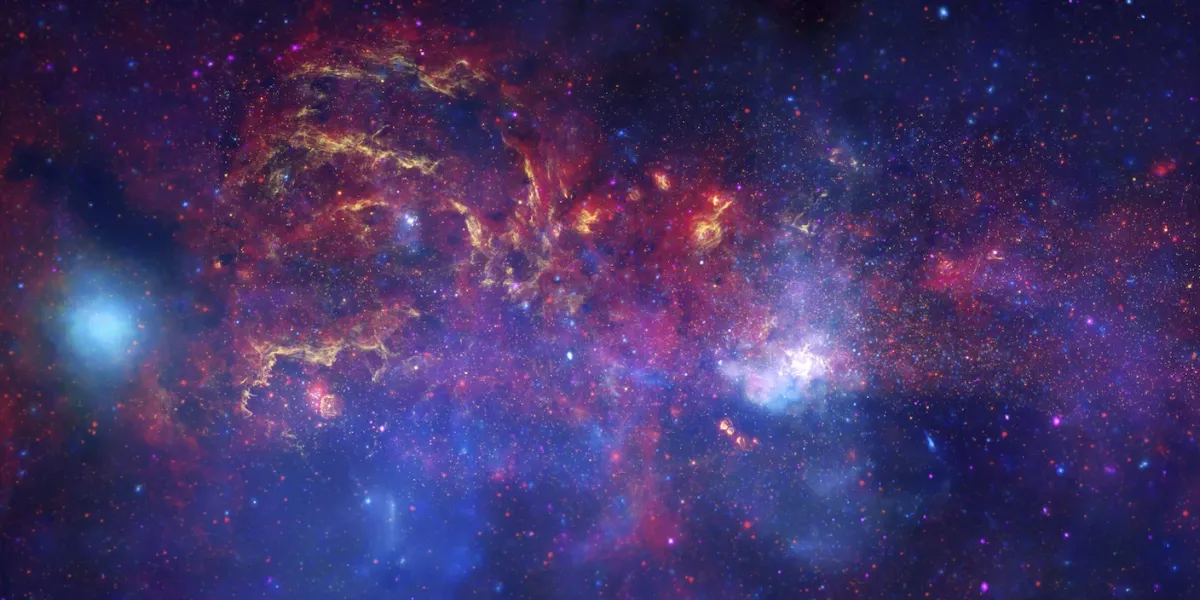
The night sky, that seemingly serene backdrop to all our anxieties, has been lying to us. For millennia, we've looked up and seen permanence. Turns out, our home galaxy, the Milky Way, is less a peaceful cosmic haven and more a cosmic demolition derby survivor, perpetually undergoing extreme makeovers.
Meet Vasily Belokurov, an astrophysicist who's basically a galactic archaeologist. Instead of dusty trowels and ancient pottery, he uses the laws of physics and billions of stars to dig through our galaxy's past. His goal? To figure out how the Milky Way got its current chaotic personality, and what's next for its long-suffering stars. Because, apparently, we're due for another collision.
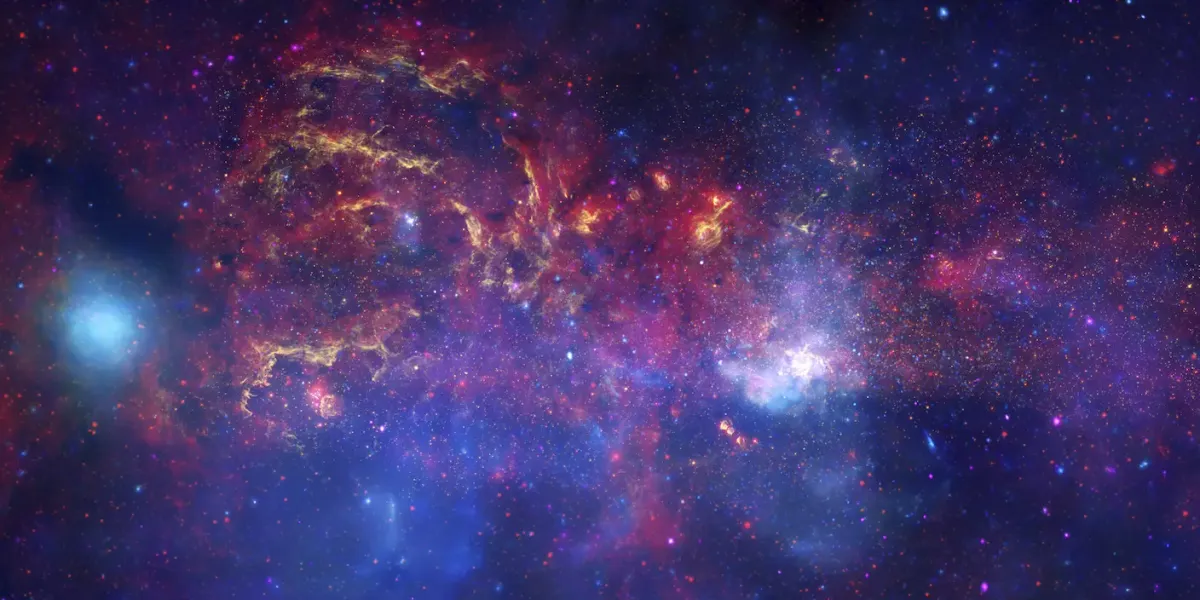
Belokurov sifts through hundreds of millions of stars, looking for the weird ones — the ones that don't quite fit in. These celestial misfits are the key to unlocking the Milky Way's dramatic history, revealing the cataclysmic events that shaped it. And central to all this interstellar detective work is dark matter, that invisible cosmic glue holding everything together, whose true nature remains one of the universe's most frustratingly elegant secrets.
We're a new kind of news feed.
Regular news is designed to drain you. We're a non-profit built to restore you. Every story we publish is scored for impact, progress, and hope.
Start Your News DetoxWhat makes the Milky Way special is that we can actually map its stars' movements with startling precision. Thanks to projects like the Sloan Digital Sky Survey and, more recently, the European space telescope Gaia, we now have a cosmic treasure map of nearly 2 billion stars. This turns our galaxy into an open-air museum, with every star a potential artifact.
The Violent Rewiring of Our Galaxy
The clearest tell-tale signs of a past cosmic brawl? "Migrant" stars. These aren't your local, homegrown stars orbiting politely in the galactic disk. Oh no. These guys are the rebels, cutting across the usual paths, plunging into the inner galaxy, then slingshotting back out to the edges. They're like cosmic boomerang enthusiasts, but with far more dramatic flair.
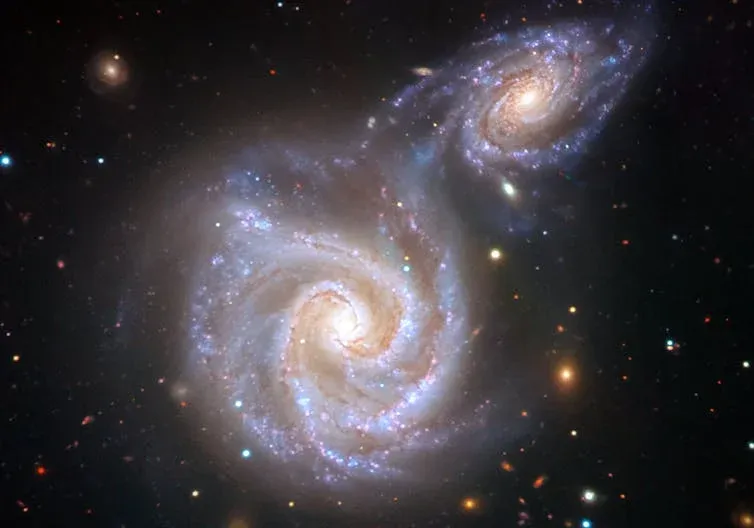
These migrants also have an unusual chemical makeup, suggesting they came from a smaller, slower-evolving dwarf galaxy. They're literally fossils of the Milky Way's violent past, giving us a front-row seat to the largest ancient collision we know of: the Gaia-Sausage-Enceladus merger, which happened some eight to eleven billion years ago. Yes, a sausage. Because apparently that's where we are now with galactic naming conventions.
This wasn't just a fender bender. It completely rewired the Milky Way. Stars from our old disk were flung into the galactic halo, becoming exiles in their own birthplace. The collision even changed the orientation of the Milky Way's disk and how it aligned with its dark matter halo. Imagine your ship suddenly tilting, slowly, over billions of years, without anyone noticing until the data rolls in. Which, if you think about it, is both impressive and slightly terrifying.
For a long time after the "sausage merger," the Milky Way enjoyed some peace and quiet. But no good quiet spell lasts forever. Now, our galaxy is being pulled into an accelerating dance with its most massive companion, the Large Magellanic Cloud (LMC). It's a new chapter of migration, survival, and adaptation. And, frankly, it sounds like a cosmic reality show we'd all tune into.
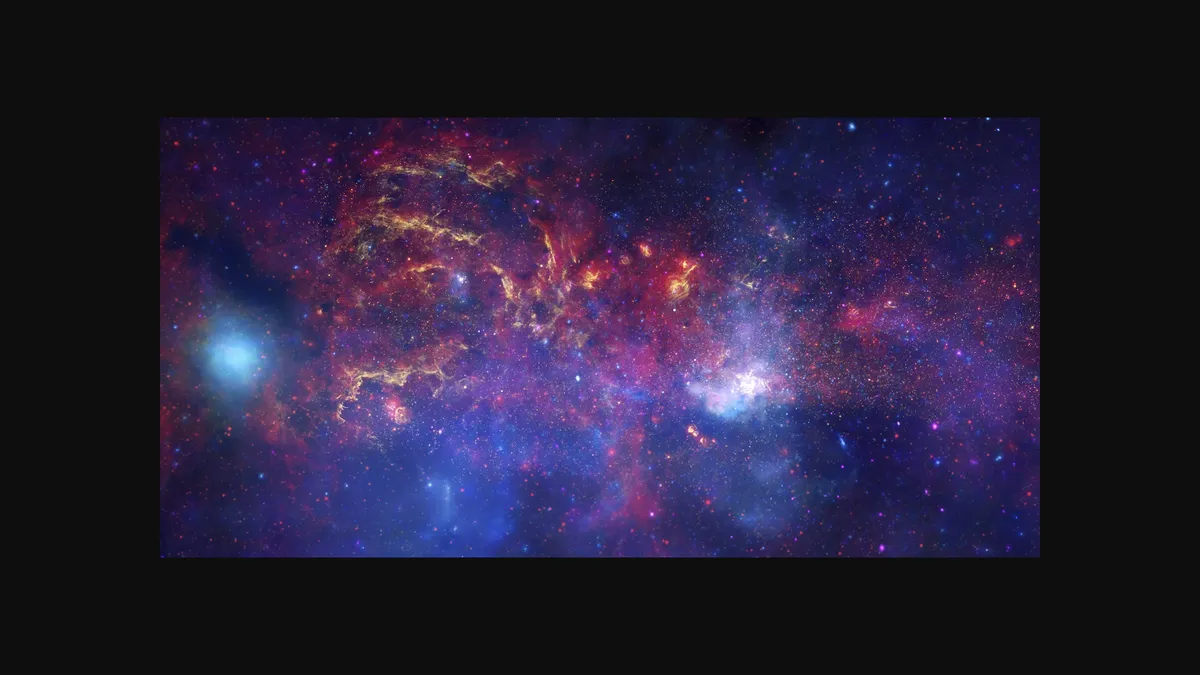
So, the next time you glance up at the night sky, remember: that calm band of light is not a symbol of permanence. It's a testament to long-term survival, a visible reminder of a galaxy that's been broken, rebuilt, and is now being disturbed all over again. The stars remember. And their movements reveal the future. What looks eternal is, in truth, just a moment in a much longer, far more dramatic story. You're welcome.