The Physics Behind the Poo Emoji
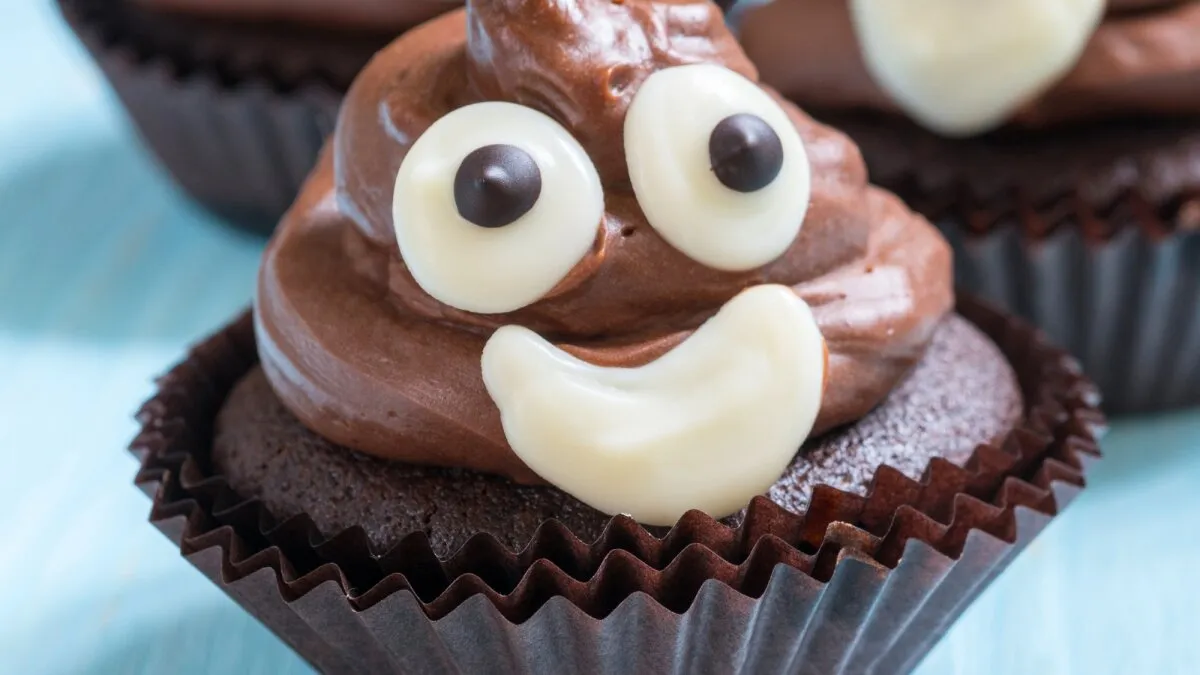
The familiar swirled shape of the poo emoji isn't just a random design. It actually reflects a basic law of physics. When most animals poop, the waste falls downwards. Each new coil drops a shorter distance, naturally creating the tapered swirl we see.
A new study looked at what happens when this process is reversed, like with certain worms. The same physical laws create completely different shapes. This shows that even a humorous icon like the poo emoji is shaped by gravity and how materials behave.
The poo emoji looks like a typical pile of animal waste. It's wider at the bottom and tapers towards the top, much like a soft-serve ice cream cone. This happens because as the coils of waste build up, the distance they fall gets shorter, making each new coil smaller.
We're a new kind of news feed.
Regular news is designed to drain you. We're a non-profit built to restore you. Every story we publish is scored for impact, progress, and hope.
Start Your News DetoxWhen Poop Defies Gravity
Some worms, like the lugworm, poop upwards, going against gravity. This creates a very different shape: a tower where the coils stay the same size all the way up, instead of tapering.
Daniel Bonn, a lead author from the Institute of Physics, University of Amsterdam, explained that lugworms show an unusual mechanical process. They push soft material upwards against gravity. Their waste shows how soft solids buckle when going against gravity, unlike the downward coiling seen in most animals.
This question even puzzled Charles Darwin. The answer lies in the laws of elastic rope-coiling, which describe how ropes and other materials form coils.
Bonn, along with Mehdi Habibi and Neil M. Ribe, used this principle to understand why these two different shapes occur. They found that the material's stiffness and the direction of gravity compared to the direction of extrusion were key. This means physics, not biology or evolution, determines the shape of a single poop.
Bonn noted that the coil's radius depends on the poo's diameter, which varies by species. It also depends on the poo's elasticity and density. These last two can change a little with diet. He added that Darwin's rainworms make very small coils because their poo diameter is small. Lugworms are much bigger and make much larger coils.
These observations also apply to many other materials, including extruded pea dough and pasta. Bonn pointed out that many foods, like pastas, noodles, and sweets, are made by extrusion.
Beyond Poop: Real-World Applications
This research could have applications beyond food. For engineering, it might offer a simple way to make springs. By moving the surface while coiling happens, a wide range of structures can be created, leading to useful patterns.
Bonn and his team plan to design a second poo emoji. They will officially propose it to the Unicode Consortium, so a new poo emoji might appear on phones in the future.
Deep Dive & References
The physics of faecal coiling - Nature Communications, 2024