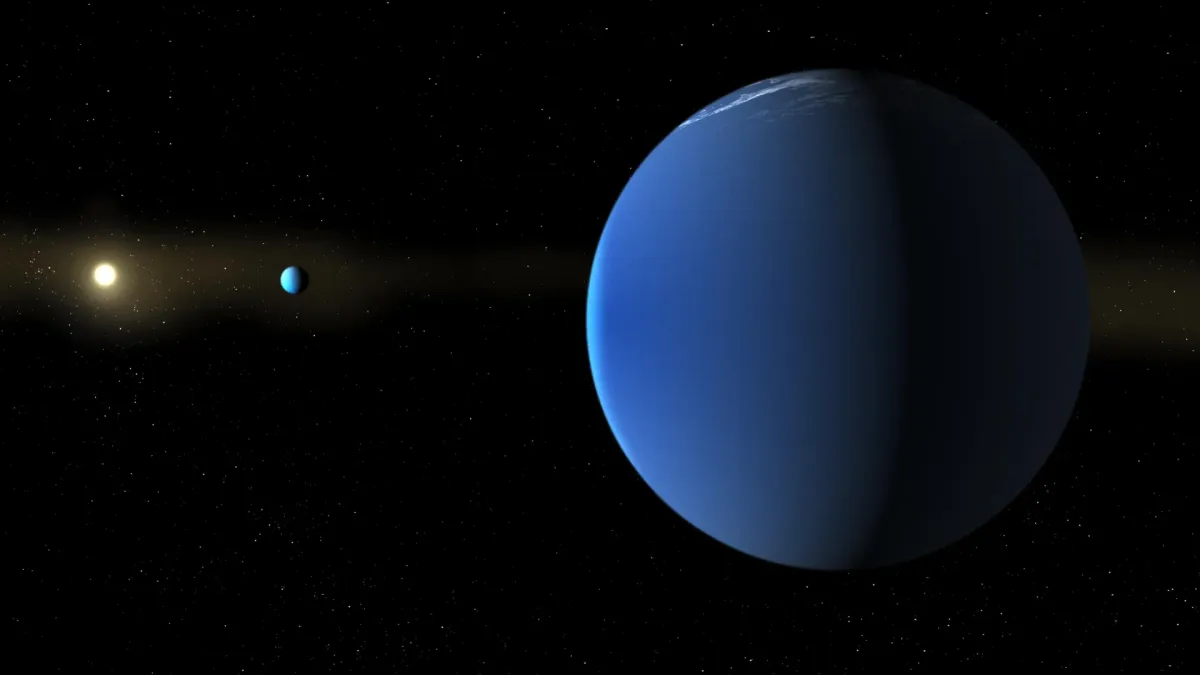
Imagine a planet the size of Jupiter, but instead of being a dense gas giant, it’s lighter than a cloud of spun sugar. Scientists just found two of them, orbiting a star 1,110 light-years away in the constellation Volans. Meet TOI-791 b and TOI-791 c, the universe’s newest, fluffiest residents.
These celestial oddities are what astronomers affectionately call "super-puffs." And for good reason: their density clocks in at a mere 0.038 and 0.047 grams per cubic centimeter, respectively. For context, Jupiter is a hefty 1.33 g/cm³. Earth? A solid 5.5 g/cm³. Cotton candy, meanwhile, floats in at about 0.05 g/cm³. So yeah, these planets are literally less dense than your favorite carnival treat.
Cosmic Siblings in a Gravitational Dance
This isn’t just a one-off discovery. The planets are siblings, believed to have formed together from the same cosmic dust cloud. And they’re not just floating around aimlessly; they’re locked in a rare, precise 5:3 orbital resonance. For every five times the inner planet circles its star, the outer one completes almost exactly three. It's like a perfectly choreographed ballet, but with gravitational tugs that subtly shift their timing.
We're a new kind of news feed.
Regular news is designed to drain you. We're a non-profit built to restore you. Every story we publish is scored for impact, progress, and hope.
Start Your News DetoxOnly four other systems are known to host multiple super-puff planets, making TOI-791 a cosmic unicorn. This rare pairing gives scientists an unprecedented opportunity to figure out how these bizarre, barely-there worlds even exist.
And who helped find them? You did, potentially! Volunteers from the Planet Hunters TESS project, using data from NASA’s Transiting Exoplanet Survey Satellite (TESS), first spotted TOI-791 b in 2019 and TOI-791 c in 2023. Because apparently, the universe’s biggest mysteries are sometimes solved by people in their pajamas.
Antarctica's Stargazing Advantage
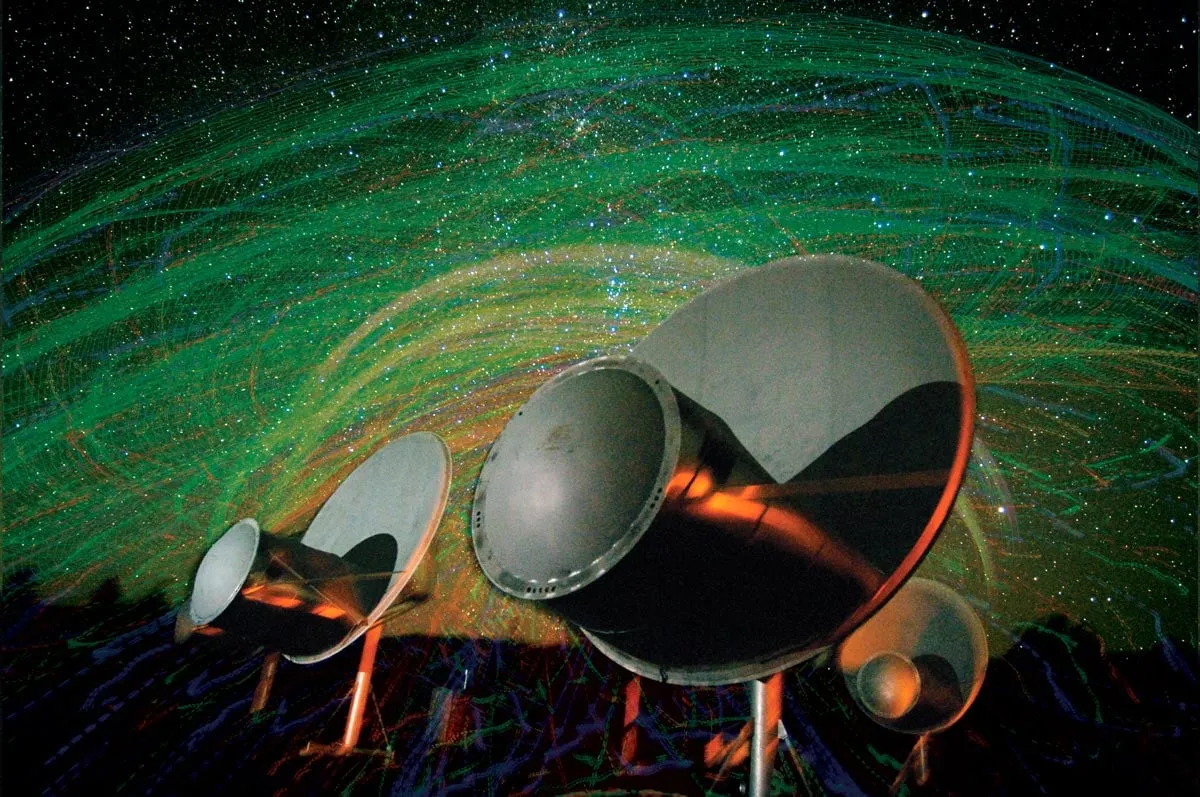
Pinpointing these planets' sizes and masses—and thus their shockingly low densities—involved a global effort, including a telescope in one of the most remote places on Earth: Concordia Station in Antarctica. The ASTEP (Antarctic Search for Transiting ExoPlanets) telescope capitalized on Antarctica's months-long winter nights.
Why does continuous darkness matter? Because these super-puffs take their sweet time transiting their star, with each pass lasting over 11 hours. Those long, uninterrupted observations from the frozen continent were crucial, providing the longest continuous ground-based planetary transits ever recorded. Because if you're going to watch a planet, you might as well commit.
Scientists suspect these super-puffs have enormous atmospheres of hydrogen and helium, making up a significant chunk of their mass. The leading theory is that they formed much farther from their star, in colder regions where gas could quickly accumulate around a solid core. Future observations, possibly with the James Webb Space Telescope, aim to sniff out what else is in those puffy atmospheres, like carbon, nitrogen, and oxygen. This could be the key to unlocking the mystery of how such delightfully strange planets come to be.
So, next time you’re enjoying some cotton candy, spare a thought for TOI-791 b and c. They’re out there, defying expectations, and giving us all a new reason to look up and wonder.