Parenting behaviors may have evolved from the brain's ancient hunger circuits. Many animals once laid eggs and left their young to fend for themselves.
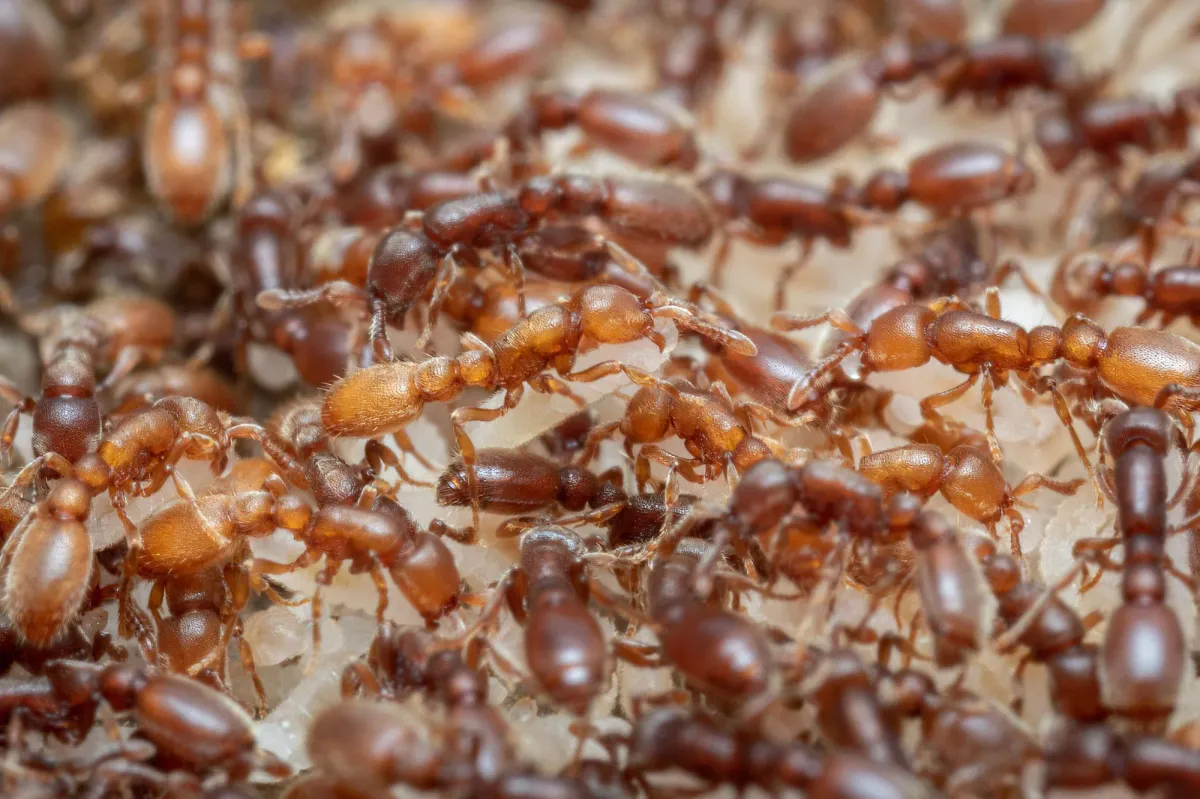
A new study in Nature shows how evolution might have changed this. Researchers studied clonal raider ants, which are known for caring for their young. They found that evolution didn't need to create new brain circuits. Instead, it adapted old systems that control hunger to also trigger caregiving and other social behaviors.
Daniel Kronauer, who leads the Laboratory of Social Evolution and Behavior at Rockefeller, noted that evolution often reuses existing systems in surprising ways.
We're a new kind of news feed.
Regular news is designed to drain you. We're a non-profit built to restore you. Every story we publish is scored for impact, progress, and hope.
Start Your News DetoxMammals nurse their young, birds build nests, and ants care for larvae. Scientists are still learning how these different parenting behaviors came from ancestors that offered little care. One idea is that evolution changed existing biological systems instead of building new ones. For example, earlier studies on mammals suggested that some brain chemicals involved in hunger might have been adapted to encourage parenting.
Ants as a Simpler Brain Model
Testing this idea has been hard. Fruit flies and roundworms, common lab animals, don't care for their young. Mice are good parents, and researchers have found several brain chemicals involved in their caregiving.
Kronauer's team found that mice and ants share some of these brain mechanisms. An ant brain has about 60,000 cells, while a mouse brain has 100 million. This makes ants a simpler model to study these mechanisms and their circuits in detail.
Tracking Caregiving in Ants
The researchers set up a system where individual ants were placed with individual larvae. This allowed them to automatically watch hundreds of caregiving interactions. They then identified and created many of the chemical signals found in ant brains. They tested how each one affected caregiving.
Ant colonies organize work by age. Young ants stay in the nest and care for larvae. Older ants leave to find food. The team wanted to know how changes in brain chemistry control this shift.
Further experiments looked at where the most promising molecules were made. They also studied how their levels changed throughout an ant's life. They observed how behavior changed when they increased or decreased the activity of these molecules. The scientists also compared fed and starved ants to see if caregiving signals were still linked to the old feeding circuits they might have evolved from.
Kay, one of the researchers, explained that they identified 70 neuropeptides, which are a complete set of brain chemicals. This provides many molecules to study.
Two Molecules Control Caregiving and Foraging
The results showed that the brain systems for caregiving are still closely linked to ancient hunger circuits. Two signaling molecules worked in opposite ways depending on the ant's internal state. Neuropeptide F (NPF) encouraged caregiving. Allatostatin A (AstA) made ants leave the larvae and start looking for food.
Young ants naturally had more NPF and less AstA in key brain areas. Older ants showed the opposite pattern. This matched the ants' natural change from nursing to foraging as they aged. Changing the activity of either molecule changed their behavior, showing how much these brain chemicals influence them.
As earlier mammal research suggested, both molecules also responded to hunger. Starving ants had more NPF and less AstA, making them act more like caregivers. After eating, the balance reversed, and the ants were more likely to leave caregiving duties and forage.
Kronauer noted that parental behaviors build on the brain circuits for feeding, which makes sense because parenting often involves feeding offspring.
Ants Could Help Understand Parenting and Aging
The researchers now plan to map the neural circuits affected by these brain chemicals during caregiving. Mammals seem to use some of the same molecules. Comparing these circuits across species could show how parenting evolved. The similarities might point to a shared biological strategy across many animal species.
Kay finds it amazing that similar parenting behaviors have evolved so many times in different animals. He believes their paper suggests that the evolutionary paths to these behaviors are more limited than imagined. This could lead to a blueprint for how complex social behaviors evolve.
Because ants naturally change from caregivers to foragers as they age, they could also be a good model for studying how healthy aging changes the brain. These findings might eventually help researchers study similar changes in humans.
Kronauer said that much research focuses on late-stage brain diseases, but little is known about how the brain changes during a normal healthy lifespan. In ant colonies, these changes are key to how society is organized. He suspects that brain chemicals cause age-dependent changes in behavior in other animals, including humans.
Deep Dive & References
Ancient feeding-related neuropeptides regulate alloparenting in ants - Nature, 2026