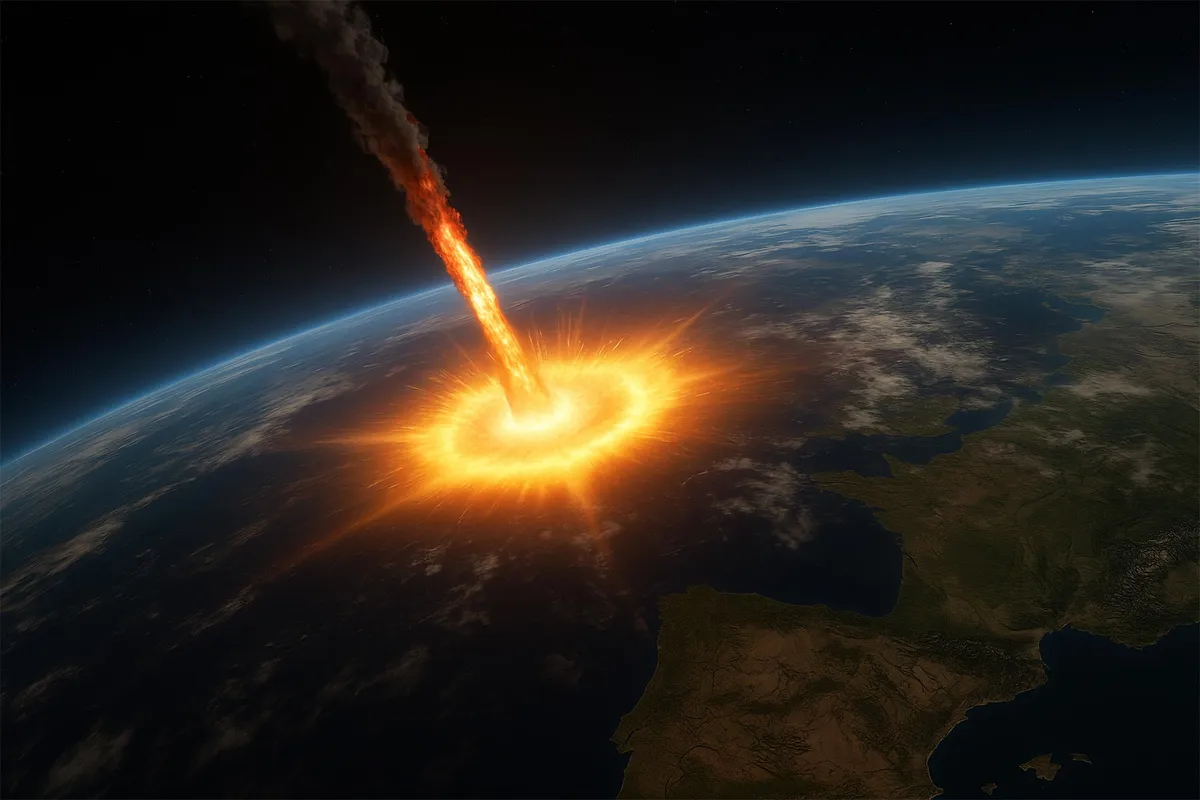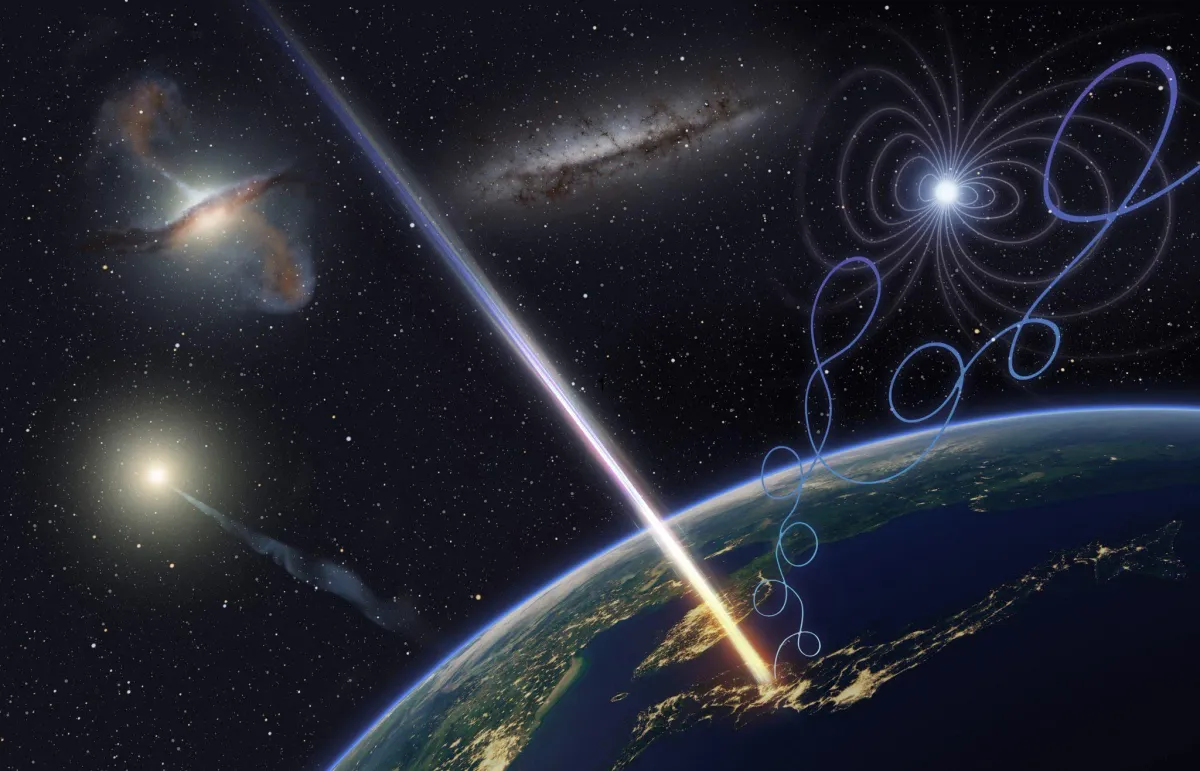
Scientists might have found a new clue about where the universe's most powerful particles come from. These particles, called ultrahigh-energy cosmic rays, hit Earth with incredible force. They are much more powerful than anything made in human particle accelerators.
One famous example is the "Amaterasu particle," found in Utah in 2021. It was named after a Japanese sun goddess. This particle had an energy similar to the "Oh-My-God particle" from 1991. But scientists still don't know what it was or where it came from.
Ultraheavy Nuclei and Cosmic Rays
New research from Penn State suggests that some of these super-energetic cosmic rays might be made of atomic nuclei heavier than iron. Atomic nuclei are the dense centers of atoms, holding most of an atom's mass.
We're a new kind of news feed.
Regular news is designed to drain you. We're a non-profit built to restore you. Every story we publish is scored for impact, progress, and hope.
Start Your News DetoxThese heavy nuclei might lose energy more slowly as they travel through space. This means they could travel vast distances and still reach Earth with extremely high energies. This discovery could help scientists find the cosmic events that create such powerful particles.
Kohta Murase, a professor at Penn State and the research leader, explained that these cosmic rays come from the most powerful sources in the universe. When scientists detect them, they try to trace them back to their origins using their energy and direction.
However, the Amaterasu particle seemed to come from an empty part of space, with no clear source.
Solving a 60-Year Mystery
Murase noted that the origin of ultrahigh-energy cosmic rays has been a big mystery for over 60 years. These particles carry energies above 100 exa-electron volts, which is 10 million times more energetic than particles in the Large Hadron Collider. The Amaterasu particle alone had the kinetic energy of a fast-moving tennis ball, but packed into a single particle.
Scientists believe these high-energy particles come from extreme events like colliding neutron stars or collapsing massive stars. By studying many cosmic ray events, their energy, direction, and makeup can give clues about their sources.
Simulating Particle Journeys
The researchers used computer simulations to track how different particles lose energy while traveling through space. They wanted to see which particles could survive the journey to Earth with such high energies.
The simulations showed that ultraheavy nuclei lose energy more slowly than lighter particles at these extreme energies. This makes them more likely to reach Earth from far away. Murase clarified that not all ultrahigh-energy cosmic rays are ultraheavy nuclei, but if some are, it changes how scientists search for their sources.
The study also set limits on how much these ultraheavy nuclei might contribute to the cosmic rays detected on Earth.
Black Holes and Neutron Stars as Sources
Murase believes the most likely places to create and speed up these ultraheavy nuclei are massive stars collapsing into black holes, highly magnetized neutron stars, or binary neutron-star mergers. These events are also known to cause gamma-ray bursts, which are some of the universe's most powerful explosions.
A contribution from these sources could also explain why the cosmic ray spectrum looks different in the northern and southern skies. If ultraheavy nuclei are a big part of the highest-energy cosmic rays, future data should show a heavier composition than iron.
Future observatories, like the proposed AugerPrime project and the Global Cosmic Ray Observatory, could test these ideas. More studies of black holes and neutron stars will also help scientists understand where these extraordinary cosmic rays come from.
Deep Dive & References
Ultraheavy Ultrahigh-Energy Cosmic Rays - Physical Review Letters, 2026