You know a machine is serious when "vehicle" doesn't quite cut it. We're talking about things that stretch for hundreds of meters, weigh more than a small town, and basically operate as their own mobile factories. These aren't your average backyard tools; these are the titans, the behemoths, the "how did they even build that?" wonders.
Here's a look at some of the largest machines ever conceived, ranked by their sheer scale, heft, and the rather important jobs they do.
The Ring to Rule Them All
Let's start with the one that literally holds a Guinness World Record for being the biggest: the Large Hadron Collider (LHC). Tucked neatly under the border between France and Switzerland, this particle accelerator boasts a circumference of 26.6 kilometers. That's right, a giant underground loop where 1,232 superconducting magnets play traffic cop for particles zipping around at nearly the speed of light.
We're a new kind of news feed.
Regular news is designed to drain you. We're a non-profit built to restore you. Every story we publish is scored for impact, progress, and hope.
Start Your News DetoxSince firing up in 2008, the LHC has been busy smashing atoms and giving us a peek into the universe's fundamental building blocks, famously leading to the discovery of the Higgs boson. Unlike its cousins on this list, it's not moving mountains; it's just trying to understand them, one tiny particle collision at a time.
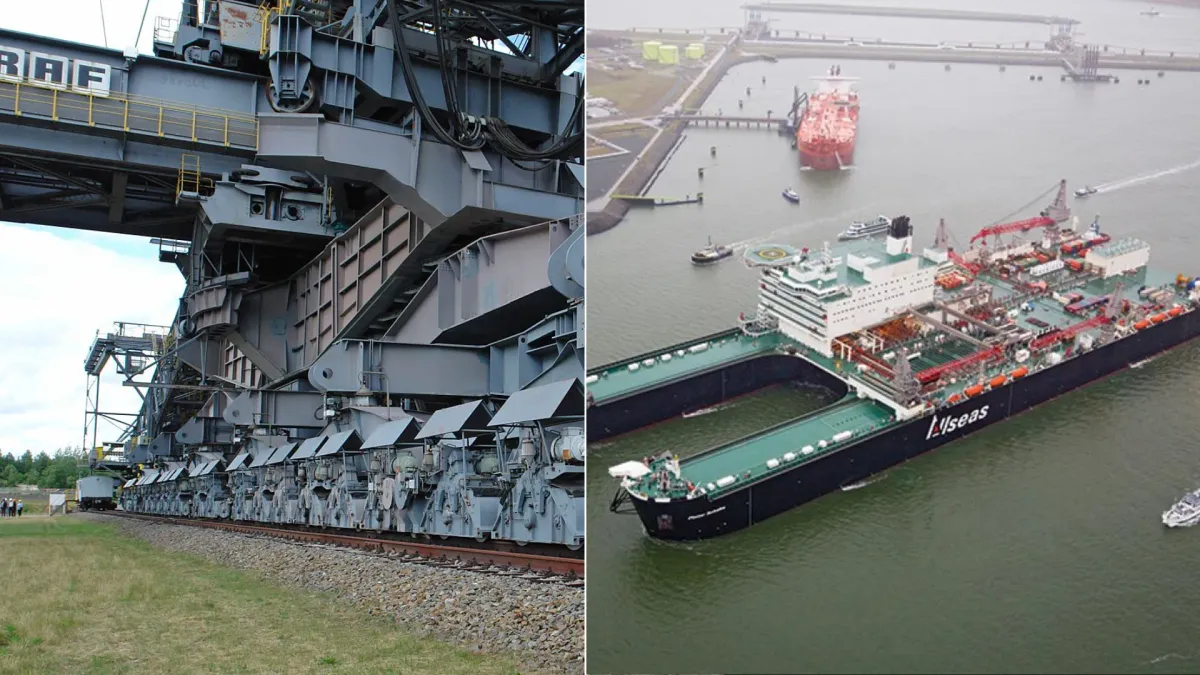
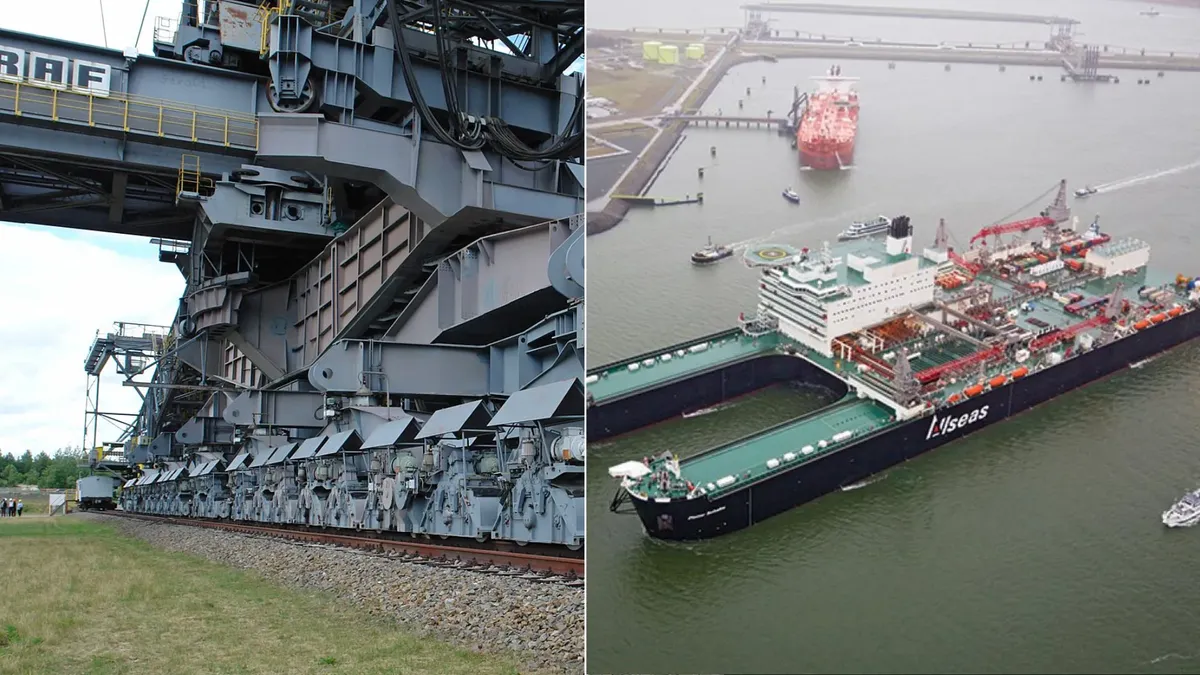
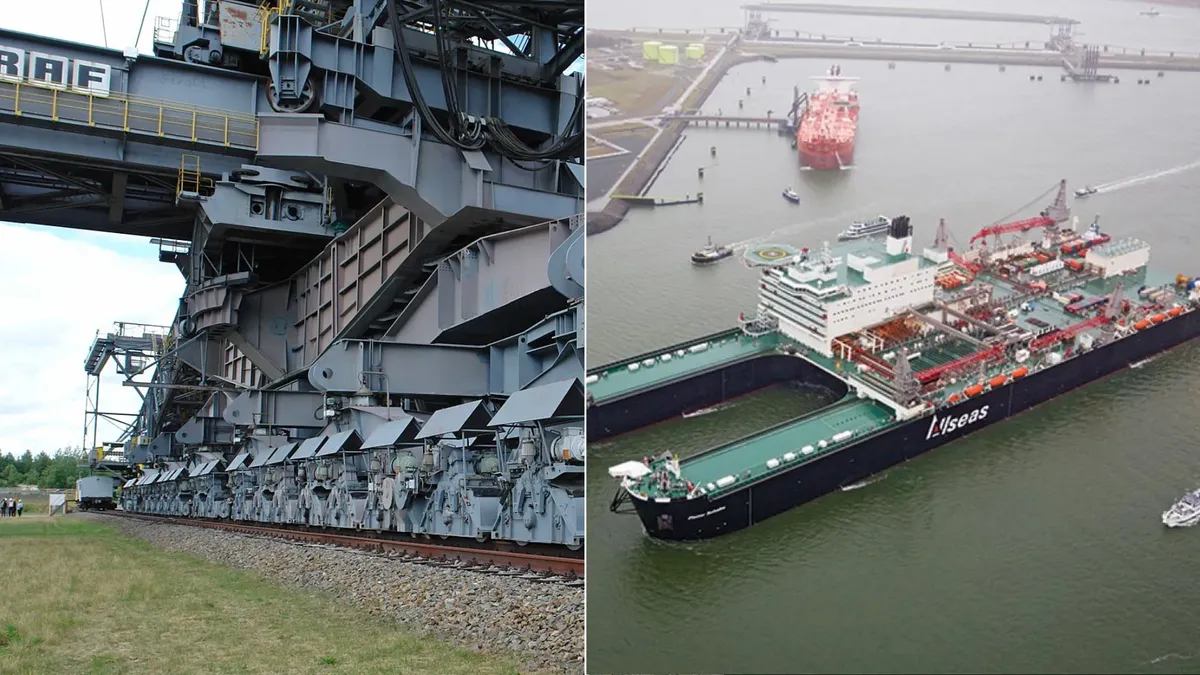
Then there's the appropriately named Bagger 293. This bucket-wheel excavator weighs a staggering 14,196 tons. At 220 meters long and 94.5 meters high, it’s not just the heaviest land vehicle but also the largest mobile industrial machine on Earth, according to Guinness. Its spinning wheel, a cool 21.6 meters across, is studded with 18 buckets, each capable of scooping up thousands of liters of... well, whatever's in its way. It moves at a snail's pace, but it can shift 240,000 cubic meters of earth daily. Because apparently, some mountains just need to be politely asked to move.
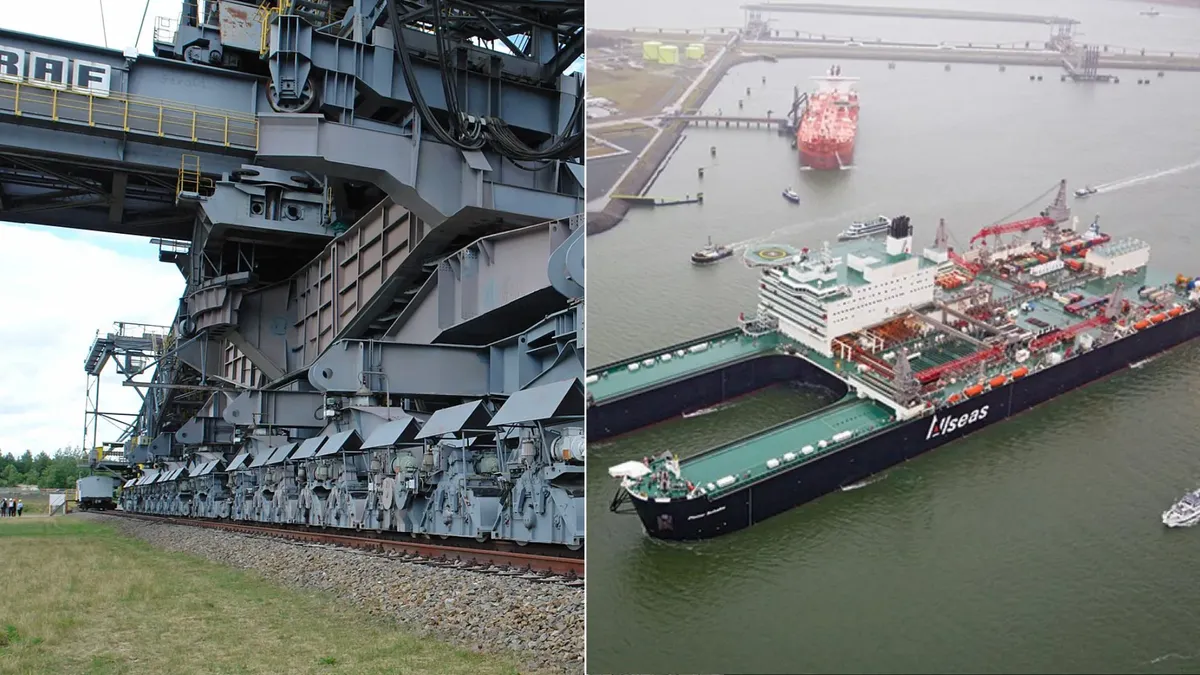
Speaking of things that move mountains (or at least, oil rigs), meet the Pioneering Spirit. This isn't just a ship; it's a floating city of industry, 382 meters long and 124 meters wide. Guinness calls it the world’s largest ship by gross tonnage, and its operators at Allseas simply refer to it as the world’s largest construction vessel. Its twin-hull design allows it to straddle entire offshore platforms and lift them in one go, like a giant, very careful crane. It can hoist 48,000 tons of platform topsides. Because apparently, that's where we are now.
Earth Movers and Space Haulers
Next up, the F60 Overburden Conveyor Bridge. Built in Germany between 1989 and 1991, this isn't just a bridge; it's a half-kilometer-long moving bridge designed to strip away layers of earth above brown coal deposits. At 502 meters long, 204 meters wide, and almost 80 meters high, it could span vast mining areas, continuously moving excavated material. It only ran for a year, but today, this retired leviathan stands as an industrial monument. Because even giant machines deserve a dignified retirement.
Then we have NASA’s Crawler-Transporter 2 (CT-2). This might be the slowest machine on the list, but it’s hard to argue with its purpose: moving entire rockets. Guinness recognized it in 2023 as the heaviest self-powered vehicle, tipping the scales at 6.65 million pounds (about 3,020 tons). Built in the 1960s to haul Saturn V rockets, CT-2 now supports NASA’s Artemis program, capable of carrying loads up to 18 million pounds. It moves on massive tracks along special pathways, because you don't just roll a rocket down the highway.
Let's not forget Big Muskie, a walking dragline excavator that, sadly, no longer exists. Finished in 1969, this Ohio coal mine titan weighed 13,200 tons and was the largest dragline excavator ever built. Its bucket alone could carry 325 tons of earth, and it moved around on hydraulic walking shoes. Big Muskie could shift 17,500 tons of earth per hour until its retirement in 1991. It was dismantled in 1999, but its legacy lives on as a testament to 20th-century mining excess.
Finally, the Caterpillar 6090 FS. This isn't about continuous cutting; it's about sheer, concentrated digging power. Weighing in at 1,000 tons and packing 4,500 horsepower, its bucket can scoop up 103 tons, or 55 cubic meters, in a single bite. It loads giant haul trucks one massive bucket at a time, showcasing how modern mining has evolved towards enormous payloads and hydraulic muscle. Because sometimes, you just need to get a lot of dirt, very quickly.
So, whether it's an underground ring for smashing particles, a mobile mountain-mover, or a space-age hauler, these machines prove that "big" comes in many glorious, slightly absurd forms. And each one makes you wonder: what will they build next?