On July 20, 1969, Neil Armstrong became the first person to walk on the moon. He, Buzz Aldrin, and Michael Collins traveled on Apollo 11, leaving Earth on July 16 and returning eight days later. A big challenge for this journey was making sure the crew had enough food and drink. This required careful planning.
Preparations for space food began years before the mission. Astronauts tested what they could eat in space. John Glenn, the first American to orbit Earth, was also the first American to eat a meal in space. He showed that eating and digesting in space was possible. One item he tested was apple puree in a tube.
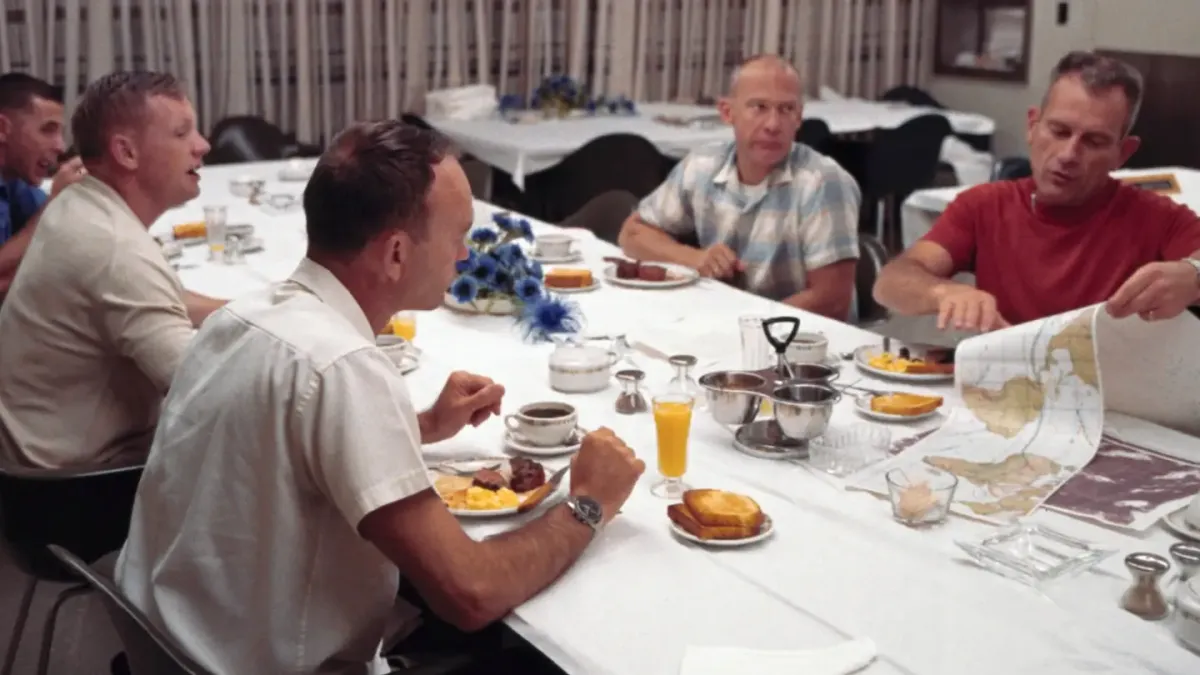
Before each launch, astronauts ate a big breakfast on Earth. Once in space, their meals changed. The food was carefully prepared to give them 2,800 calories each day on the Apollo 11 mission.
We're a new kind of news feed.
Regular news is designed to drain you. We're a non-profit built to restore you. Every story we publish is scored for impact, progress, and hope.
Start Your News DetoxWhy Freeze-Dried Food Was Key
Many foods for the Apollo 11 astronauts were freeze-dried. This kept them fresh and helped them keep their nutrients. The National Air and Space Museum has a package showing some of these foods.
One package held freeze-dried chicken with rice and sauce in an airtight plastic bag. It was wrapped in laminated film to keep its flavor. This was one of the three daily meals for the astronauts. Other freeze-dried items included fruit cake and cubes of barbecued beef.
Apollo 11 was also the first space trip where astronauts could eat hot dogs. The very first meal eaten on the moon included bacon cubes, sugar cookies, peaches, coffee, and a pineapple and grapefruit soft drink.
The Astronauts' Post-Mission Menu
After returning to Earth, the crew went into quarantine for 21 days. This was to make sure they hadn't brought back any harmful bacteria. During this time, they had a final period of unusual eating before returning to normal life. Menus from this quarantine still exist.
The quarantine menu was more limited than food on Earth. But it allowed them to eat things like soup, which they couldn't have during their mission.
Today, astronauts have many more food options in space. However, some things are still impossible to take, like alcohol and perishable items. This helps minimize health risks for astronauts away from Earth.