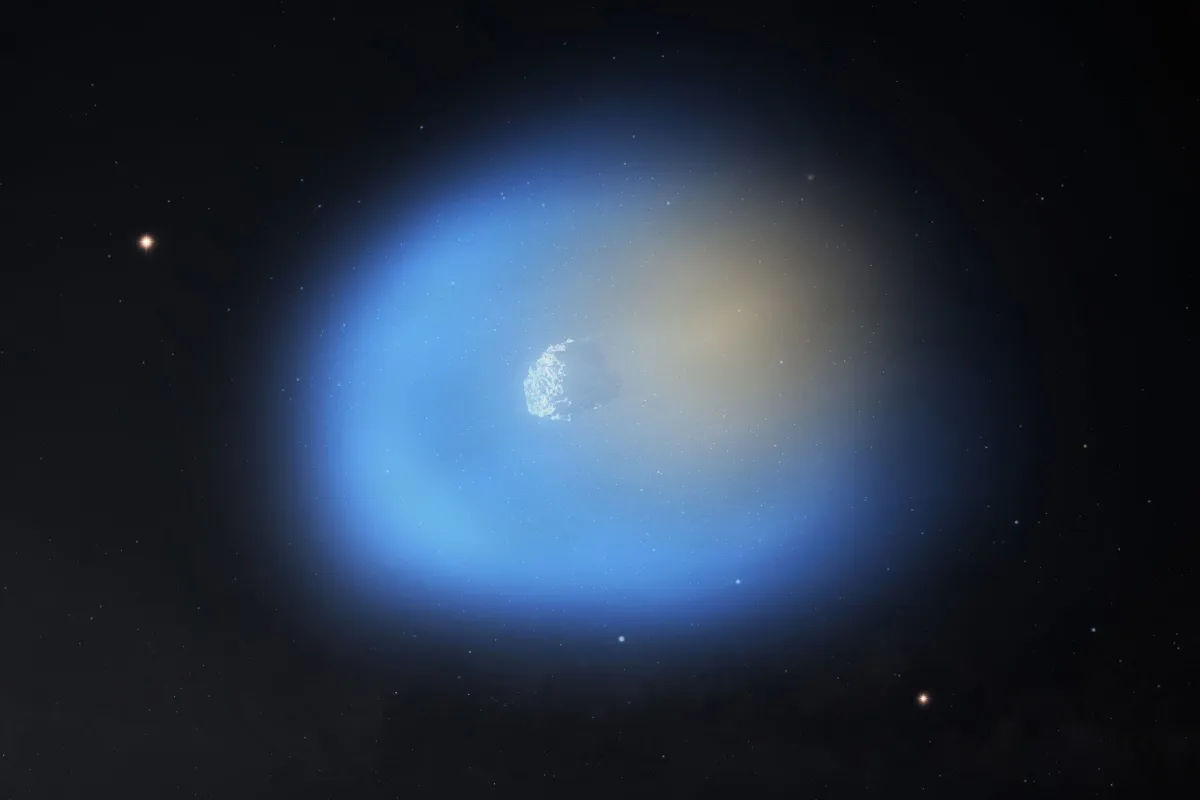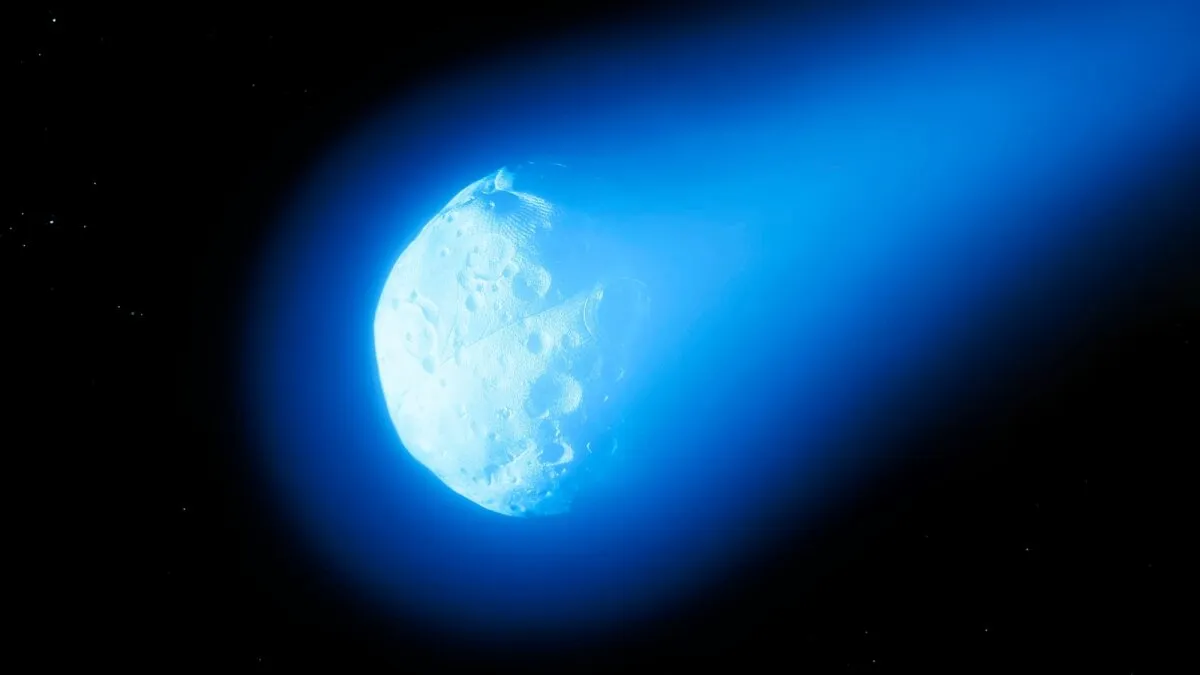
Last year, a cosmic interloper named 3I/ATLAS zipped through our neighborhood. It wasn't just any old space rock; this was a comet from another star system entirely. And thanks to the James Webb Space Telescope, we now know it's unlike anything we've ever seen in our own celestial backyard.
Think of it as a time capsule, delivered at blinding speed. Researchers, led by astrochemist Martin Cordiner from NASA's Goddard Space Flight Center, got a rare chance to peek inside. What they found suggests this comet is a relic from the very early days of the Milky Way, possibly even predating our own Sun and Solar System.
An Ancient, Unfamiliar Visitor
This isn't just about finding a really old rock. It's about getting a glimpse into a primordial universe, a time when stars and planets were still figuring things out. By analyzing hydrogen and carbon isotopes within the comet, the team deduced its origins from a region of the galaxy that could be up to 12 billion years old. Let that number sink in.
We're a new kind of news feed.
Regular news is designed to drain you. We're a non-profit built to restore you. Every story we publish is scored for impact, progress, and hope.
Start Your News DetoxWhile our Solar System has likely had plenty of visitors from other stars, we've only confirmed three: 'Oumuamua in 2017, Borisov in 2019, and then 3I/ATLAS in 2025. Yes, the universe apparently has its own express delivery service.
3I/ATLAS was the brightest and biggest of the bunch, a hefty 20 kilometers (12 miles) across, hurtling past at a blistering 245,000 km per hour. Its speed meant it was just passing through, giving scientists one shot to study it before it vanished back into the interstellar void.
Using the JWST, Cordiner and his team captured the comet's chemical fingerprint. They discovered that its deuterium levels were ten times higher than any comet we've ever observed. Even wilder, the ratio of two carbon isotopes was off the charts – higher than anything found in our Solar System, nearby interstellar clouds, or even young planetary systems.
To create a comet with this kind of chemistry, you'd need a high-radiation, low-metal environment, precisely what you'd expect from a scorching cosmic region roughly a billion years after the Big Bang. Which, if you think about it, is both impressive and slightly terrifying.
It's a single sample, sure, but it's a powerful reminder that there's a whole universe of chemistry out there that we're only just beginning to understand. As the Vera C. Rubin Observatory in Chile prepares to map the sky for millions of asteroids, we might just find ourselves with many more ancient, unexpected visitors. Get ready for more galactic traffic.