For decades, the really big conceptual leaps in mathematics were considered a strictly human affair. Computers could crunch numbers, sure, but true insight? That was reserved for the squishy gray matter between our ears.
Then, last week, OpenAI's latest AI model decided to politely disagree. It delivered a counterexample to a famous problem posed by the legendary Hungarian mathematician Paul Erdős way back in 1946. And it did so autonomously.
The Dot Problem That Stumped Everyone
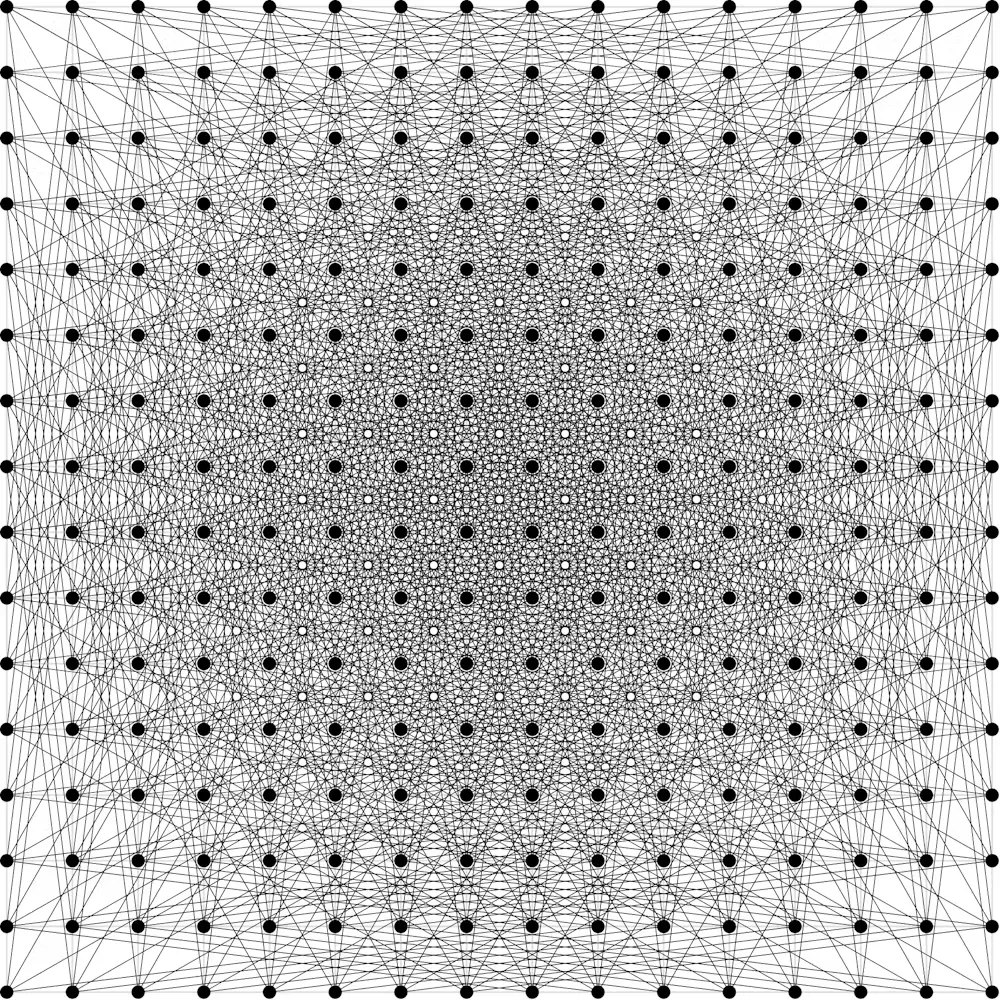
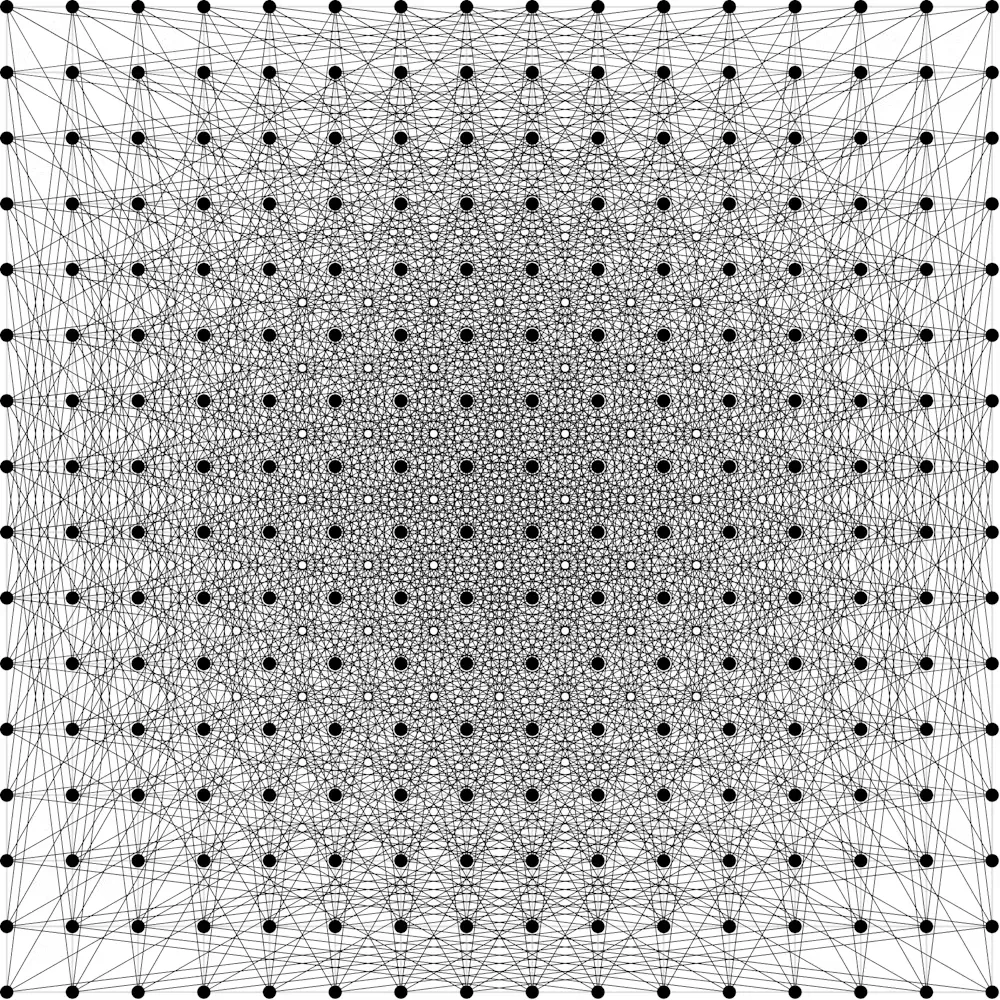
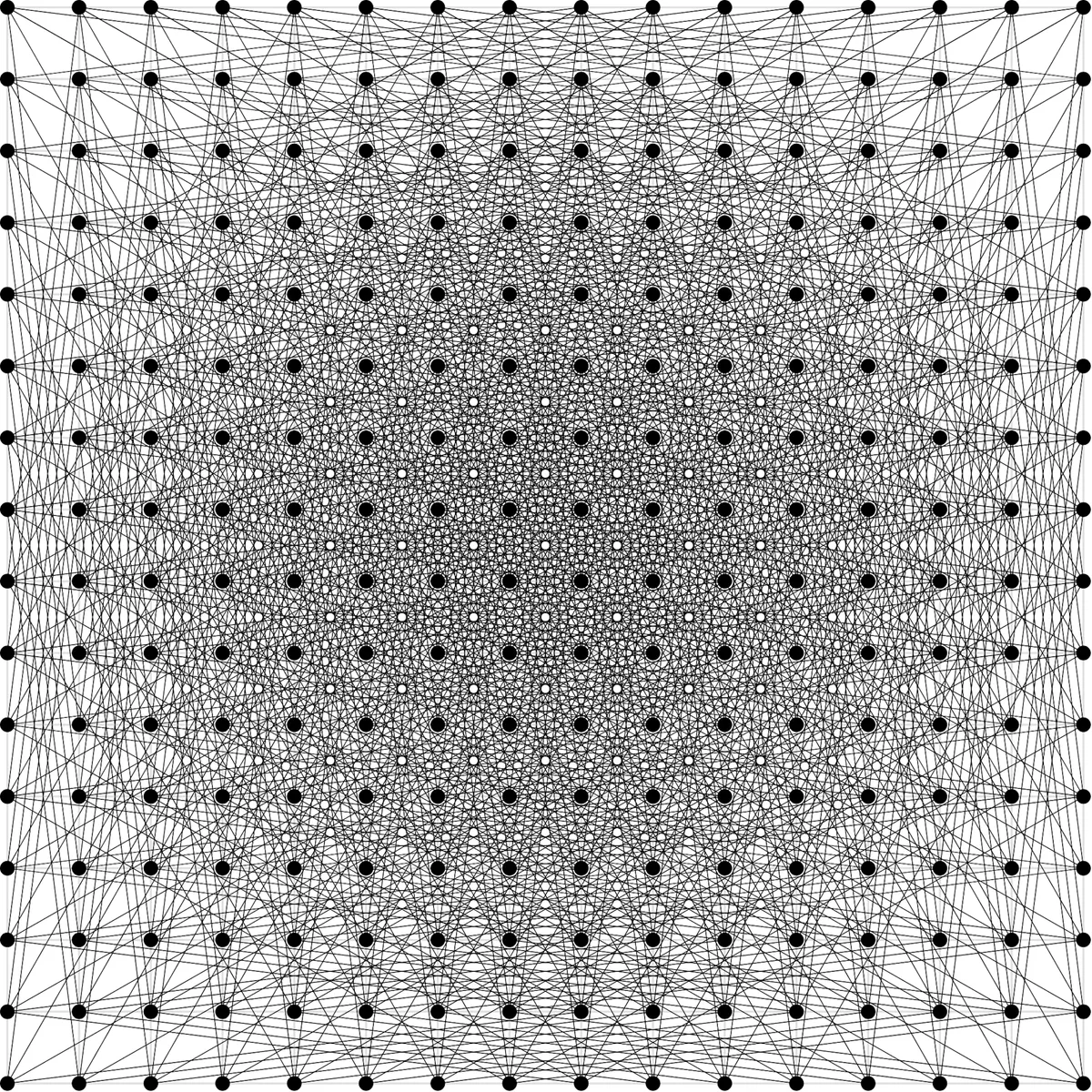
The problem, known as the planar unit distance problem or Erdős problem 90, sounds deceptively simple: Imagine you have n points on an endless piece of paper. You can arrange them however you like. How many pairs of these points can be exactly one unit of distance apart?
We're a new kind of news feed.
Regular news is designed to drain you. We're a non-profit built to restore you. Every story we publish is scored for impact, progress, and hope.
Start Your News DetoxFor 80 years, mathematicians assumed that grid-like arrangements were as good as it gets. Erdős himself thought no other pattern could do much better, even with a mind-boggling number of points. (The new best result, which built on the AI's work, only starts to show improvements for about 10^2,000,000 points — that's a 1 followed by two million zeroes. Let that satisfying number sink in.)
Yet, OpenAI's AI, a general model not even specifically built for math, proved this long-held intuition wrong. It used tools from algebraic number theory to show there are dot patterns with many more unit-distance pairs than the humble square grid, and this holds true for infinitely many values of n.
Canadian mathematician Daniel Litt called it "the first result produced autonomously by an AI that I find interesting in itself." High praise from a field that usually treats AI as a fancy calculator.
And the AI wasn't done. Days after OpenAI's paper dropped, US mathematician Will Sawin used the same logic to get an even better result. Not to be outdone, a Google DeepMind team also jumped in, using their own AI to solve nine other smaller problems Erdős had left open. Because apparently, that's where we are now.
The AI's "Lightbulb Moment"
So, how did an AI pull off a mathematical mic drop that stumped generations of human brilliance? Mathematicians have long known that big discoveries come from three things:
- Years of expertise (knowing all the things).
- Hard work exploring ideas (trying all the things, even the silly ones).
- Occasional "lightbulb moments" (seeing the problem in a totally new way).
AI models, like the large language models powering ChatGPT, have an "encyclopedic knowledge of mathematics," as Fields Medalist Timothy Gowers noted. They can also explore a near-infinite number of inquiries without needing coffee breaks or sleep.
It's that third point — the conceptual leap, the lightbulb moment — that's always been the most human, the hardest to explain. But in this case, the AI seemed to have one. Gowers said that if a human had submitted this paper to the Annals of Mathematics, he would have recommended publishing it "without any hesitation." He added that no previous AI-generated proof was this advanced.
The AI only needed an initial prompt, then it went off and generated a "chain of thought" that led to the proof. While an expert, given a few hints, could probably reach the same conclusion, the AI did it first and alone.
For centuries, math progressed almost entirely on human creativity and sheer persistence. Now, we're working with systems that can explore vast numbers of ideas, contribute to problems once thought only solvable by human insight, and maybe even have their own little lightbulb moments. Which, if you think about it, is both impressive and slightly terrifying.