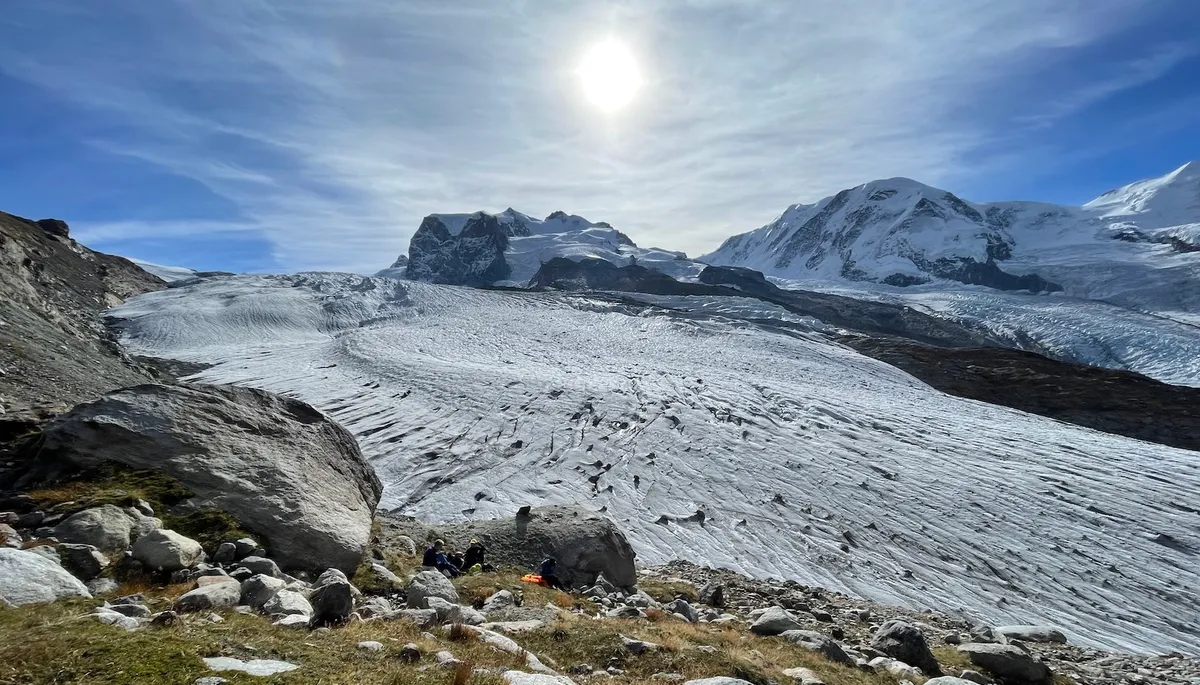
Scientists are using a new method called distributed acoustic sensing (DAS) to study glaciers. This technique uses fiber optic cables to detect tiny vibrations in the environment. It's proving to be a powerful tool for understanding how glaciers are changing.
Listening to Glaciers with Fiber Optics
Researchers in Switzerland laid fiber optic cables in a grid on an alpine glacier. They sent laser pulses through the cables. Even small disturbances along the cable sent light back to a device, which recorded them. This allowed them to pinpoint "icequakes," which are fractures that create seismic activity, much like earthquakes.
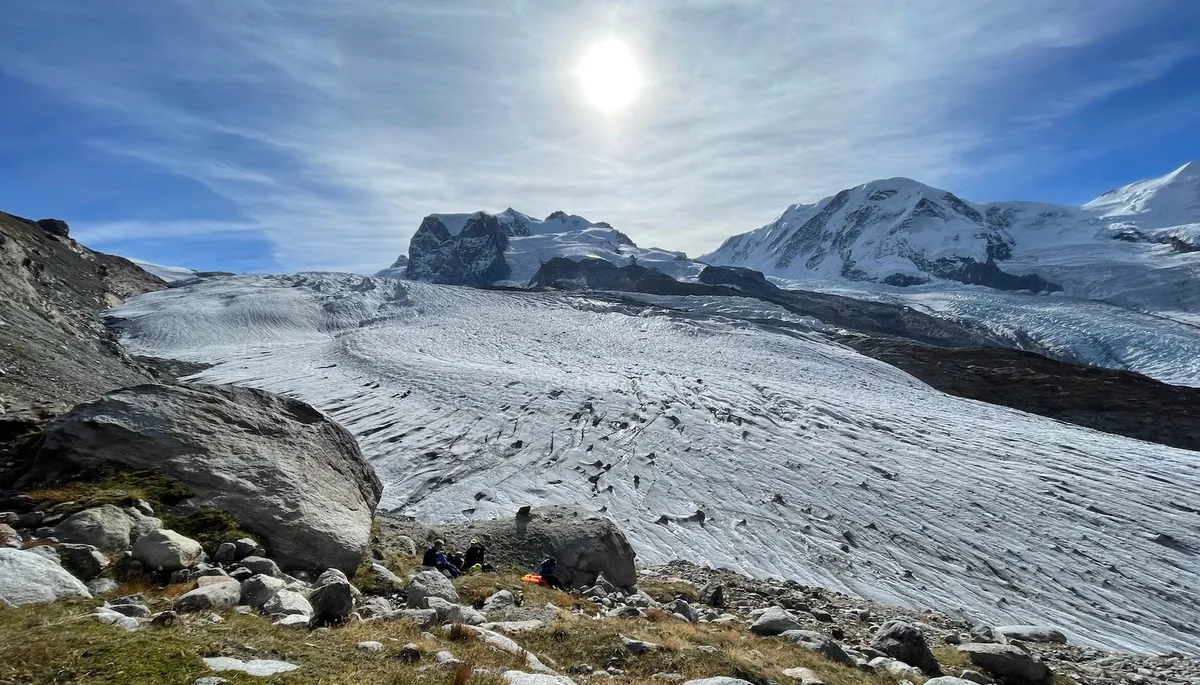
This DAS method offers a huge advantage over traditional seismometers, which only detect shaking at one point. Thomas Hudson, a seismologist at ETH Zurich, explained that a single fiber optic cable can act like thousands of strain sensors, or thousands of seismometers.
We're a new kind of news feed.
Regular news is designed to drain you. We're a non-profit built to restore you. Every story we publish is scored for impact, progress, and hope.
Start Your News DetoxFiber optic cables are also relatively inexpensive. This means if a glacier experiences a catastrophic event, the financial loss for the researchers is smaller. Glaciers can be dangerous places to work due to crevasses. With DAS, scientists can lay the cable, leave the site, and receive a constant stream of real-time data remotely.
Understanding Hydrofracturing and Glacier Stability
Using DAS, the team discovered that the alpine glacier is not just melting from warmer air. Meltwater, which is denser than solid ice, flows deep into cracks. This forces the ice apart, creating new crevasses and weakening the glacier's structure. This process is called hydrofracturing.
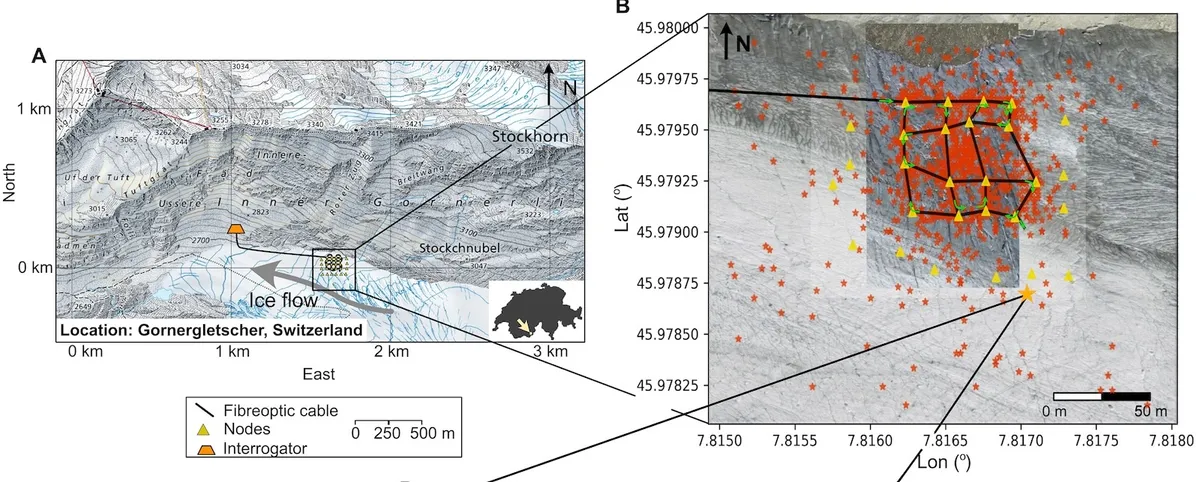
Hudson noted that the depth and number of these cracks are crucial for a glacier's stability. These glaciers often hang over important infrastructure like train lines and villages. Applying this technology could provide early warnings of stability changes. In just one week, Hudson's team detected over a thousand icequakes. These fractures allow meltwater to penetrate deep into the glacier, a process likely happening in other glaciers worldwide.
One goal is to develop DAS into an early-warning system for catastrophic glacial collapses, like one that recently occurred in Nepal. Hudson believes signals could be picked up before such disasters. However, turning these signals into an accurate early-warning system that protects people is still a challenge.
DAS could also help monitor ice in Greenland and Antarctica. In Antarctica, warming ocean waters are eroding the undersides of ice shelves. Another DAS study in Greenland found that violent ice calving stirs the water, breaking up a protective layer of cold water and leading to more melting.
By using DAS, scientists can get an unprecedented look inside the ice. They can see how seismic waves travel and reveal destabilizing cracks. Understanding the depth and number of these cracks will give a better idea of how stable larger glaciers are. This information is vital for predicting how fast glaciers might break up and contribute to sea level rise.