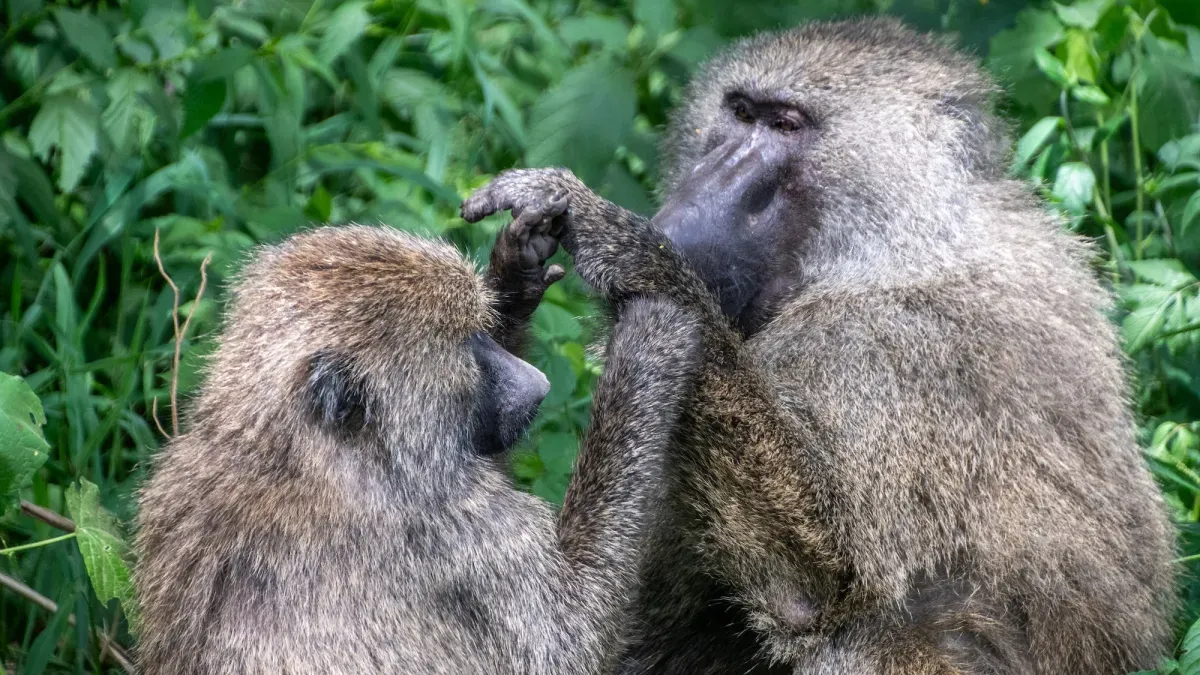
Only a few species besides humans are known to understand geometry. Scientists once thought that even our closest primate relatives struggled with shapes and space. However, a new study shows that some monkeys might not only understand geometry but also process it like humans do.
Monkeys and Geometry
Jessica Cantlon, a cognitive neuroscientist at Carnegie Mellon University (CMU) and a study co-author, noted that the surprising part was how monkeys, children, and adults all thought about geometric relationships in the same way. This suggests these ideas are a basic part of the primate mind.
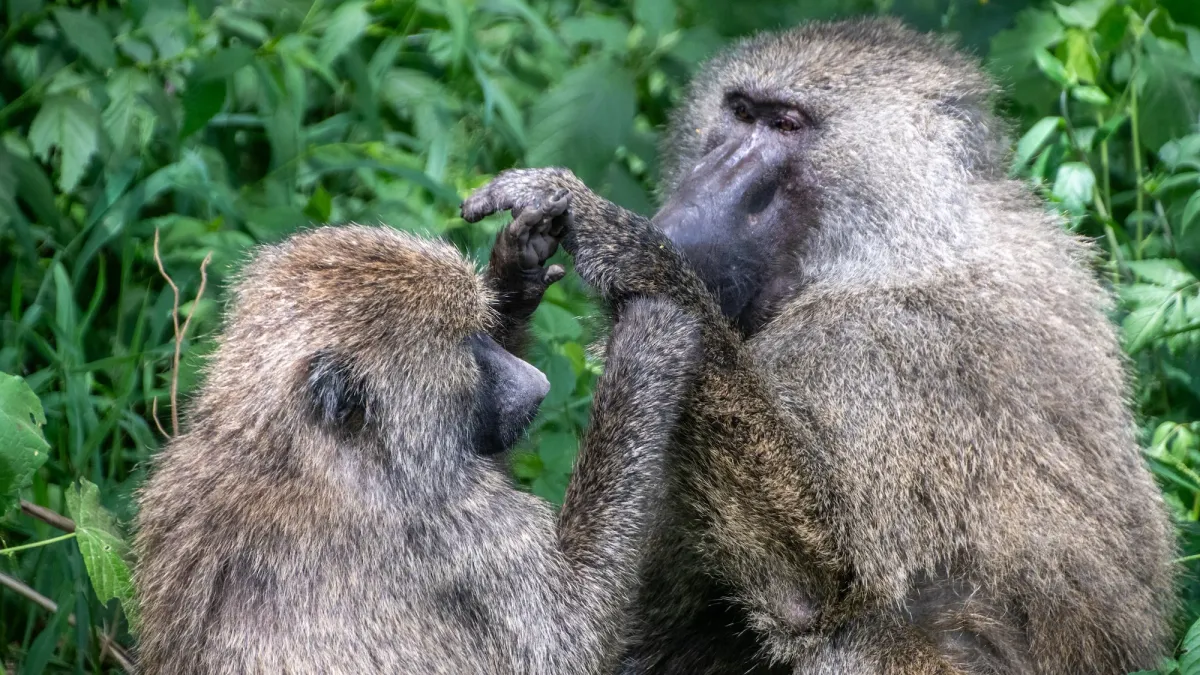
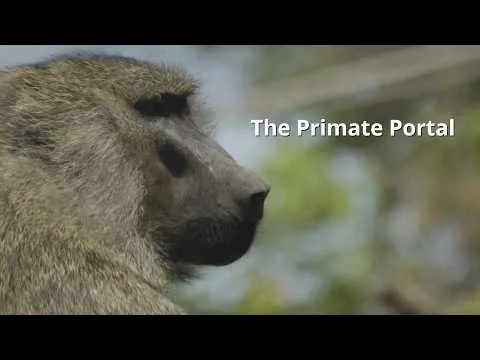
Cantlon and her team studied olive baboons (Papio anubis) and Rhesus macaques (Macaca mulatta) at New York's Seneca Park Zoo. These primates use touchscreens for various cognitive tasks. The data and videos from these tasks are openly available.
We're a new kind of news feed.
Regular news is designed to drain you. We're a non-profit built to restore you. Every story we publish is scored for impact, progress, and hope.
Start Your News DetoxThe monkeys were given fruit for playing a 2D shape-matching game. Cantlon explained that the game is harder than it sounds because the shapes don't have very distinct features like form, size, or color. She warned that even humans would find it tricky.
Comparing Primates and Humans
To compare results, the team gave the same game to preschoolers, 21 American adults, and nearly 80 adults from the Tsimane’ people. The Tsimane’ are an Indigenous group in Bolivia who do not receive formal education. This helped the researchers separate the effects of age and culture.
Cantlon explained that it can be hard to tell if a child's ability comes from development or from learning through education. By including the Tsimane’, the team could see what children know before formal schooling.
The study showed a clear range of geometric understanding across monkeys, human children, and adults from different backgrounds. The results suggest that human children are born with an innate sense of space and shape. Geometry lessons then build on these existing ideas.
Ancient artifacts support the idea that humans have long understood Euclidean geometry. For example, a 70,000-year-old stone with parallel lines was found in South Africa's Blombos Cave. Also, a 40,000-year-old mammoth tusk with rows of notches was found in Germany.

Cantlon said that these geometric ideas feel automatic to us because we have learned them so deeply. However, it now seems this understanding started before humans.
Jialin Li, another study co-author and CMU cognitive scientist, mentioned one baboon named Kalamata. He was very dedicated, waiting for the computer to turn on and then working on math tasks for two to three hours.