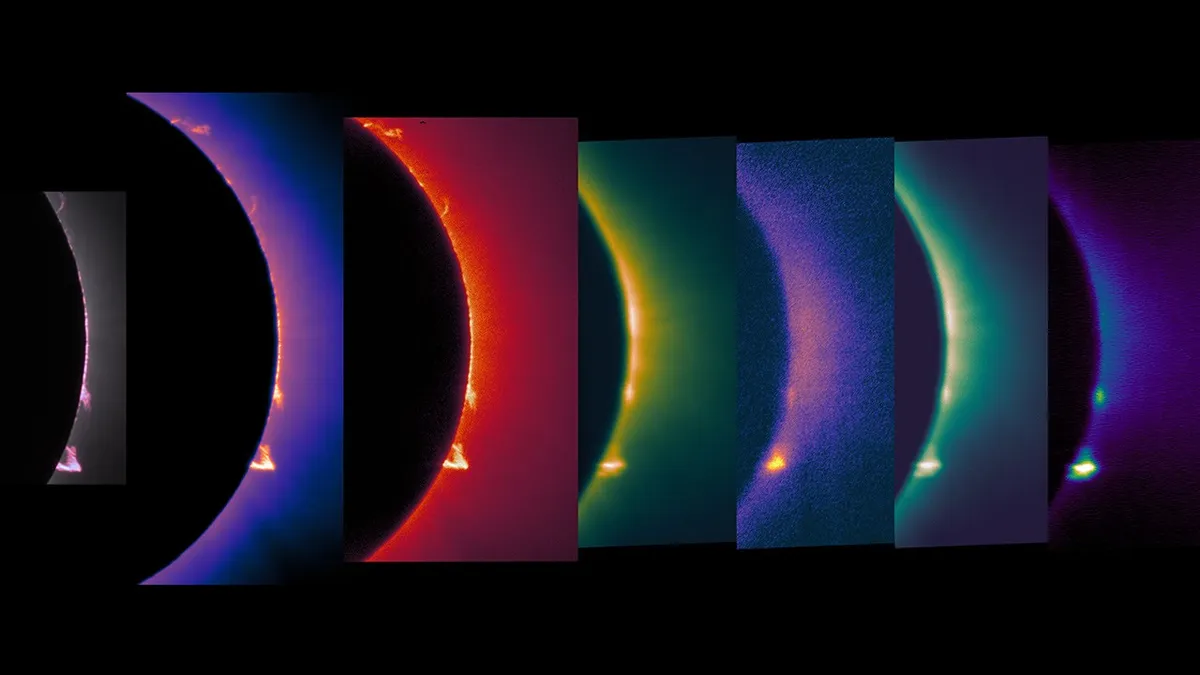
Mark your calendars, celestial spectacle fans: on August 12, a total solar eclipse will sweep across Greenland, Iceland, and Spain. This isn't just a pretty show; it's a rare chance for scientists to go full Sherlock Holmes on our nearest star.
Because when the moon decides to play peek-a-boo with the sun, it reveals the sun's wispy outer atmosphere, the corona. And as NASA's eclipse program manager, Kelly Korreck, points out, studying the corona from Earth during an eclipse is like getting a backstage pass to the universe. It's how we figure out how the sun messes with our satellites, astronauts, and, you know, daily existence.
So, what's NASA doing? They're sending a high-flying jet and a fleet of scientific balloons to get up close and personal.
We're a new kind of news feed.
Regular news is designed to drain you. We're a non-profit built to restore you. Every story we publish is scored for impact, progress, and hope.
Start Your News DetoxThe Jet That Chases Shadows
Imagine a research aircraft, the NASA WB-57, flying at 50,000 feet — well above any pesky clouds. It's got four cameras jammed into its nose cone, snapping at least 20 high-res images per second of the corona. Think of it as a paparazzi for the sun, but with actual scientific purpose.
Why go to all this trouble? Scientists want to understand solar prominences (those loops of solar material hovering above the sun's surface), figure out why the corona is a million degrees hot, and trace the origins of the solar wind that blasts across our solar system.
By flying along the moon's shadow, this jet extends the viewing time from a mere two minutes and 18 seconds on the ground to almost three minutes. Every second counts when you're trying to unravel cosmic mysteries. Amir Caspi, the principal investigator from the Southwest Research Institute, says every eclipse is a new opportunity, like watching a perpetually changing cosmic drama. They're even making improvements based on the April 2024 eclipse, because apparently, even sun-gazers are always optimizing.
Balloons That Feel the Vibe
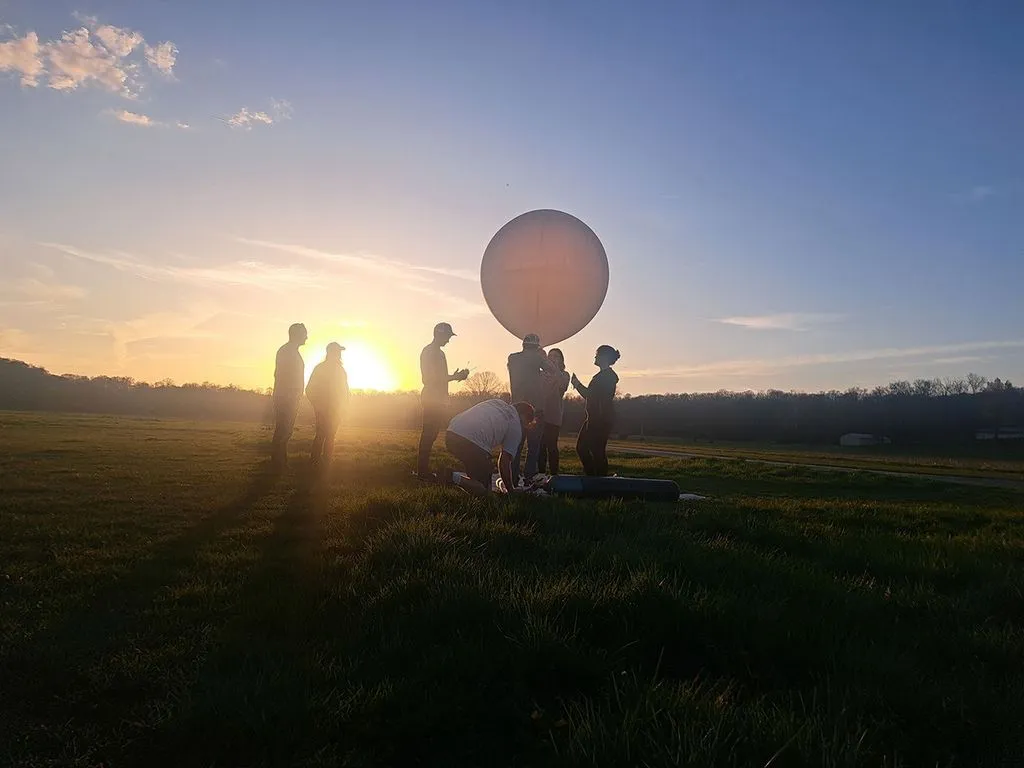
Meanwhile, closer to home, the Nationwide Eclipse Ballooning Project is dispatching students to Iceland and Spain. Their mission: launch scientific balloons to see how our atmosphere reacts to sudden, temporary darkness. Because, apparently, our atmosphere is a bit dramatic when the lights go out.
In Iceland, two teams will launch 80 balloons over 26 hours to study the "boundary layer" — the part of the atmosphere closest to the ground. Previous eclipse flights showed this layer could collapse in clear skies. Will it happen again in Iceland, where August days are long and nights are short? Matthew Bernards, a professor at the University of Idaho, is leading one team and is clearly ready for some atmospheric plot twists.
Over in Spain, three more balloon teams will launch six balloons equipped with 360-degree cameras to capture the eclipse's shadow from above. They'll also measure ozone levels. Ozone needs sunlight to form, so scientists are curious to see if it drops again, especially since this eclipse is later in the day and in a different season. Because, as we all know, timing is everything.
So, while most of us won't see the total eclipse in person (unless you're in Greenland, Iceland, or Spain, in which case, lucky you), NASA's high-altitude party crashers will be collecting some seriously cool data. It's all in the name of understanding that giant, fiery orb that keeps us all alive — and occasionally, gives us a really good show.