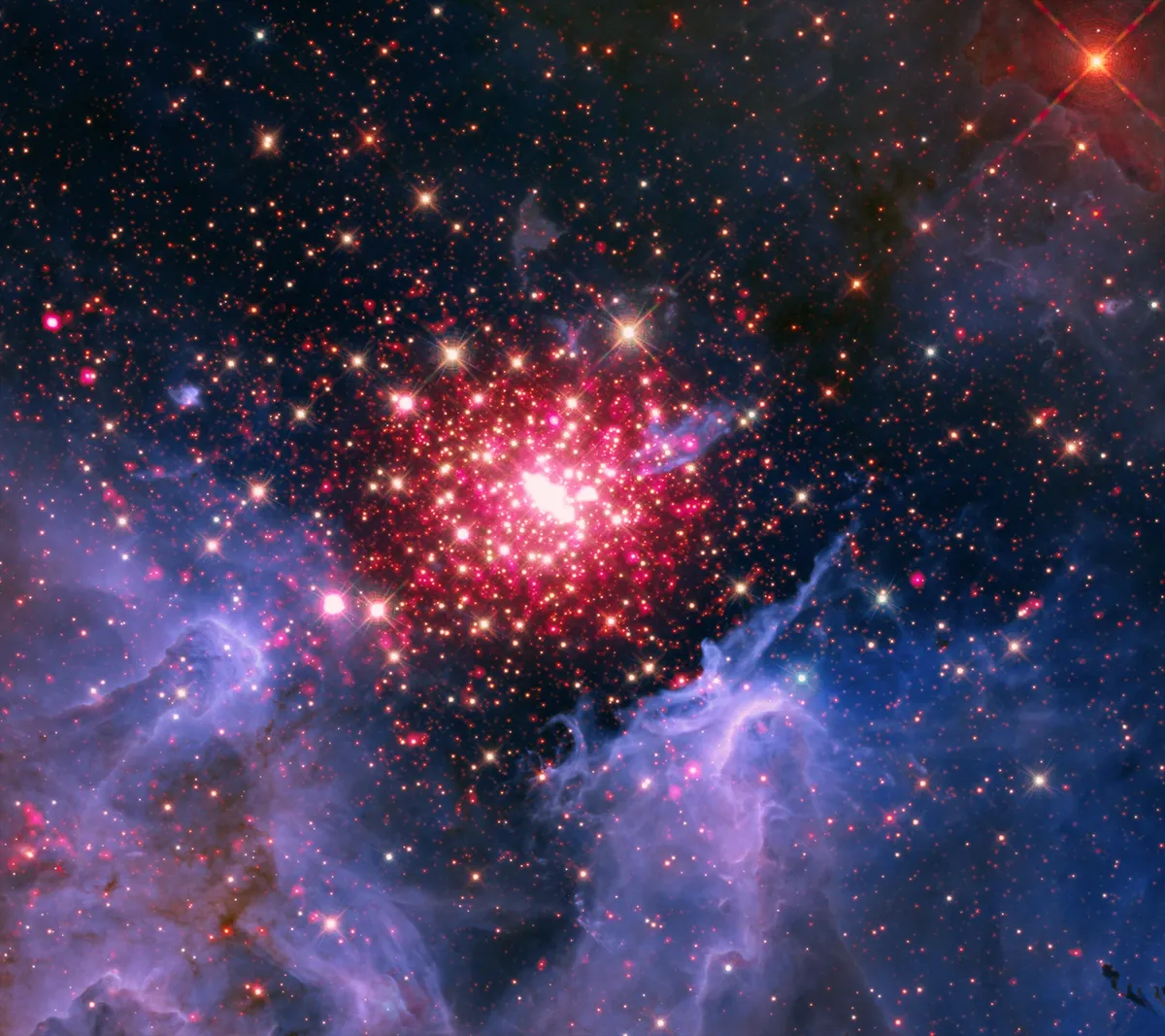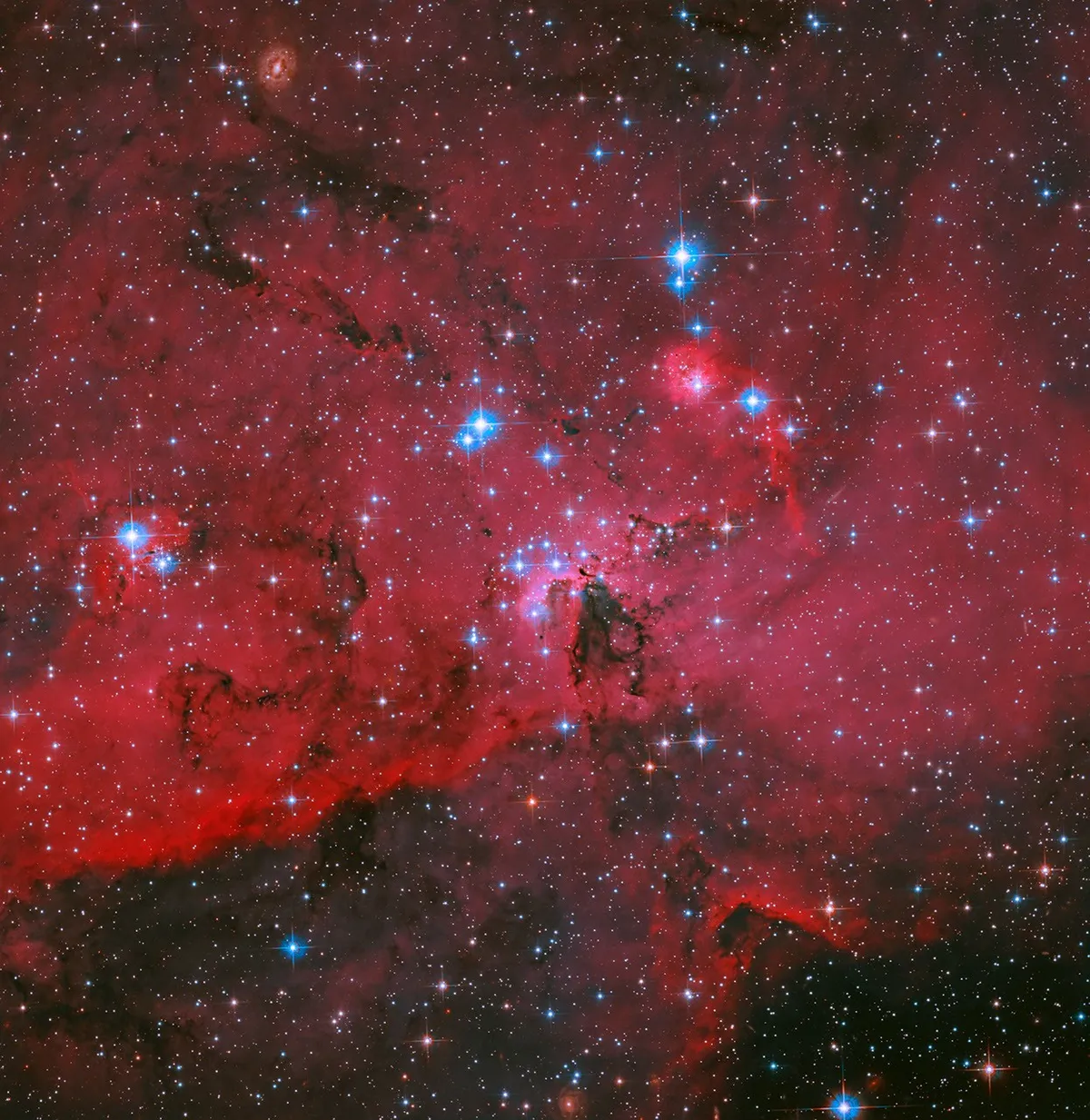
Imagine a cosmic fireworks display, but instead of fleeting sparks, you've got baby stars popping into existence. That's essentially what NASA's Hubble Space Telescope just captured in a stunning new image: a glowing crimson cloud named LH 95, absolutely packed with young, brilliant blue and white stars.
This isn't some distant galaxy you'll never hear from again. LH 95 is nestled in the Large Magellanic Cloud, a smaller galaxy that's basically our Milky Way's next-door neighbor. So close, in fact, that astronomers get a pretty clear, unobstructed view of its stellar nurseries.
Cosmic Daycare
LH 95 isn't just a random cluster; it's what scientists call a "stellar association," meaning all these stars basically grew up together. You've got everything from tiny, recently-formed stars to colossal blue giants, some at least three times the size of our own Sun. These behemoths are the rock stars of the cloud, blasting out ultraviolet light and stellar winds that heat and sculpt the surrounding hydrogen gas into that dramatic crimson glow.
We're a new kind of news feed.
Regular news is designed to drain you. We're a non-profit built to restore you. Every story we publish is scored for impact, progress, and hope.
Start Your News DetoxThat red hue? That's hydrogen-alpha emissions, the cosmic equivalent of a neon sign saying, "Star Formation Happening Here!" Astronomers use this glow to sniff out brand-new stars still in their infancy, hidden within the gas and dust.
And what they found in LH 95 is truly wild: 2,500 "pre-main-sequence stars." These are stars that are almost fully grown but haven't quite flipped the switch on nuclear fusion yet. They're like teenagers, still growing into their bodies, but about to hit a major growth spurt where they'll start burning hydrogen in their cores and become full-fledged adults.
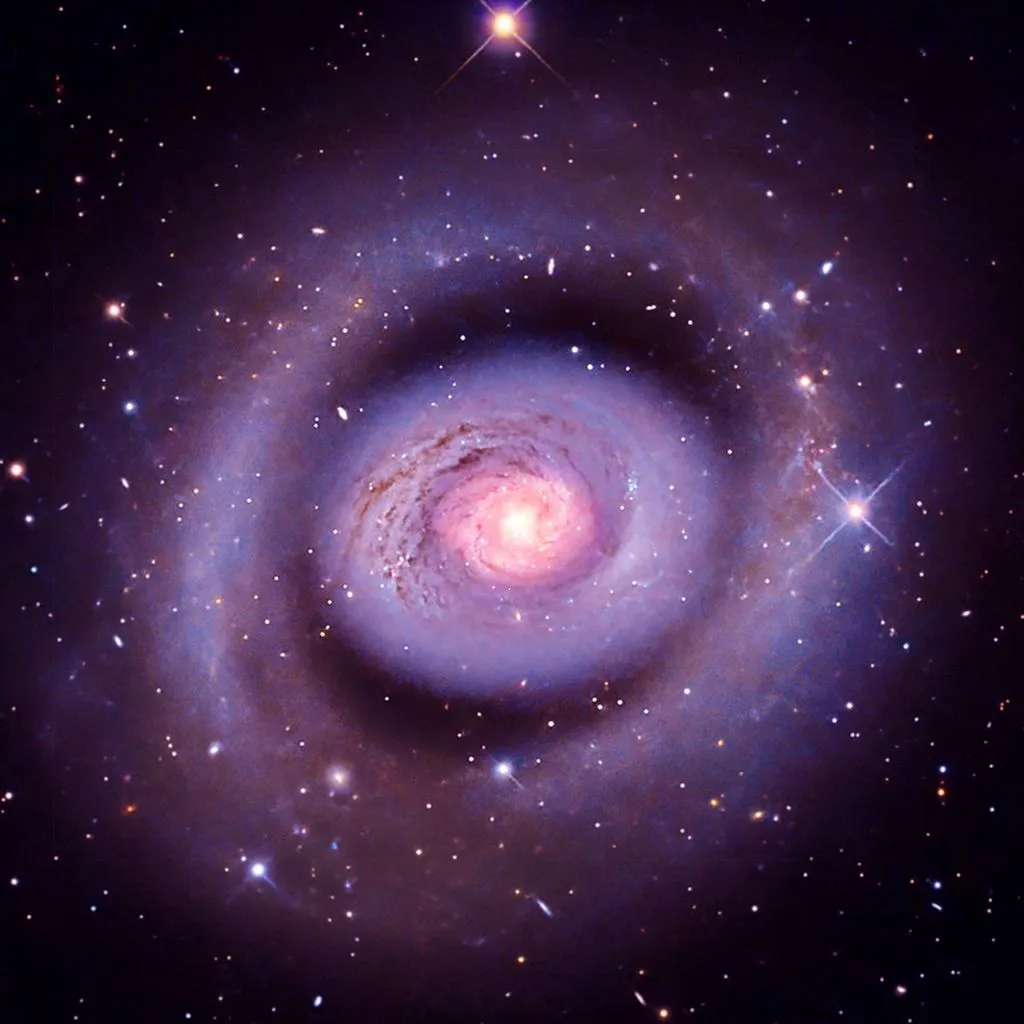
Studying these cosmic adolescents, researchers confirmed something expected: stars slow down their matter-gathering as they age. But here's the kicker: this growth phase can last for several million years. That's significantly longer than previously thought, completely reshaping our understanding of how young stars mature and how their surrounding disks evolve. Apparently, even stars need a long runway.
Generations Apart
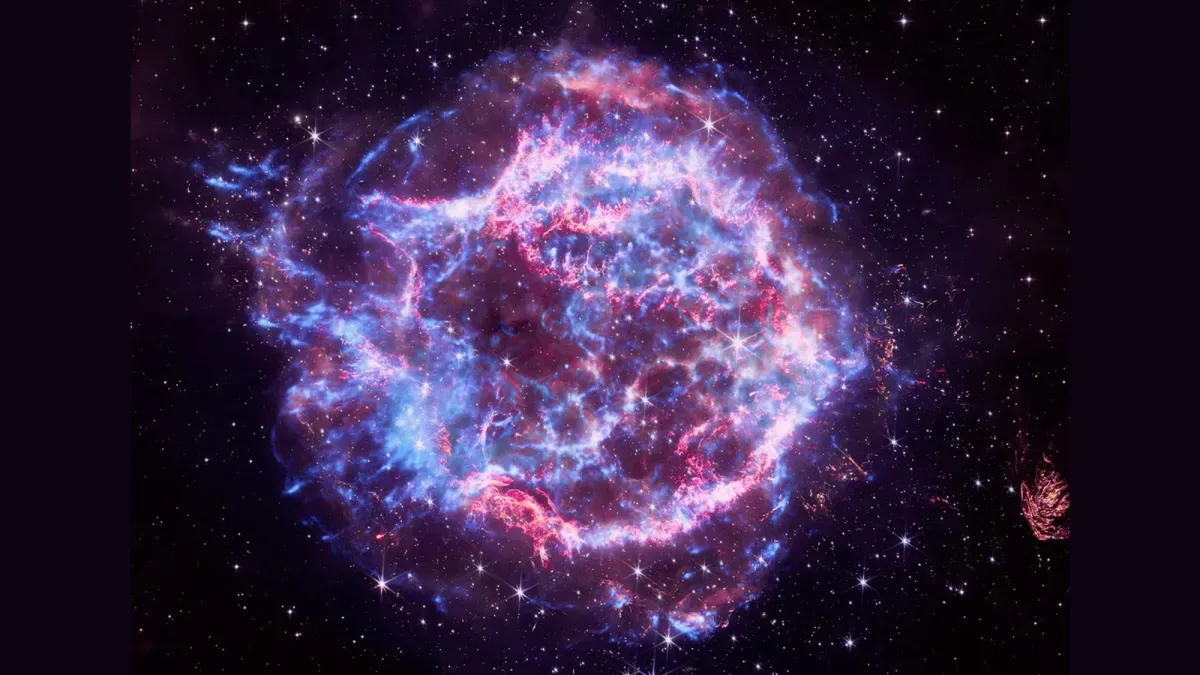
Another eyebrow-raising discovery: LH 95 isn't a one-and-done star factory. It's a multi-generational affair, with stars of different ages living side-by-side. The most massive star in the system, a true giant at 60 to 70 times the Sun's mass, is a million years younger than its 4-million-year-old neighbors. Which, if you think about it, is both impressive and slightly terrifying, considering massive stars burn through their fuel at a furious pace and end their lives in spectacular supernova explosions.
LH 95 is a treasure trove for astronomers because it offers such an intimate look at star formation, largely free of the dusty interference that often plagues similar regions in our own Milky Way. Hubble, after 30 years of delivering these cosmic postcards, continues to combine its vision with other missions like the Webb Space Telescope, ensuring we keep getting these mind-bending glimpses into the universe's most dramatic acts of creation.