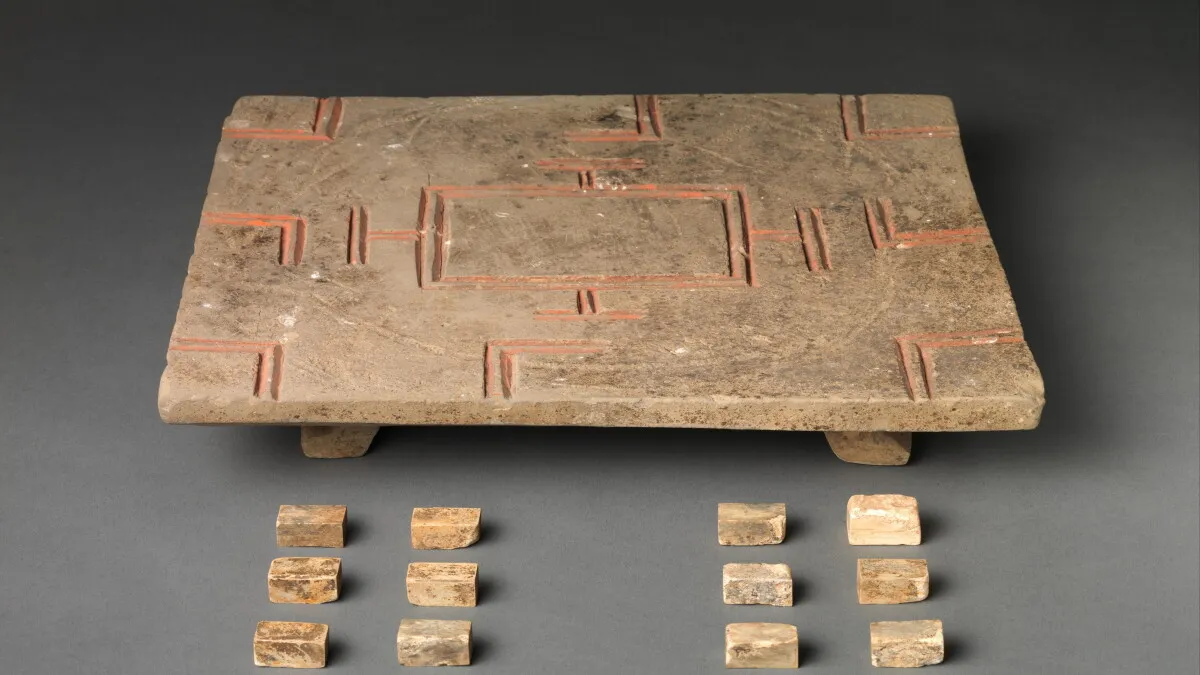
Archaeologists have found new clues about an ancient game called Liubo. This game was similar to chess and was played 2,000 years ago. Everyone from royals to commoners in China enjoyed it.
The new findings come from Han dynasty tombs in Shaanxi Province, northern China. Researchers found ancient "chessboards" there. Liubo came about 500 years before modern chess.
The Shaanxi Provincial Institute of Archaeology shared these discoveries. They were found at a site in northwestern China that is being developed for a city.
We're a new kind of news feed.
Regular news is designed to drain you. We're a non-profit built to restore you. Every story we publish is scored for impact, progress, and hope.
Start Your News DetoxThe Mystery of Liubo's Rules
Most people haven't heard of Liubo. This is because its exact rules have been lost over time. Historians have gathered some clues from old texts and archaeological finds. But they still don't fully understand how the game worked.
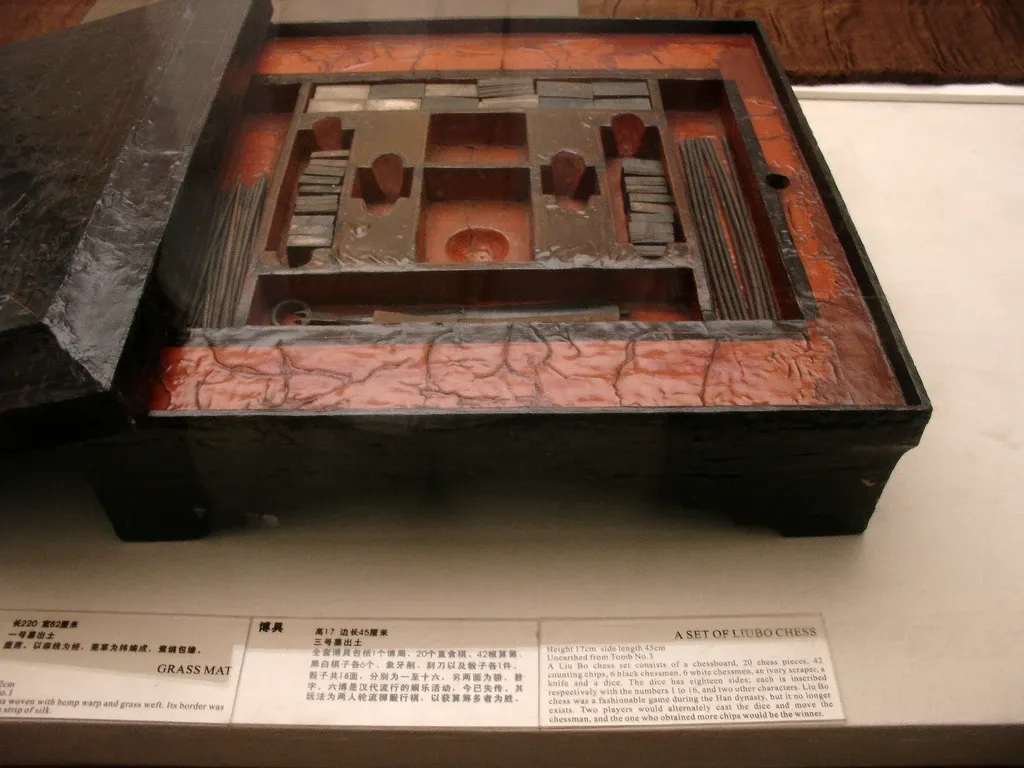
We know Liubo was a two-player game. Each player had six pieces, either black or white. It also used six "throwing sticks." These might have been like dice or used for bargaining.
The game board had 12 "paths" and a central area called the "water." Researchers at Carnegie Mellon University have an interesting idea about the game. They believe players had bird pieces that could turn into owls as they moved. These owls would then go to the central "water" area, which was like a pond. Only owls could "catch" fish there.
Catching fish earned players points. The first player to get six points won. Researchers from Carnegie Mellon University explained that "Liubo is a game about birds catching fish." They noted that birds would "fly around the board" to reach the center pond. They would catch fish by landing on or crossing this pond. Then, they would score points by dropping the fish in "Nest" spaces on the opponent's side.
Each game likely took between 10 and 45 minutes.
However, researchers still don't know the exact movement rules, different versions of Liubo, or how to win. It's thought that the game's secrets disappeared during the Tang dynasty (AD 618-907).
Tracing Liubo's History
Liubo was most popular during the Western Han period (206 BC-AD 9). Some archaeological finds suggest it might date back to King Jie of the Xia dynasty (c. 2070-1600 BC). However, the Xia dynasty's existence is still debated.
The earliest clear evidence of Liubo comes from the Warring States Period (475 BC-221 BC). An ancient text from that time mentions the game in a king's speech, according to the South China Morning Post.
No Liubo artifacts have been found from after the Jin dynasty (AD 265-420). This suggests the game faded away.
In 1973, a complete Liubo set was found in a sealed box in a Han tomb in Hunan province. This discovery brought the game back into modern attention. Since then, historians have been trying to understand this popular ancient pastime.
In 2019, researchers found more than 1,000 bamboo slips in a tomb in Jiangxi province. These slips, used for writing before paper, contained Liubo gameplay rules. Peking University researchers are studying these slips.
However, challenges like decay and interpreting ancient Chinese language have slowed their work. Researchers were still working on these findings at the end of last year. The results of this detailed work are expected in 2026.
These new findings show how common Liubo was during the early Han dynasty. It's interesting that understanding its rules has become a strategic game in itself.
The story of Liubo also shows how something very popular can vanish over time. It reminds us that cultural items are just old objects if their knowledge isn't passed down through generations.
Deep Dive & References
Shaanxi Provincial Institute of Archaeology - Global Times History of chess - Wikipedia Liubo Lab - Carnegie Mellon University Chinese scientists unearth 2,000-year-old cousin of chess played by royals and commoners - South China Morning Post Researchers get best clues yet to 2,000-year-old game - XinhuaNet Updated classic from 2,000-year-old tomb - China Daily