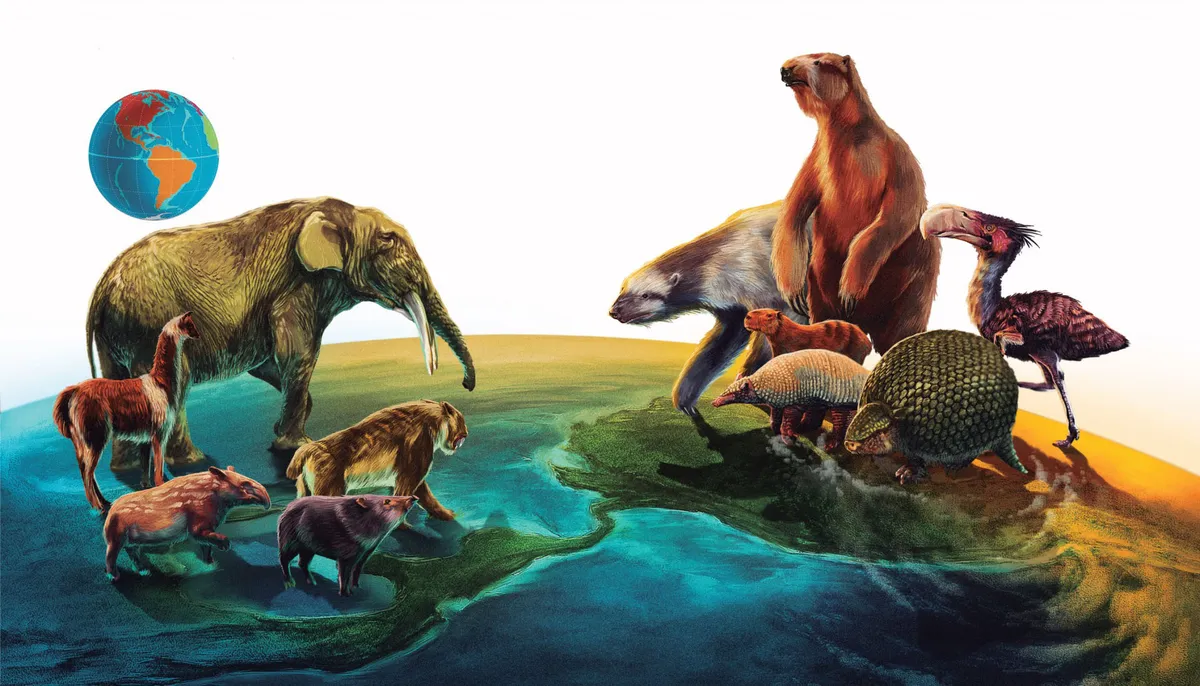
For a long time, scientists thought that North and South America were completely separate until a land bridge formed about 3 million years ago. This bridge, called the Panamanian isthmus, allowed animals to cross between the continents. However, new fossil discoveries show that mammals were actually mixing much earlier than that.
Researchers at UC Berkeley found evidence that animals from both continents started to intermingle as far back as 10 million years ago. This happened long before the permanent land bridge connected them.
Mammals on the Move
Before the land bridge, North and South America had very different animal populations. The south was home to many marsupials and sloths. The north had camels, horses, and saber-toothed cats. Biologists called the major animal exchange after the bridge formed the Great American Biotic Interchange (GABI). This event led to many South American species dying out as North American species took over.
We're a new kind of news feed.
Regular news is designed to drain you. We're a non-profit built to restore you. Every story we publish is scored for impact, progress, and hope.
Start Your News DetoxHowever, UC Berkeley paleontologists say this idea is too simple. They studied new fossil mammals found in Mexico. Their findings suggest that North American animals moved into southern North America about 10 million years ago. They stayed there, almost like in a "holding pen," until they could cross to South America around 7 million years ago.
Jack Tseng, a Berkeley professor and lead researcher, explained that this "ramp up" of animal movement is much older than previously thought. It started at least 10 million years ago.
Three Phases of Exchange
The researchers identified three main phases of animal exchange:
The Holding Pen Phase (10 to 7 Million Years Ago)
During this time, larger North American mammals, often adapted to dry conditions, moved into Mexico. They continued to evolve there. South American mammals also diversified. This period set the stage for later exchanges.
The Lag Phase (7 to 3 Million Years Ago)
In this phase, smaller mammals like racoon-like coatis, ringtails, and small rodents started moving to South America. They likely crossed through island hopping or by floating on vegetation. Interestingly, only one major South American group, the sloths, moved north during this time. Sloths eventually grew to the size of small elephants in North America.
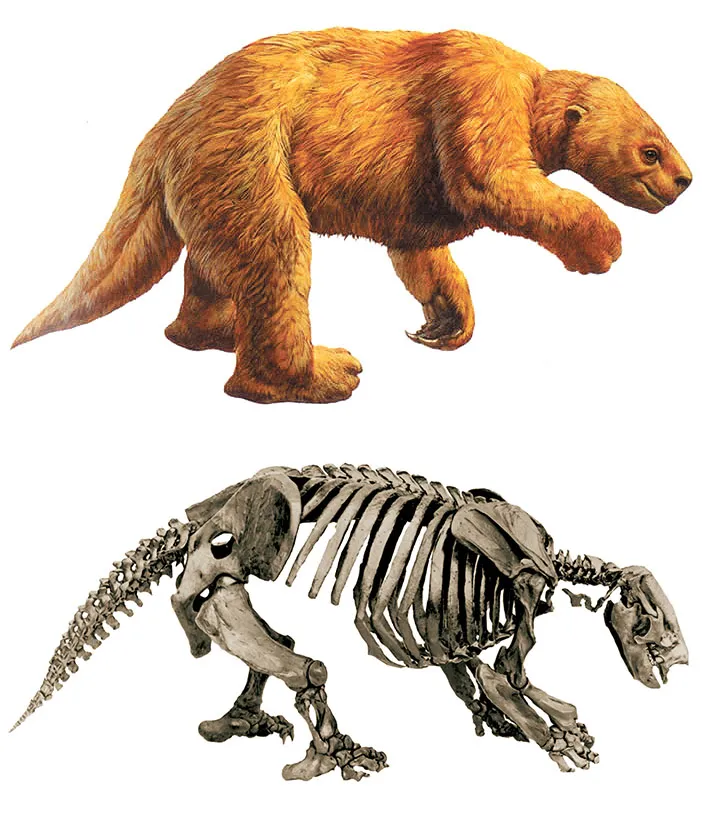 Courtesy of Natural History Museum of Los Angeles County
The GABI Phase (Around 2.8 Million Years Ago)
About 2.8 million years ago, the permanent land bridge formed. This "opened the floodgates," allowing all mammals, big and small, to move freely between the continents. This led to the ecosystems we see today. It also helps scientists understand which species might survive future environmental changes.
New Insights from Mexican Fossils
Tseng and his team have been collecting fossils in Mexico for nearly 15 years. Their work, combined with earlier discoveries, greatly increased the known fossil record from 12 million years ago to the present. They noticed that many fossils from Mexico, dating back 10 million years, were identical to those found farther north in North America.
This suggests that North American mammals spread south into Mexico much earlier than thought. Mexico acted as an extension of North America's animal populations, not a unique region.
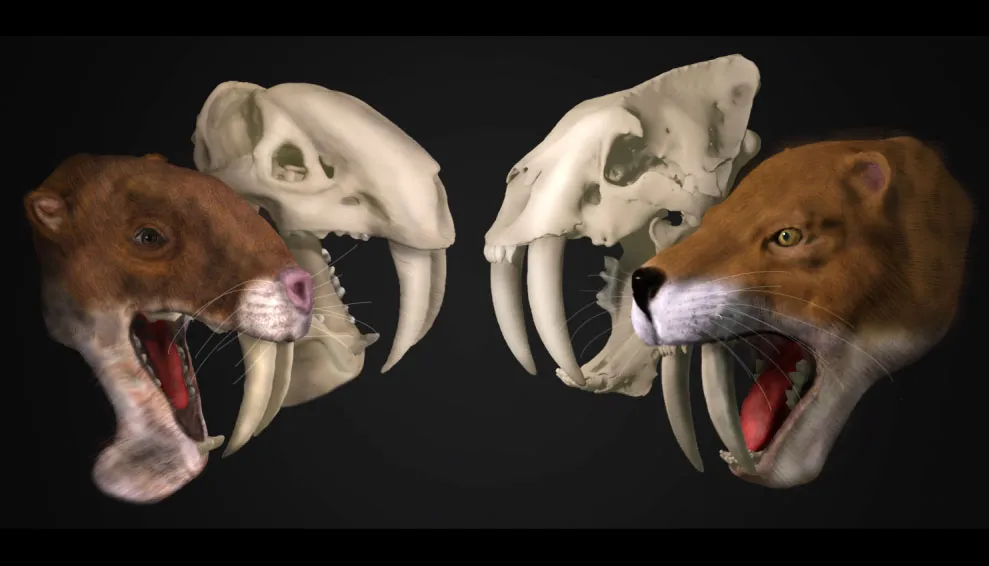 Digital reconstruction by Stephan Lautenschlager
During the holding pen phase, mammals in Mexico adapted to the warmer, wetter climate. By 7 million years ago, racoon relatives and small rodents had already reached South America. They filled new ecological roles there.
The GABI phase saw a significant shift. North American mammals often outcompeted South American ones. This might be because placental mammals from the north, which give birth to more developed young, had an advantage over marsupials from the south, whose young need more care in a pouch.
These findings challenge some ideas that a land bridge existed much earlier or that climate was the main driver of animal movement. Tseng believes the fossil record doesn't support these claims.
Tseng and his colleagues are now working with researchers in South America. They plan to include more South American fossils in their analysis. This will help them better understand which mammals migrated south and when, and why there was a delay in south-to-north migrations.
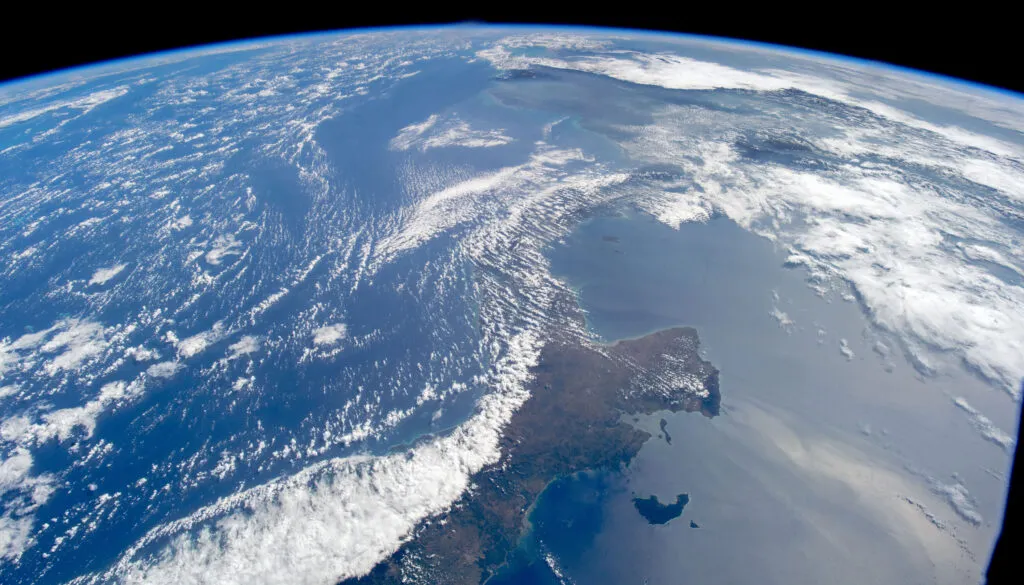 NASA, 2018
Deep Dive & References The Great American Biotic Interchange: A three-phase model - Science, 2026