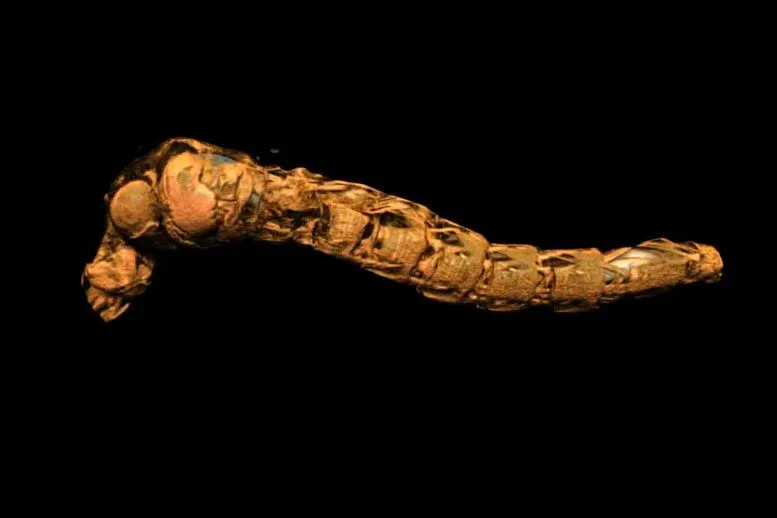
Lake fly larvae in Lake Malawi are challenging a long-held idea about why insects are rare in the open ocean. These tiny creatures can dive hundreds of meters deep. They survive pressures that were once thought to crush an insect's breathing system.
How Tiny Divers Survive Deep Water
Every day, billions of Chaoborus edulis larvae disappear into the deep, oxygen-poor parts of Lake Malawi. They do this to avoid predators during the day. At night, they swim back up to the surface to eat, passing many fish along the way.
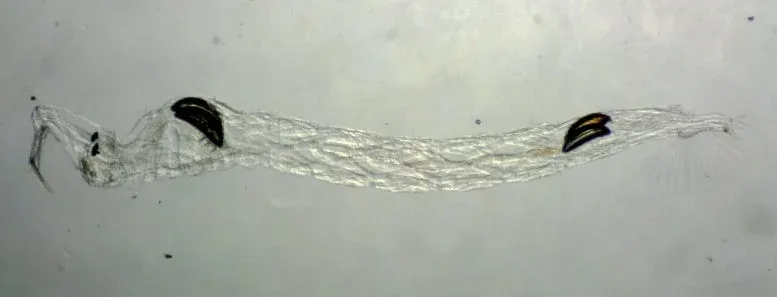
Researchers from the University of British Columbia, Dr. Philip Matthews and Evan McKenzie, used sonar to track the larvae's daily movements. They found that the larvae have special air sacs. These sacs are part of their breathing system and act like ballast tanks, helping them control whether they float or sink.
We're a new kind of news feed.
Regular news is designed to drain you. We're a non-profit built to restore you. Every story we publish is scored for impact, progress, and hope.
Start Your News DetoxThe air sacs contain a material called resilin. By changing the pH level in the walls of the sacs, the larvae can make the resilin expand or shrink. This changes the volume of the sacs and adjusts their buoyancy.
To test how strong these air sacs are, the scientists put larvae in tiny pressure chambers. They increased the pressure until the sacs collapsed. The sacs could handle pressures equal to depths over 400 meters. This is more than twice as deep as the larvae usually go.
Challenging a Long-Standing Theory
Insects are common on land and in fresh water, but they are almost completely missing from the open ocean. One popular idea is that the high pressure in deep water would collapse their air-filled breathing systems. However, the Lake Malawi larvae show that insect air sacs can handle much greater pressure than this theory suggests.
Scientists have studied resilin before. It's known as an almost perfect biological rubber found in strong insect parts like wing hinges.
These findings could also help create new smart materials. These materials could be made with resilin or artificial muscles that react to chemical signals.
Deep Dive & References
Crush-resistant air sacs allow insect larvae to exploit aquatic habitats at extreme depth - Science, 2026