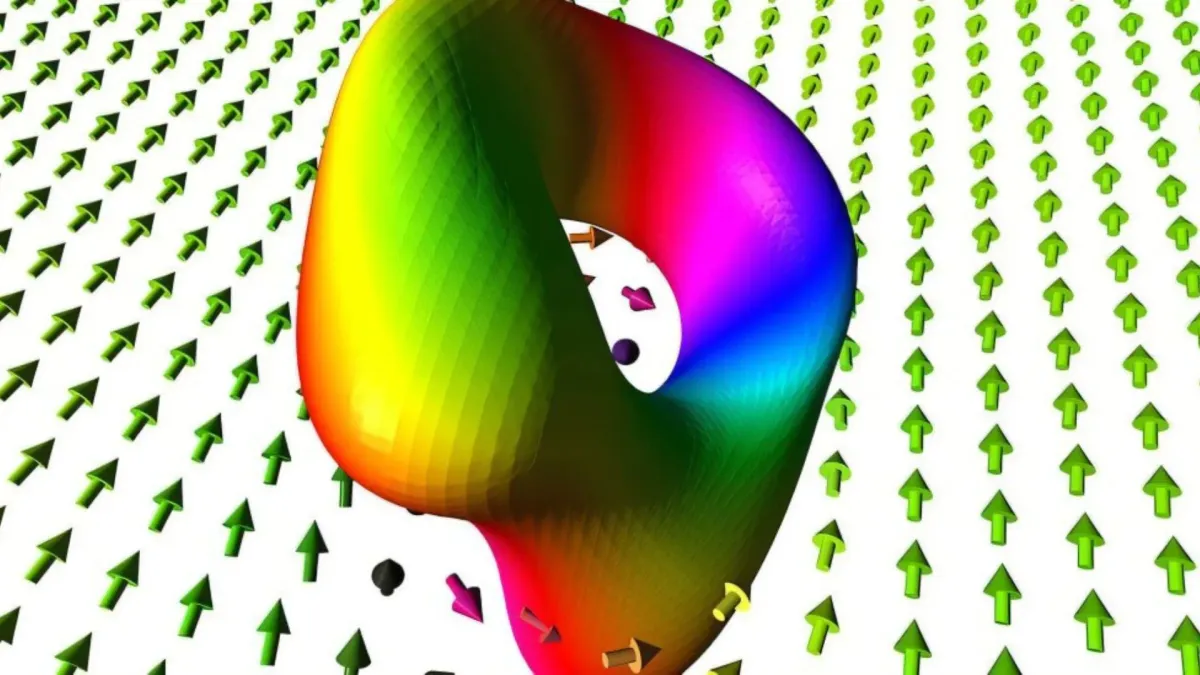
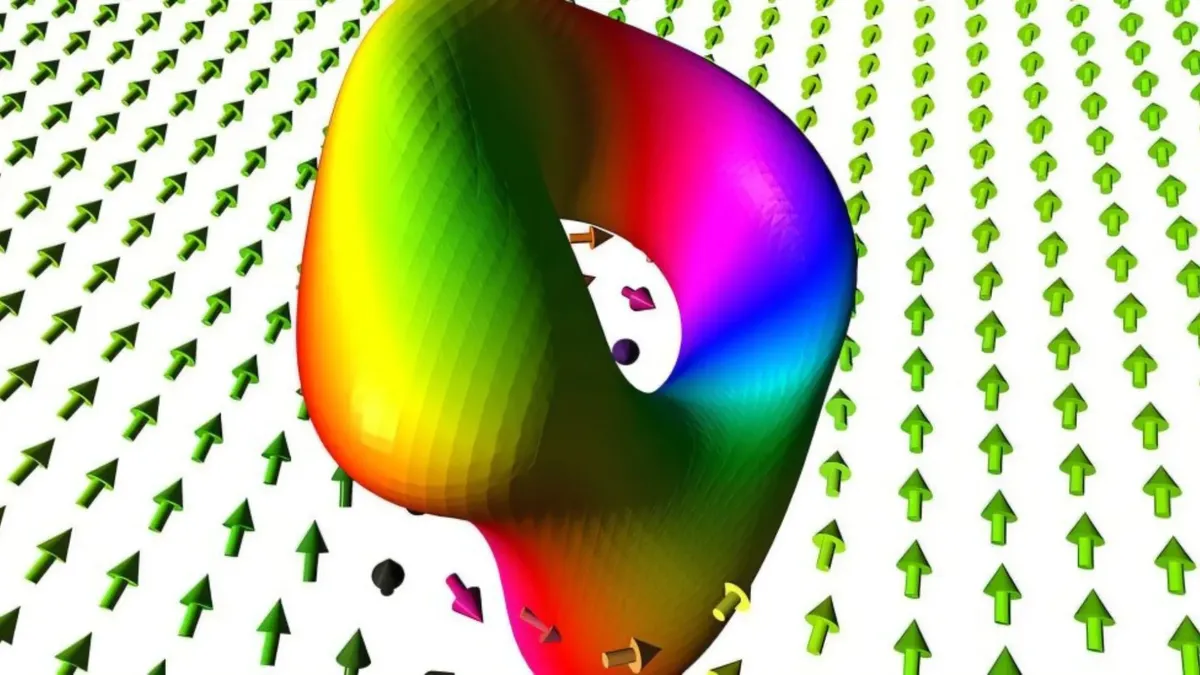
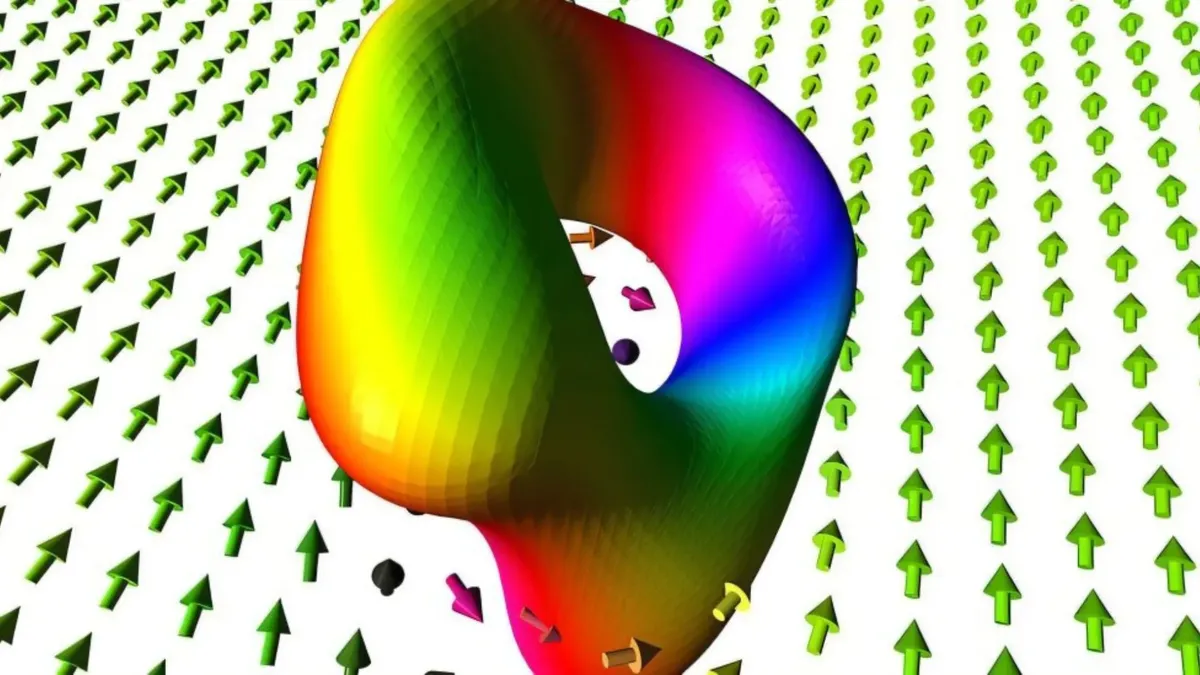
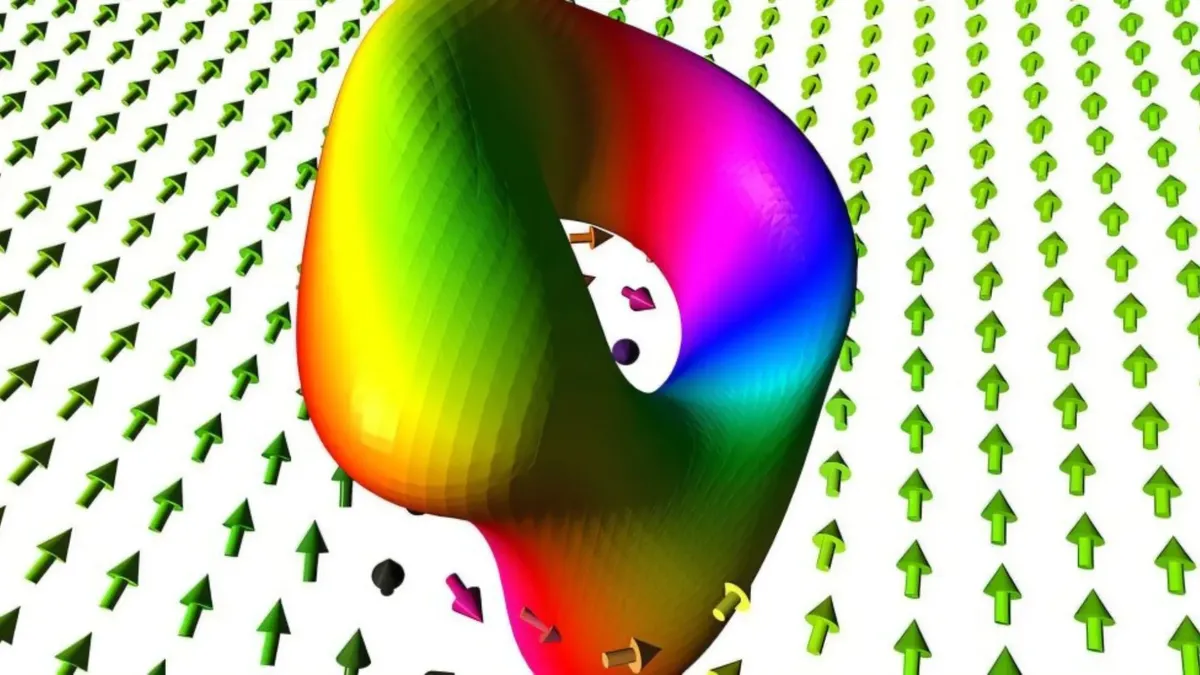
For decades, scientists have theorized about something called a "hopfion" — a bizarre, 3D magnetic structure where electron spins tie themselves into tiny, linked loops. Imagine a quantum knot, but made of magnetism, and pointing in every direction at once within a minuscule space. Sounds like something out of a sci-fi novel, right? Well, they just found them.
A collaboration of researchers from Sweden, Germany, Luxembourg, and China finally pulled off the ultimate magic trick: observing these elusive hopfions for the very first time. And how did they do it? With very fast laser flashes, naturally.
Philipp Rybakov of Uppsala University, clearly still buzzing from the discovery, called hopfions "fascinating." He noted their stability: once formed, they're not easily messed with. Which, if you're trying to store data, is exactly what you want.
We're a new kind of news feed.
Regular news is designed to drain you. We're a non-profit built to restore you. Every story we publish is scored for impact, progress, and hope.
Start Your News DetoxMagnets, But Make It 3D
Most of us think of magnetism pretty simply. A fridge magnet sticks one way, a compass points another, and your hard drive saves data in flat, linear bits. But at the electron level, things get wonderfully weird. Magnetism comes from "spin," a quantum property that basically turns every electron into a tiny, internal compass needle. When enough of these tiny compasses interact, they can form stable, complex patterns.
A hopfion is the ultimate complex pattern: a stable, 3D magnetic structure where electron spins point in literally every possible direction within a tiny volume. The problem? Materials usually have huge energy barriers preventing these little magnetic knots from forming naturally.
Enter the lasers. Specifically, ultra-fast femtosecond lasers. A femtosecond is one millionth of a billionth of a second — a blink-and-you-miss-it kind of speed that's perfect for shocking a system out of its comfort zone. The team used special "chiral" crystals (thin films of iron germanium, 110–200 nanometers thick) whose mirror-image structure naturally encourages unique magnetic arrangements.
The lasers violently zapped the material's electrons, pushing them out of their usual, low-energy state. This sudden, intense jolt forced the spins to reorganize. When the dust (or rather, the femtosecond laser pulse) settled, the spins had formed those tightly linked, closed loops. Voilà: a hopfion.
Proving this wasn't just a fluke required some serious tech. Researchers used advanced electron microscopy to watch the material in real-time after each laser strike. They also deployed a simulation program called Excalibur, creating "digital twins" of the experiment to model how millions of interacting spins would behave. Rybakov summed it up nicely: theory guided, experiments showed, and simulations explained.
This isn't just a cool party trick for physicists. This discovery is a huge step for spintronics — a field aiming to replace heat-generating electrical currents in computers with electron spin. These new 3D hopfions could act as incredibly dense, stable data packets. Imagine data storage that's much faster, smaller, and more energy-efficient than today's silicon chips. Because apparently, we're tired of flat data.
And just to show it wasn't a one-off, another study in Nature Communications used the same laser technique on a different chiral material to create "bimerons" — essentially the 2D cousins of hopfions. It seems lasers are the new master key for unlocking magnetic dimensions. Which, if you think about it, is both impressive and slightly terrifying. Imagine giving your phone a laser pointer and it suddenly remembers things in 3D. We'll get there.