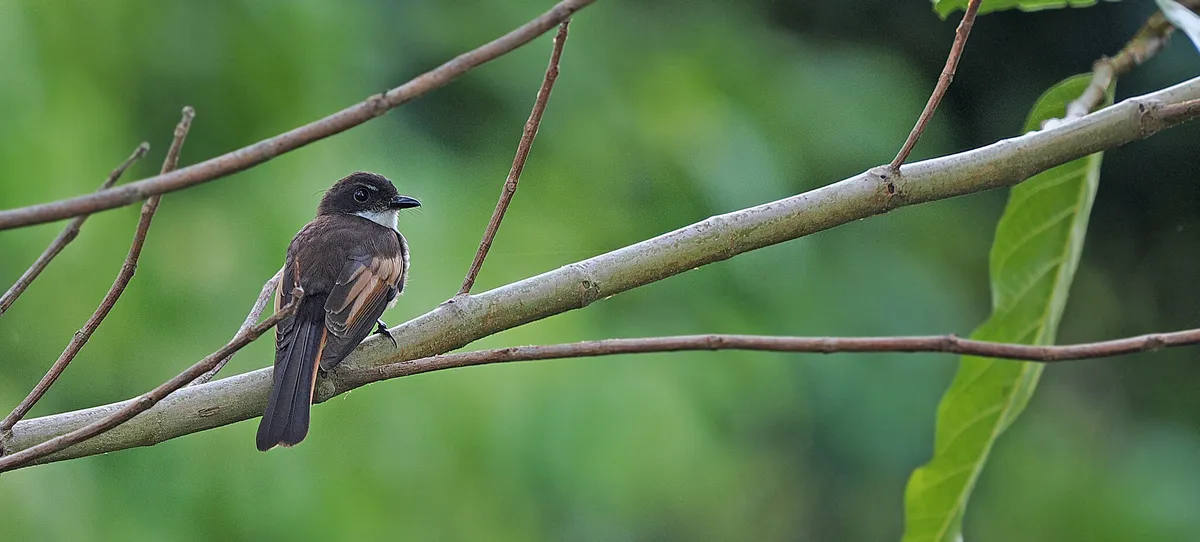
Scientists in France have found what they believe are the basic building blocks of birdsong. They analyzed over 100,000 songs from thousands of species. This research revealed that all birdsongs are made of eight fundamental sound types, which they call "motifs."
These motifs include three kinds of trills, three kinds of whistles, chaotic notes, and harmonies. Birds combine these motifs in different ways to create their diverse songs.
Uncovering Song Patterns
Birdsong is a complex form of communication that has always fascinated scientists. However, its huge variety made it hard to study on a global scale. Quentin Bacquelé, a lead researcher, noted that birdsongs vary greatly across different parts of the world.
We're a new kind of news feed.
Regular news is designed to drain you. We're a non-profit built to restore you. Every story we publish is scored for impact, progress, and hope.
Start Your News DetoxTo tackle this, Bacquelé and his team used a global database of birdsongs. Thousands of volunteers had uploaded these recordings. This allowed them to study about 116,000 songs from over 3,000 species.
They looked for patterns in how songs changed over time. With the help of AI, they compared thousands of songs to find common links. This process showed a "simplicity underlying the spectacular diversity of birdsongs."
Environment Shapes Song
A key discovery was that the environment shapes how birds "compose" their songs. Birds in tropical forests use different motifs than those in temperate regions.
For example, simpler motifs like flat whistles are common in tropical areas. Bacquelé explained that these help birds be heard through the noisy, dense forest.
More complex songs, with fast trills and lots of information, are more common in temperate forests. Birds there often communicate at closer ranges. This is an evolutionary trade-off: a complex song carries much information but is harder to transmit over long distances in busy environments.

Conserving Natural Soundscapes
Bacquelé noted that human activity is changing the link between the environment and its natural soundscape. He believes this research offers a new way to see how songs are connected to their surroundings.
This understanding could help scientists learn how birds might adapt to new background noise from human activity. Bacquelé also stressed the importance of conserving natural sounds. He said that birdsongs are a vital part of our connection to nature. If a forest is destroyed, the specific songs of its birds may no longer suit the new environment.
Deep Dive & References
The acoustic building blocks of birdsong diversity - Science